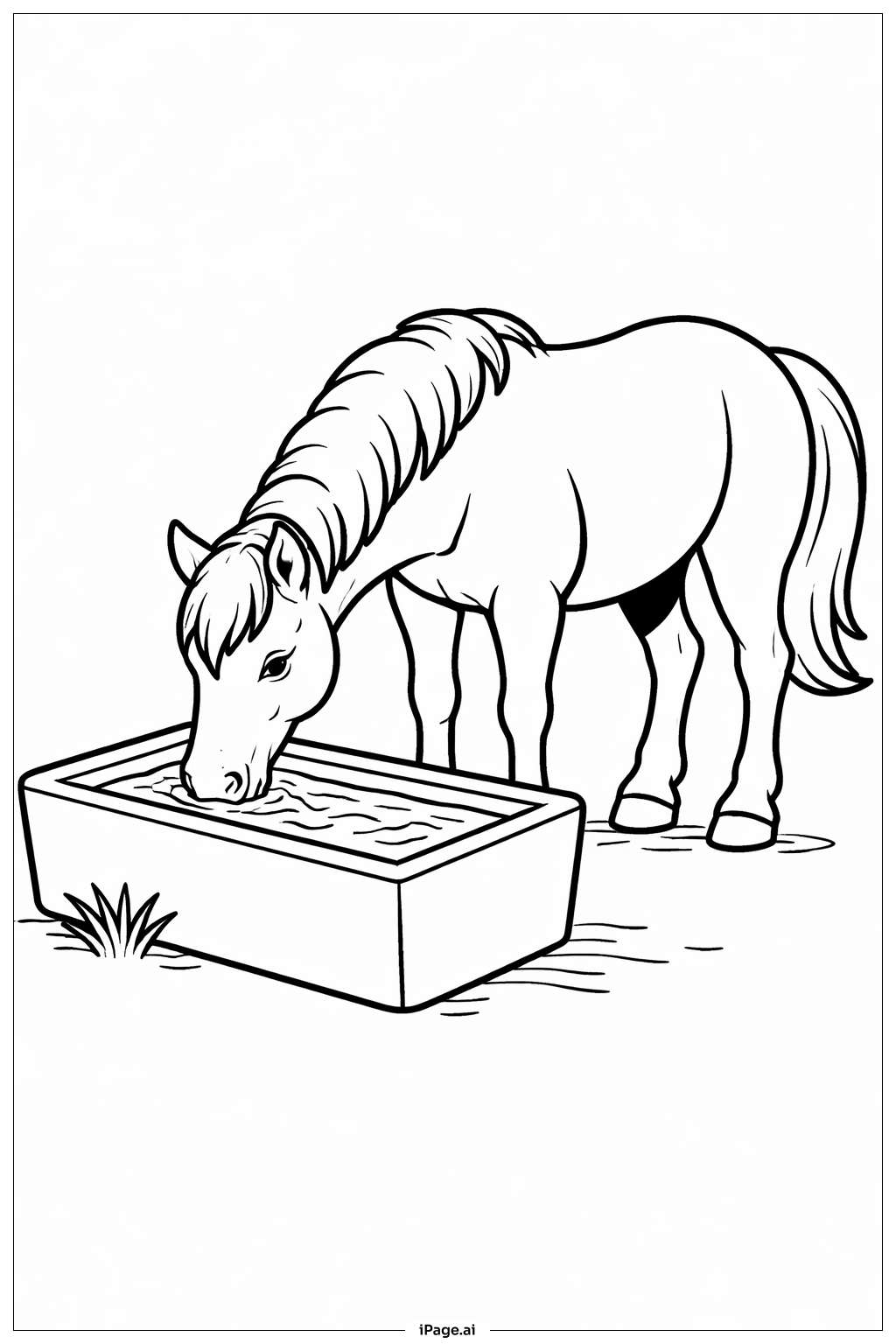
Coloring tips: How to color Horse At Water Trough coloring page well?
Start with the horse using warm browns, chestnuts, or even black for a classic look. You might try a golden palomino or dappled gray for variety. The mane and tail can match the body or contrast with lighter or darker shades. For the water trough, use natural wood tones like tan, light brown, or weathered gray. Add dimension by shading the planks darker along the edges. Color the water inside with light blue or turquoise, adding white highlights to show reflection. The surrounding grass works well in various greens, from spring lime to deep forest tones. Add yellow or brown patches for dried grass to create texture. Consider a soft blue sky background or leave it white for simplicity.
Coloring challenges: Which parts are difficult to color and need attention for Horse At Water Trough coloring page?
• Horse Anatomy and Proportion: The horse's body requires careful attention to maintain realistic proportions and muscle definition. Young colorists may find it challenging to shade the curved surfaces of the legs, neck, and body to create a three-dimensional appearance. The transition between light and shadow areas needs gradual blending to avoid a flat look.
• Mane and Tail Texture: Creating the flowing, individual strands of the mane and tail presents a detailed challenge. Each strand should be colored with attention to direction and natural flow. Adding highlights and shadows within the hair requires patience and fine motor control, especially for younger children working with crayons or markers.
• Water Trough Details: The wooden planks of the trough need distinct separation while maintaining a cohesive structure. Showing wood grain texture and weathering effects adds complexity. The water surface inside requires careful color selection and technique to depict transparency and reflection without making it look solid or opaque.
• Background and Ground Integration: Blending the grass and landscape elements so they complement rather than compete with the main subject requires planning. Creating depth by using lighter colors in the distance and darker tones in the foreground challenges spatial reasoning skills. Avoiding gaps between elements while maintaining clear boundaries needs careful coloring control.
Benefits of coloring books: Advantages of drawing Horse At Water Trough coloring page
Coloring this peaceful farm scene helps children develop fine motor skills and hand-eye coordination through detailed line work. The horse's anatomy provides an excellent opportunity to learn about animal body structure and proportions. Young artists practice color theory by choosing complementary shades for the horse, trough, and landscape elements. This image encourages patience and focus, as the various textures require different coloring techniques. Children can express creativity by selecting realistic or imaginative color schemes. The rural setting promotes appreciation for farm animals and country life. Completing this detailed scene builds confidence and provides a sense of accomplishment, especially when the final colored image displays their careful work and personal artistic choices.