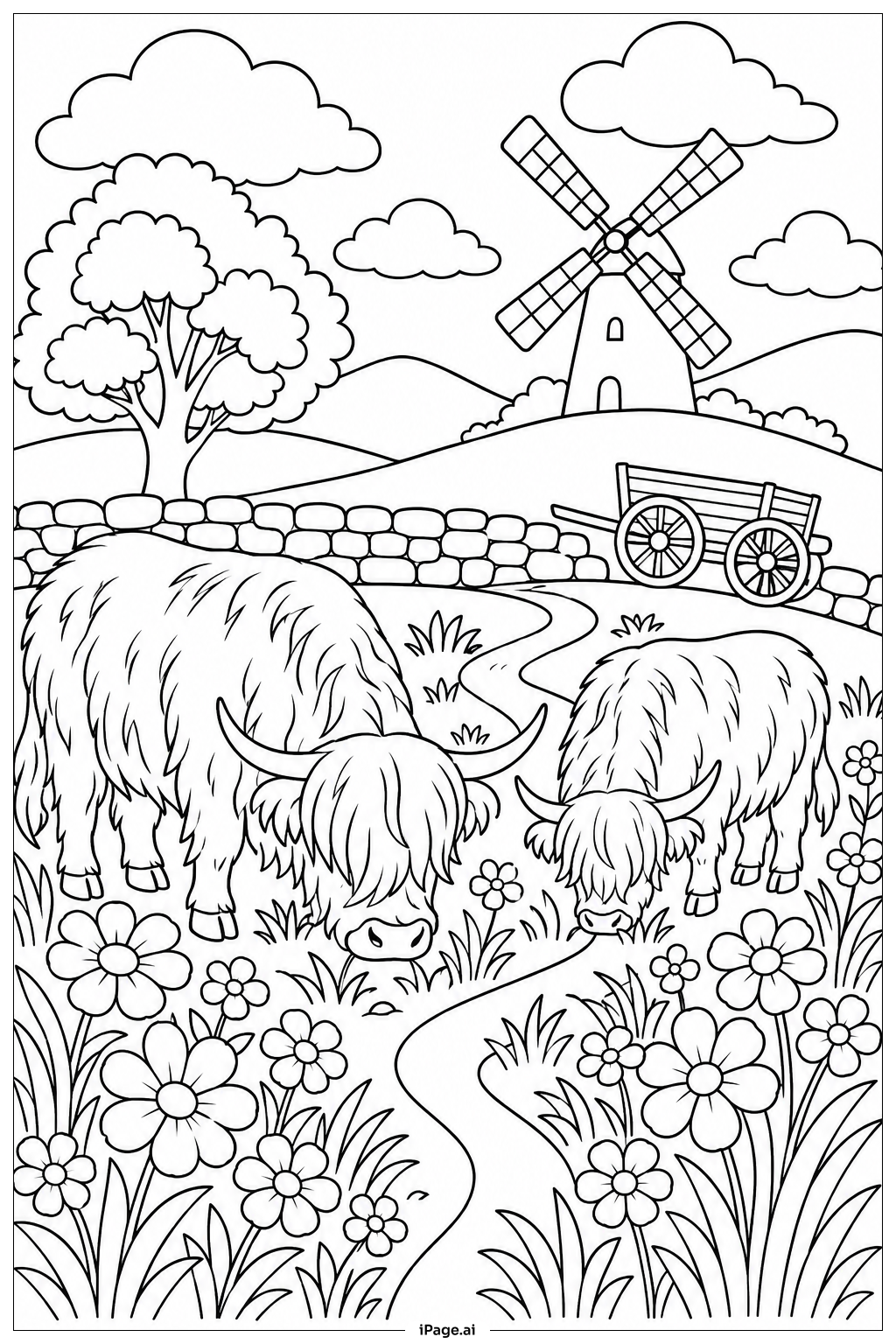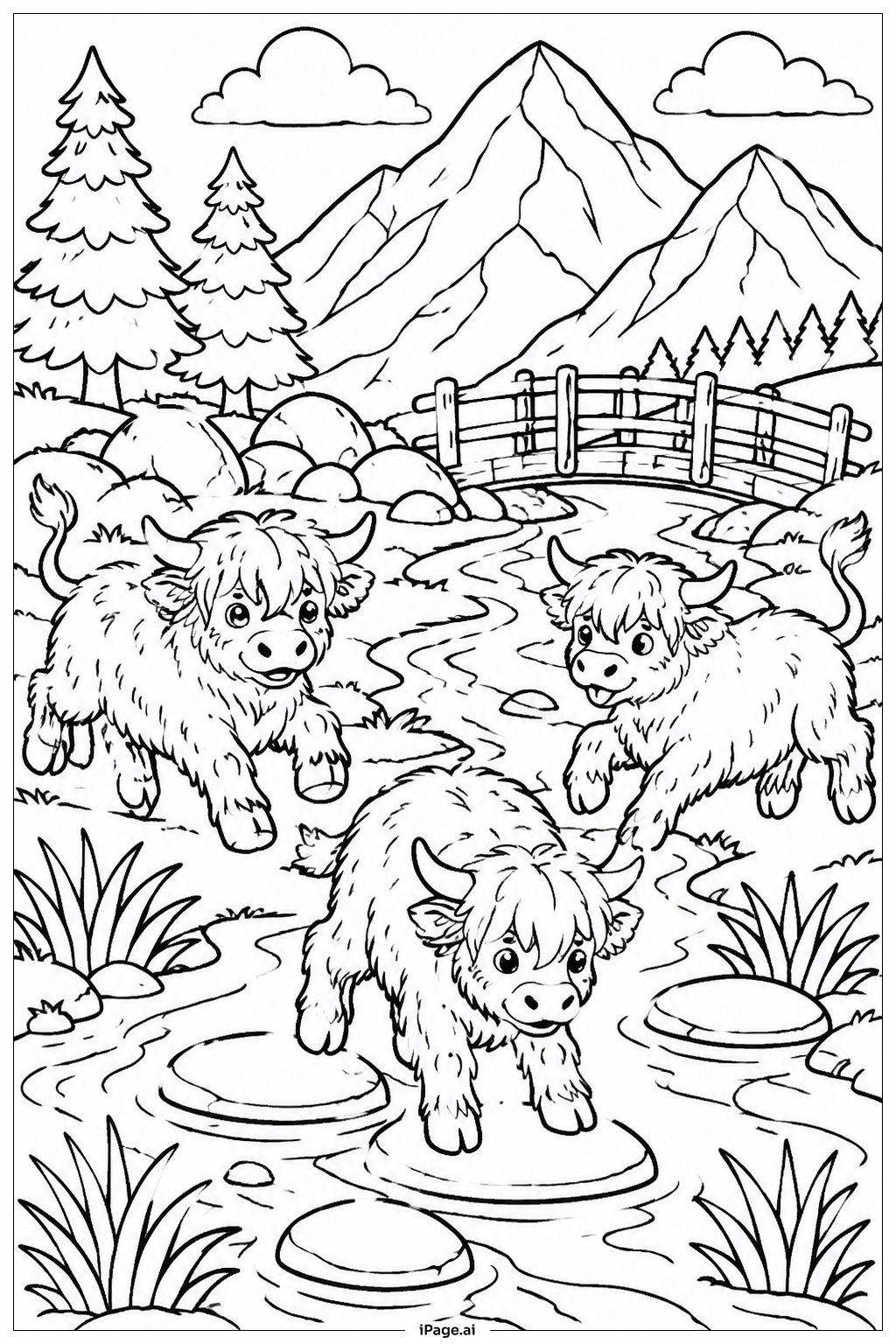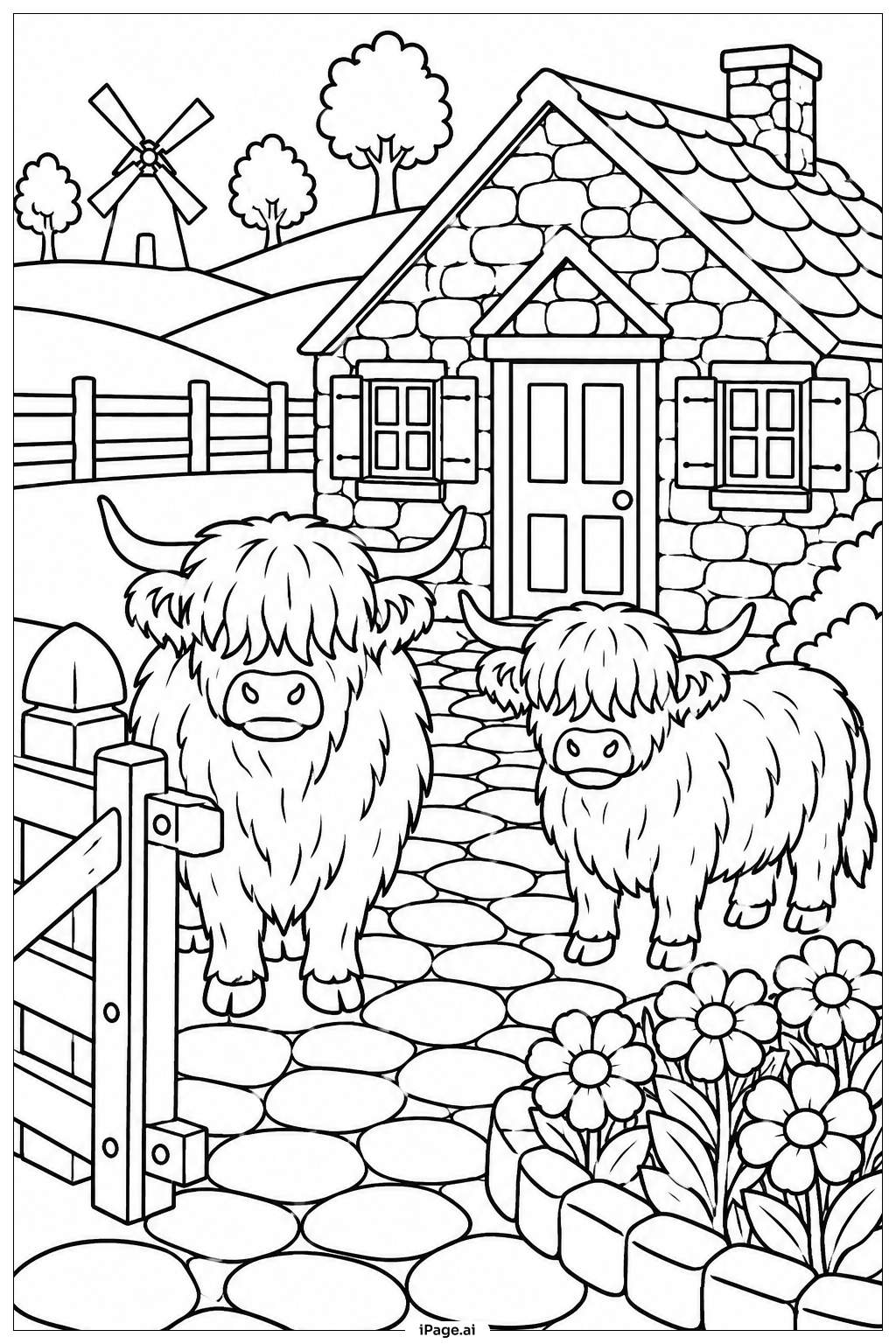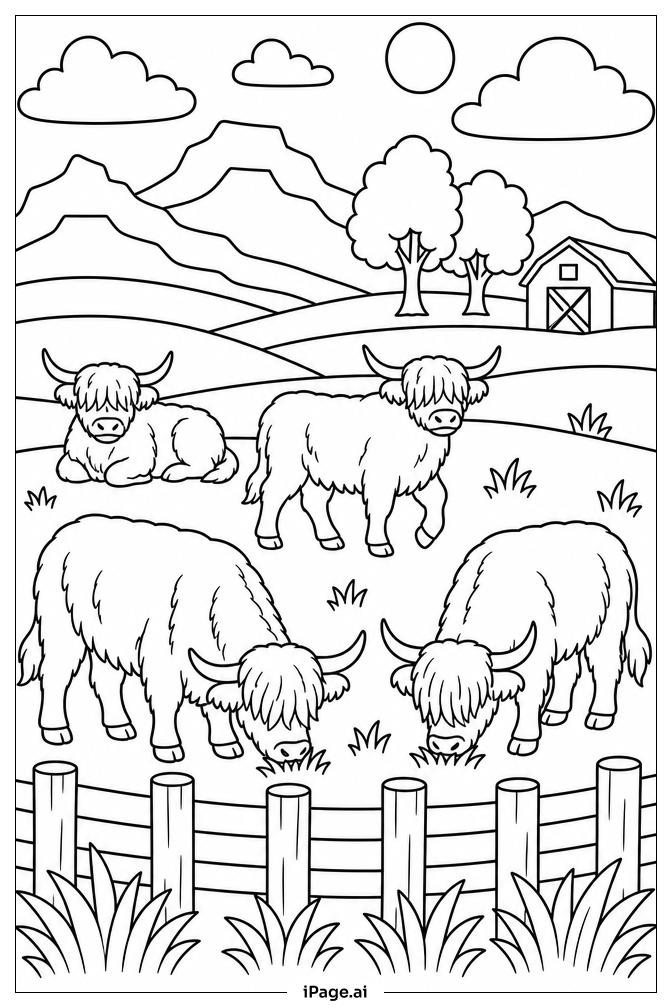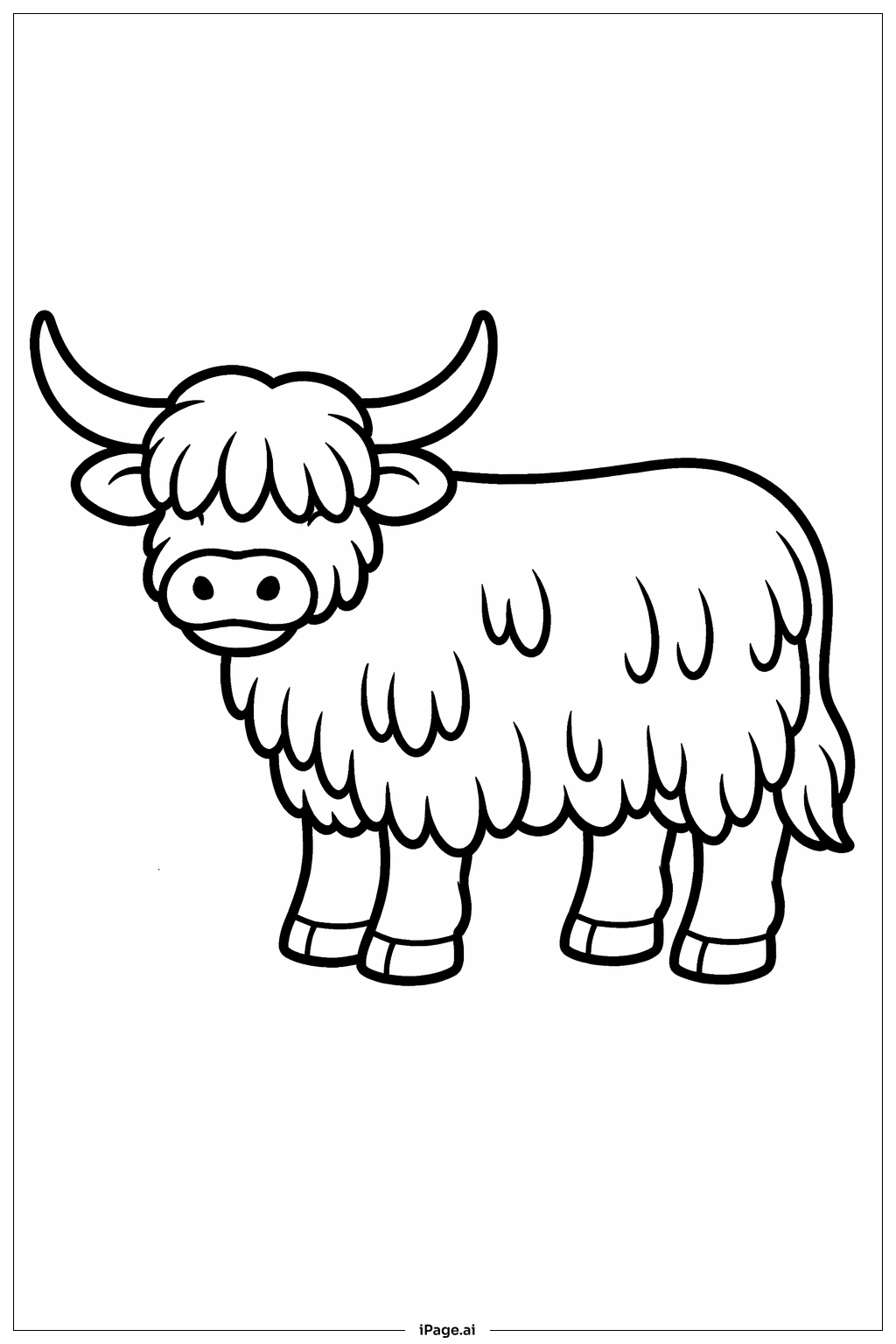
Coloring tips: How to color Highland Cow Standing coloring page well?
To color this Highland Cow, you could use warm and earthy tones. Shades of brown, ginger, and cream would highlight the softness and thickness of its fur. Try blending light and dark browns to show the layers of hair. The horns can be colored in soft gray or pale ivory to give a natural, smooth look. The grass under the cow could be different shades of green to add freshness. Don’t forget to add some subtle shadows under the cow’s belly and legs to make it look more three-dimensional. Feel free to use your imagination to make the cow vibrant or realistic!
Coloring challenges: Which parts are difficult to color and need attention for Highland Cow Standing coloring page?
- The shaggy fur has many thin strands and overlapping layers, which can be tricky to color evenly and realistically.
- The cow’s horns are curved and smooth, requiring careful shading to create a rounded effect without making them look flat.
- The face is partly hidden by hair, so coloring the eyes and nose accurately takes attention to detail to keep the expression natural.
- Blending multiple colors to show fur texture can be challenging, especially for younger artists learning to use shading techniques.
- Maintaining clean lines while coloring small areas like around the ears or hooves can be difficult, so patience is needed for precision.
Benefits of coloring books: Advantages of drawing Highland Cow Standing coloring page
Coloring this Highland Cow helps improve attention to detail as you work on the small sections of fur and horns. It encourages creativity by experimenting with different shades and blending colors for a natural look. For children, it also develops fine motor skills through careful brush or pencil control. Additionally, it promotes patience and focus due to the complexity of the textures. Finally, coloring an animal like the Highland Cow can spark curiosity about nature and wildlife, making the activity both fun and educational.