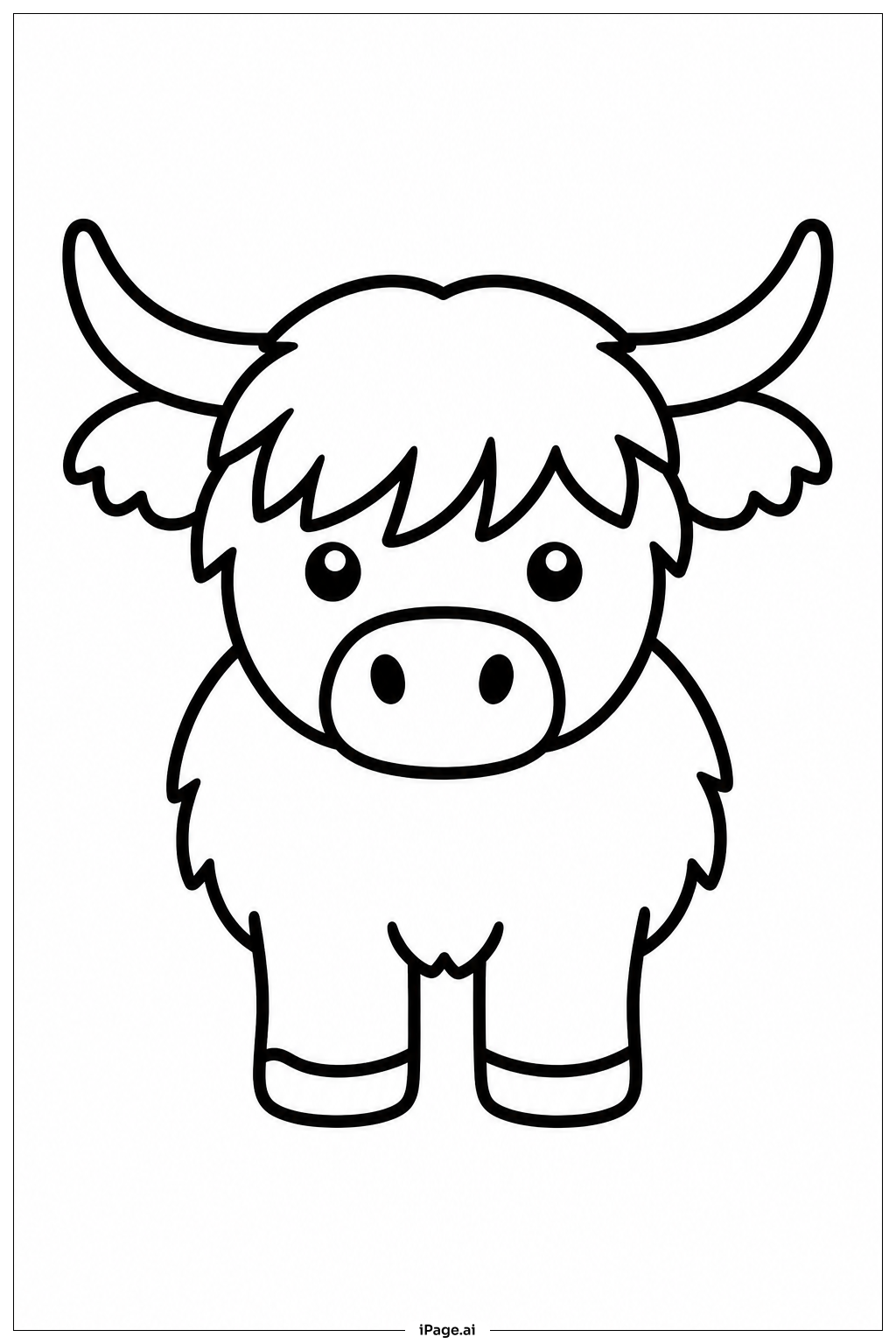
Coloring tips: How to color Highland Cow Portrait coloring page well?
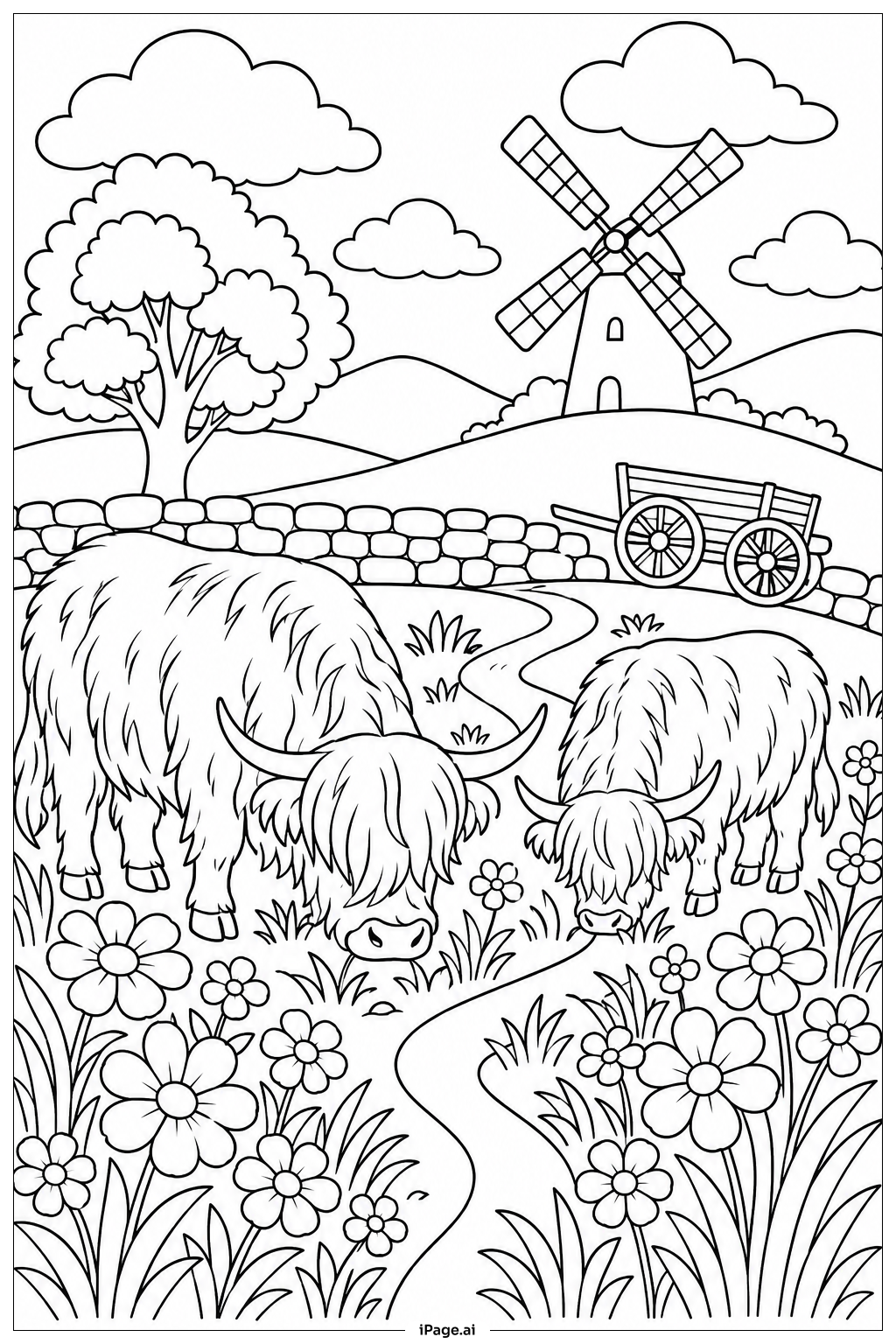
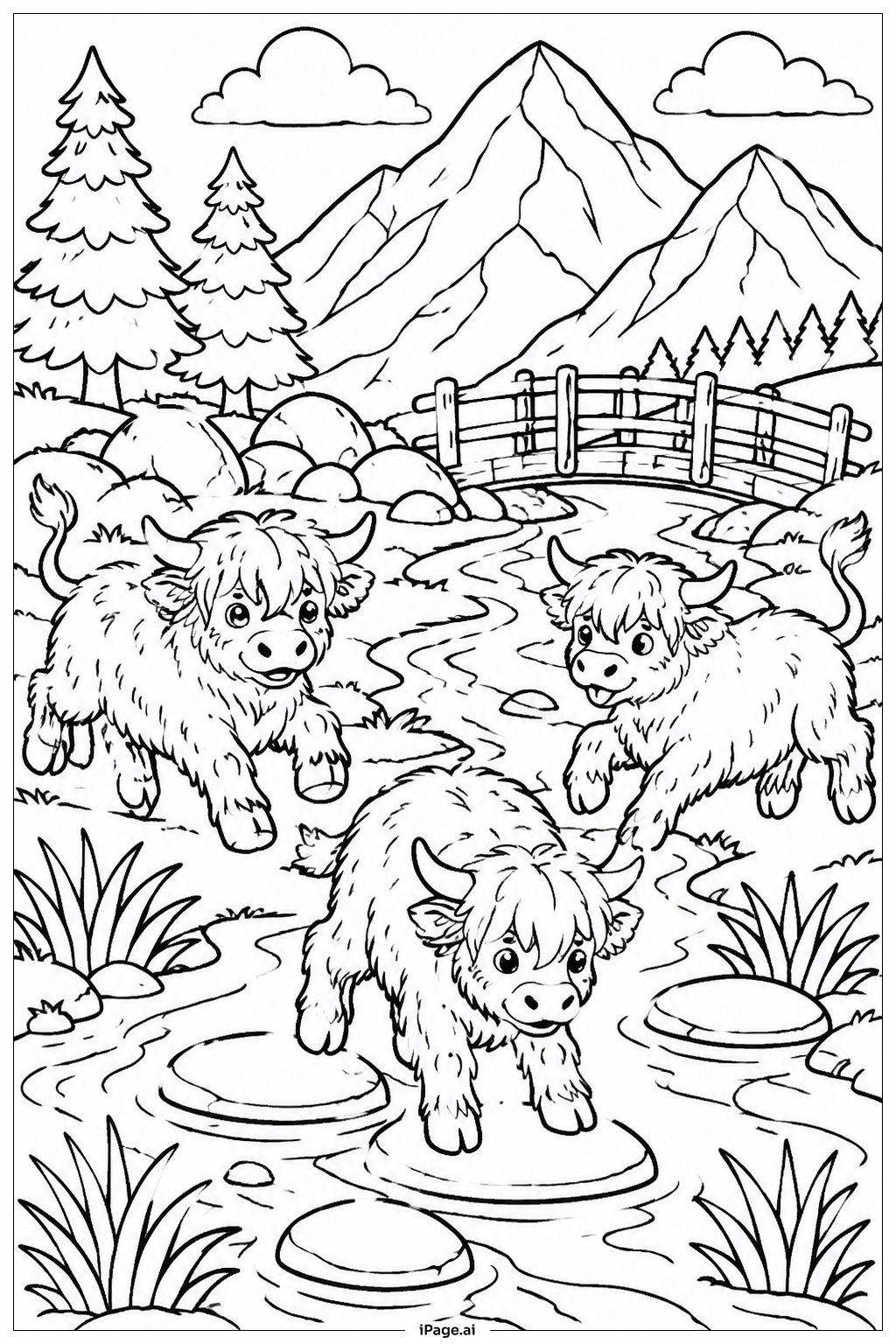
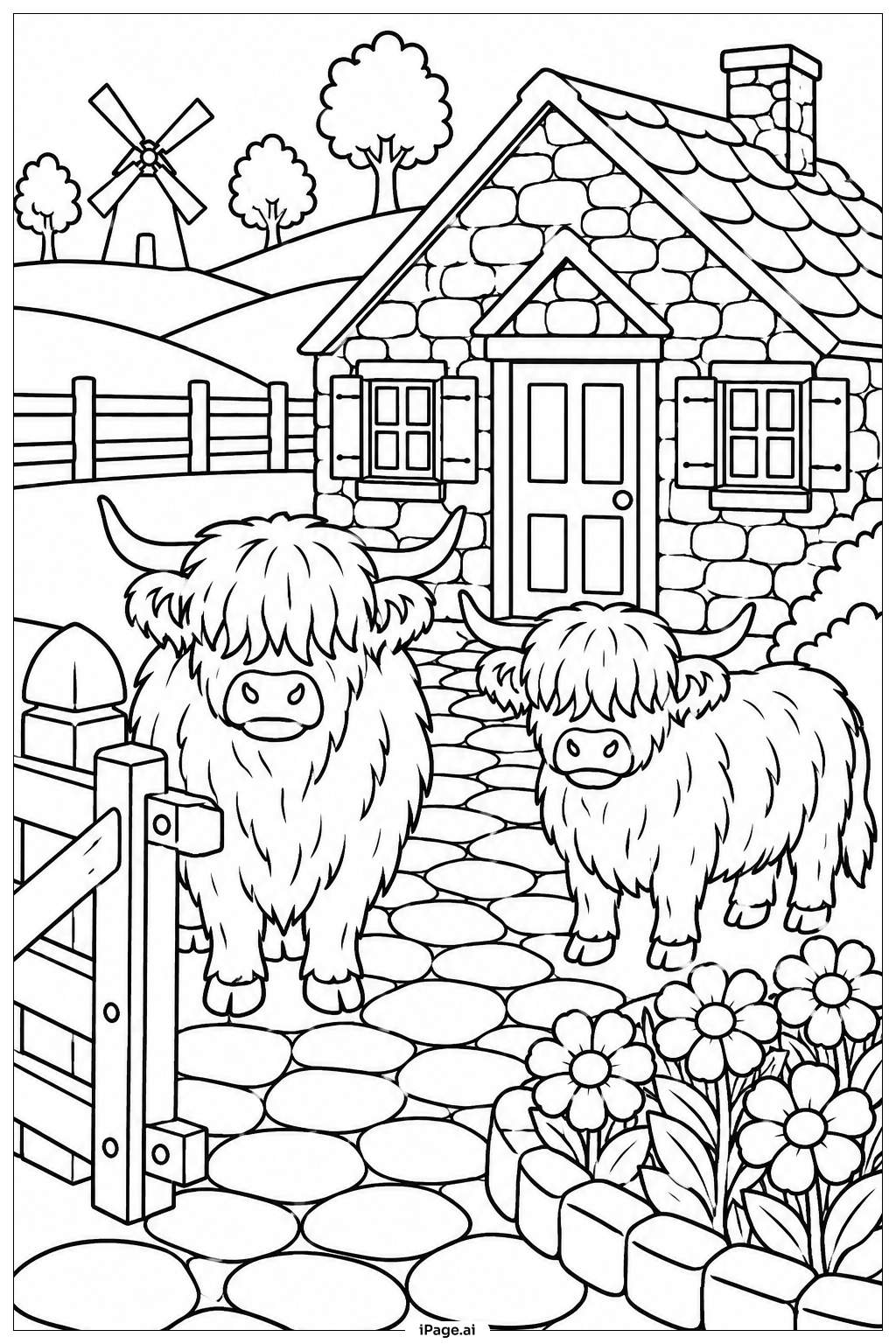
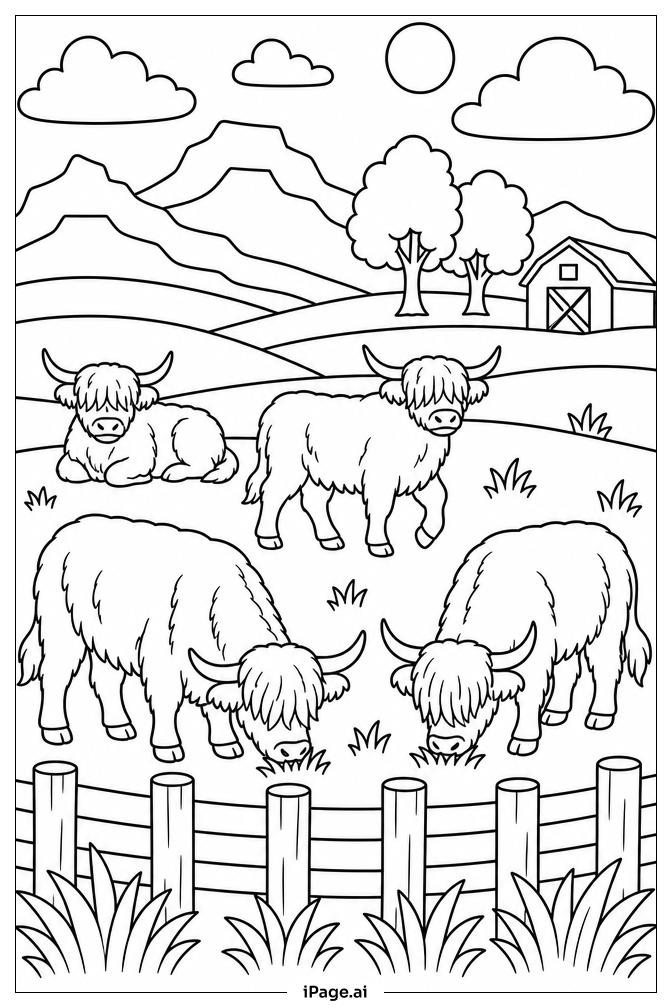
Try using warm brown, golden, and ginger shades to bring the Highland Cow’s thick coat to life. You can create depth by blending lighter and darker tones of brown and orange for the fur. Use gentle strokes to show the soft, shaggy texture of the hair. For the horns, grey, cream, or pale yellow shades can add a natural look. Don’t forget to color the nose and eyes carefully—using soft pinks or browns for the nose and dark browns or black for the eyes will give your picture character. Feel free to add a simple background in greens or blues to represent the cow’s natural outdoor environment.
Coloring challenges: Which parts are difficult to color and need attention for Highland Cow Portrait coloring page?
- The dense, overlapping fur requires careful shading and layering to capture its thick and flowing texture.
- The long strands of hair falling over the eyes can be tricky to color without losing the cow’s facial details.
- Achieving natural-looking horns involves smooth gradients from light to dark tones to show their roundness and texture.
- Small details like the nose and ears need precise coloring to maintain the portrait’s expressiveness.
- Balancing warm colors for the fur while keeping the image visually interesting can be challenging for beginners.
Benefits of coloring books: Advantages of drawing Highland Cow Portrait coloring page
Coloring this Highland Cow Portrait helps develop fine motor skills, especially when working on the detailed hair and facial features. It encourages children to observe nature closely and understand how to use different shades to create texture and depth. The image also sparks creativity by inviting the use of warm color palettes and natural tones. Additionally, coloring an animal known for its calm and gentle nature can be a relaxing and enjoyable activity. Overall, this page offers both artistic practice and a chance to learn about a unique and beautiful breed.