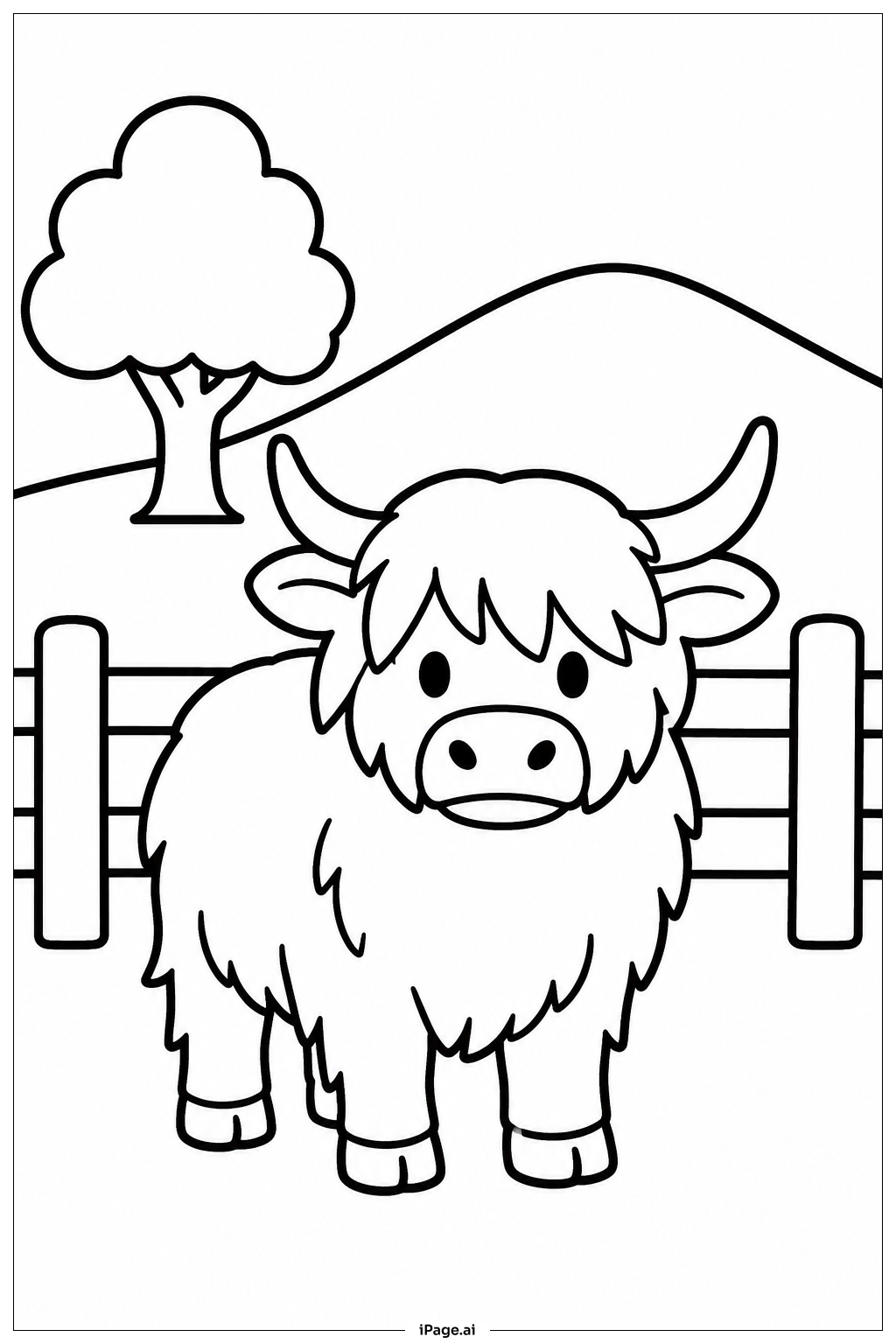
Coloring tips: How to color Highland Cow Near Fence coloring page well?
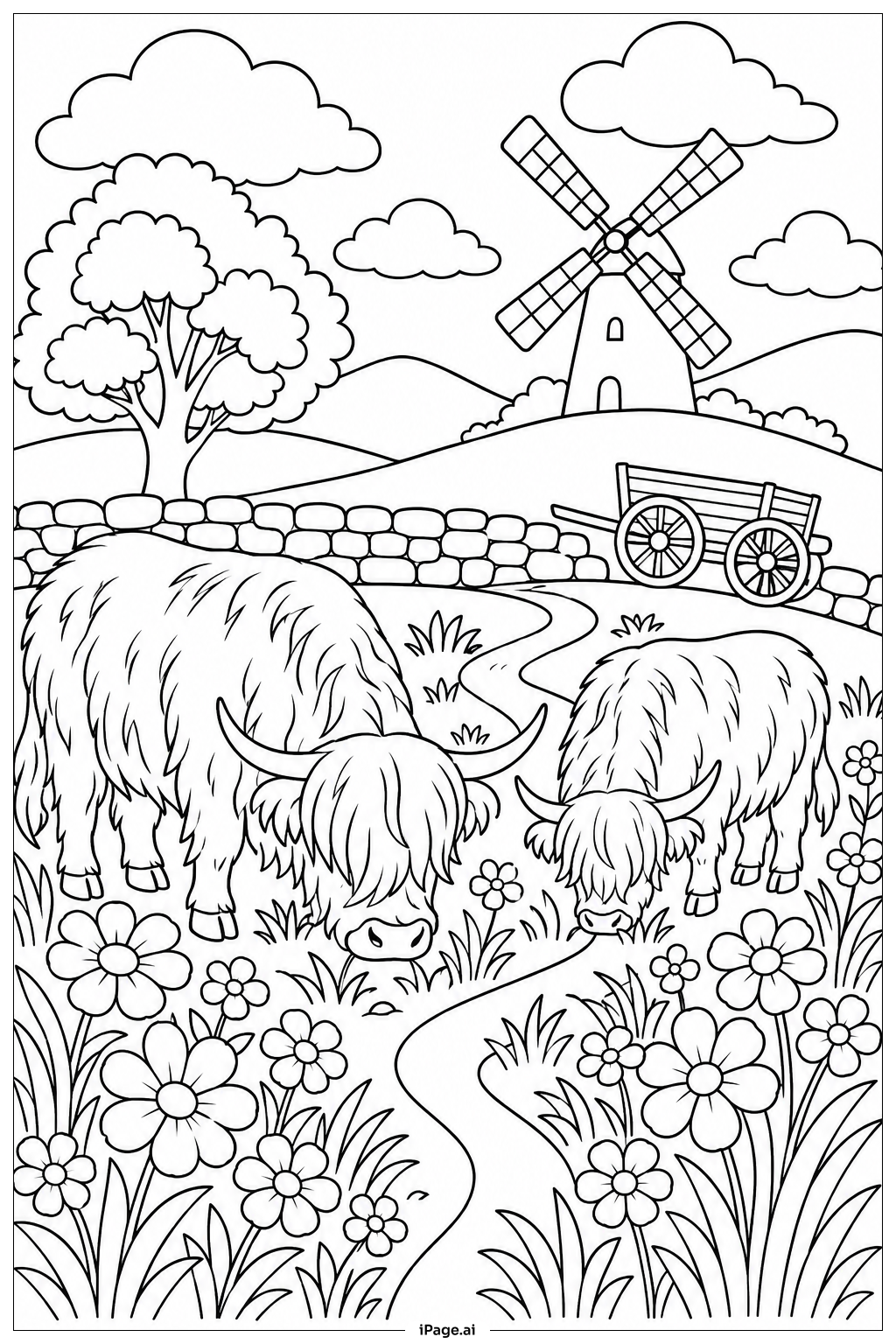
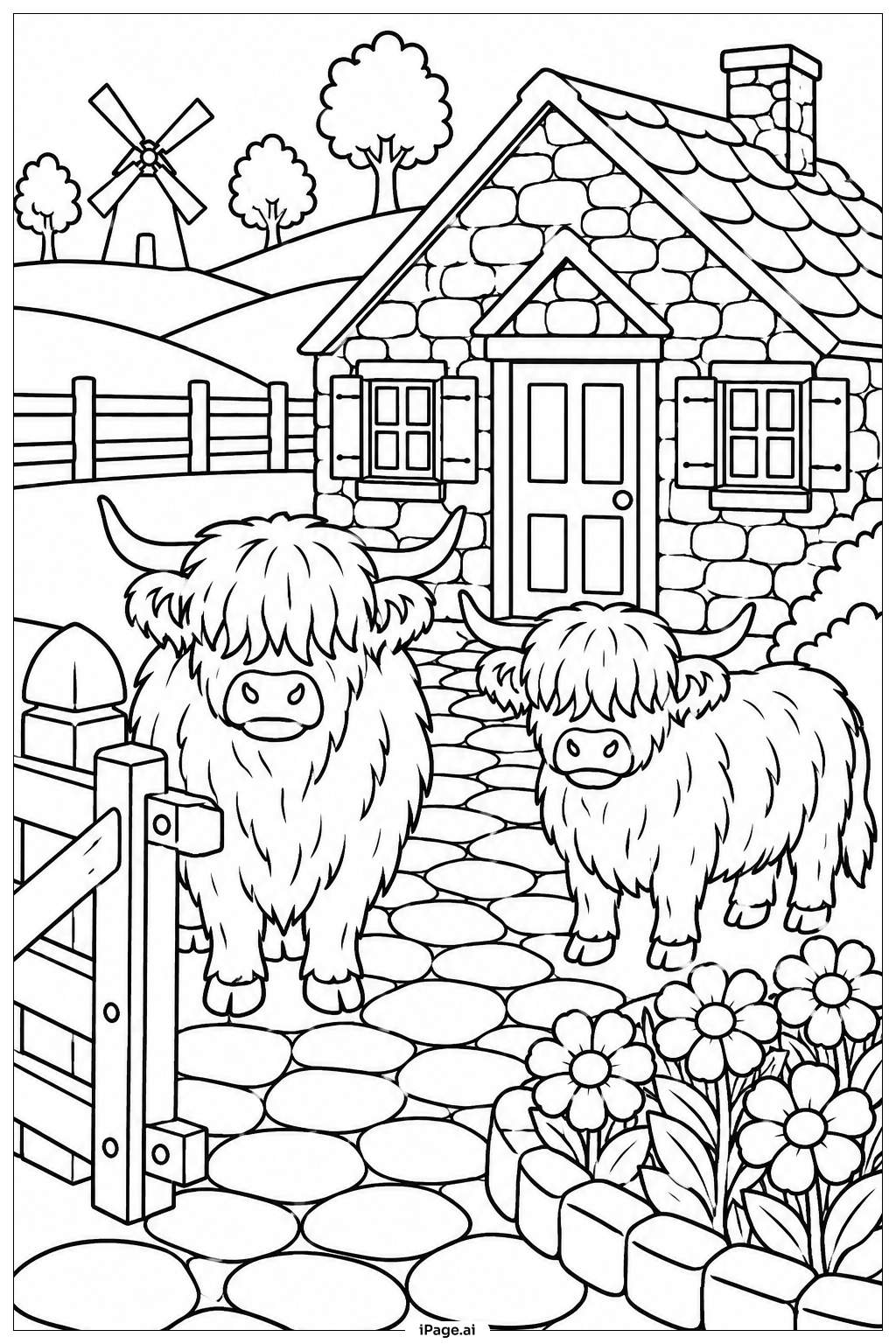
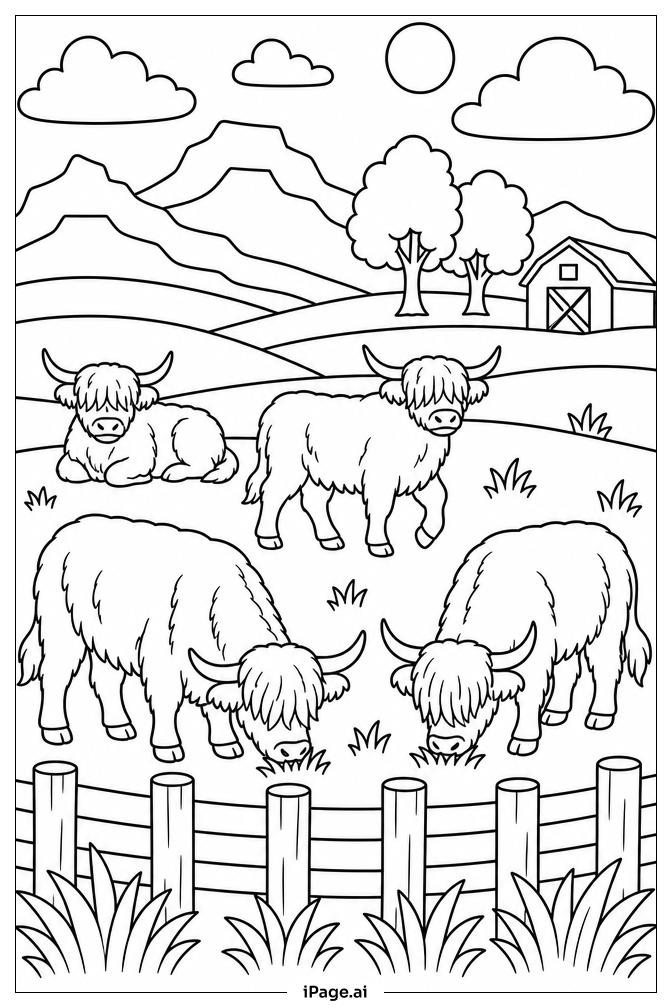
Start with the cow's body using warm earthy tones. Shades of brown, golden tan, amber, or rusty red work beautifully for Highland cows. Use a lighter color for the thick fur fringe around the face. Add depth by using darker shades of brown along the belly, legs, and under the chin. For the horns, try light cream or pale yellow with slight gray shading near the base. Color the wooden fence in warm browns and beige tones. Use gray or brown for the wooden grain texture on the fence posts. The ground can be colored in soft green for grass or golden yellow for hay and dry earth. A light blue or soft gray sky in the background can bring the whole scene to life. Feel free to mix and blend colors to make the fluffy fur look full and soft.
Coloring challenges: Which parts are difficult to color and need attention for Highland Cow Near Fence coloring page?
• Long Shaggy Fur Texture: The Highland cow's most defining feature is its thick, long fur. Recreating this layered texture with colored pencils or markers is tricky. You need to use thin, flowing strokes that follow the direction the fur falls. Blending multiple shades of the same color family helps create a sense of depth and softness.
• Facial Fringe and Eye Area: The dense fringe of hair covering the cow's forehead and eyes is a detailed area that requires careful coloring. The hair overlaps in many layers and sits close to the face. Using lighter tones at the tips and darker shades closer to the skin underneath gives the fringe a realistic, voluminous look.
• Horn Shape and Shading: The curved horns look simple but can be hard to shade properly. To make them look three-dimensional, you need to apply lighter color on the top surface and gradually darken toward the edges and base. A slight color variation from cream at the tips to warm gray at the roots adds realism.
• Wooden Fence Details: The fence has a rough, aged wood texture with grain lines and knots. Coloring it with a flat color makes it look dull. Using multiple shades of brown and pressing lightly to create streaky grain patterns gives the fence a natural, weathered look that complements the cow.
• Background and Ground Balance: Keeping the background and ground simple enough so they do not overpower the cow is a challenge. Soft, muted tones for the sky and earth help keep the focus on the main subject without making the scene feel cluttered or busy.
Benefits of coloring books: Advantages of drawing Highland Cow Near Fence coloring page
Coloring this Highland Cow Near Fence page offers a wonderful mix of fun and learning for kids and beginners alike. The image introduces children to farm animals and nature, sparking curiosity about different cow breeds from around the world. Choosing colors for the cow's fur encourages creative thinking and helps children learn about warm and cool color palettes. Working on the detailed fur texture develops fine motor skills and hand control, which are important for writing and other everyday tasks. Shading the horns and fence teaches basic concepts of light and shadow in a playful way. The scene also builds patience and focus, as the cow's shaggy coat requires careful, consistent strokes to color well. For older children and teens, this image is a great opportunity to practice blending and layering colors to create realistic textures. Overall, this coloring page is a relaxing and rewarding activity that builds both artistic confidence and a love for the natural world.