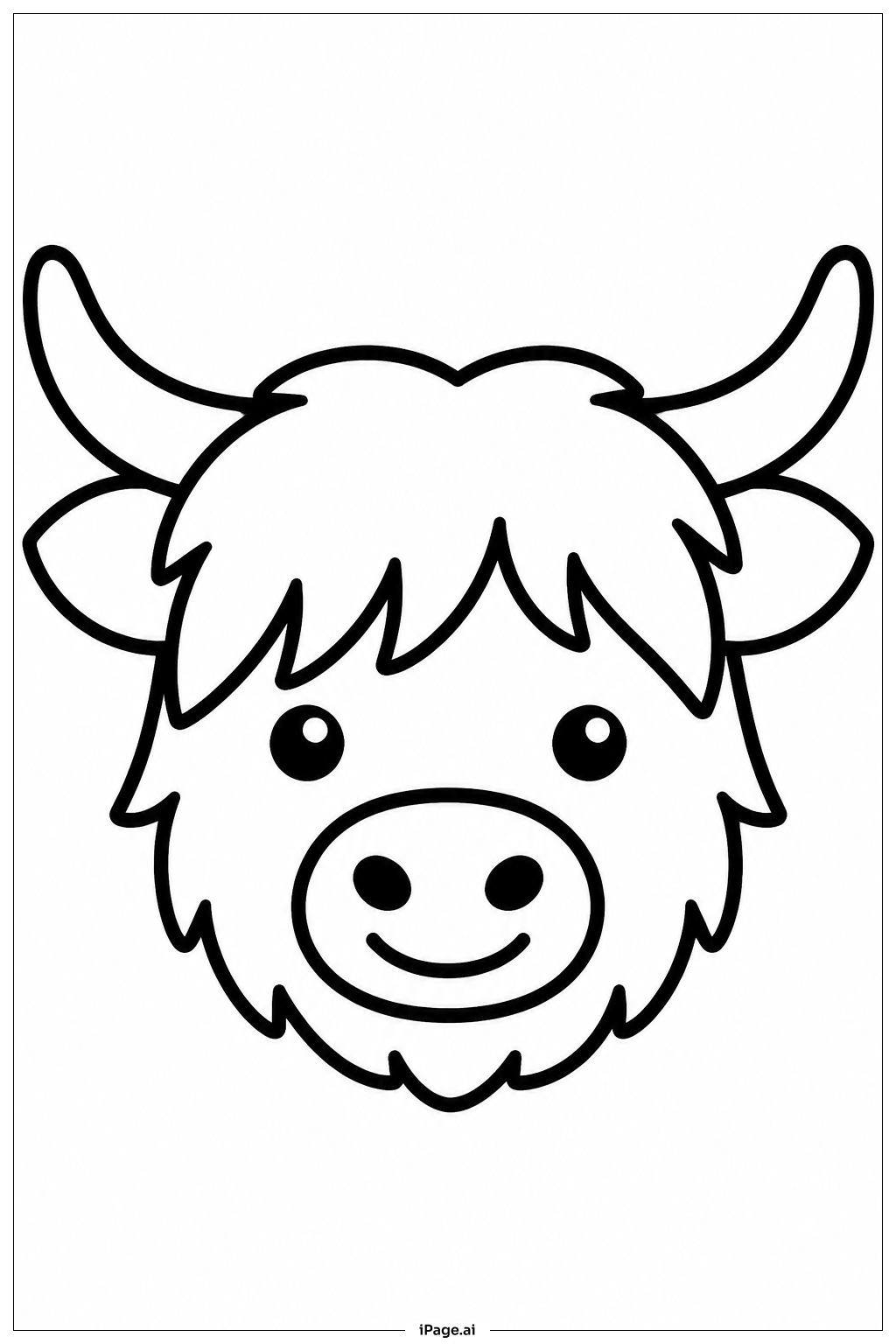
Coloring tips: How to color Highland Cow Gentle Eyes coloring page well?
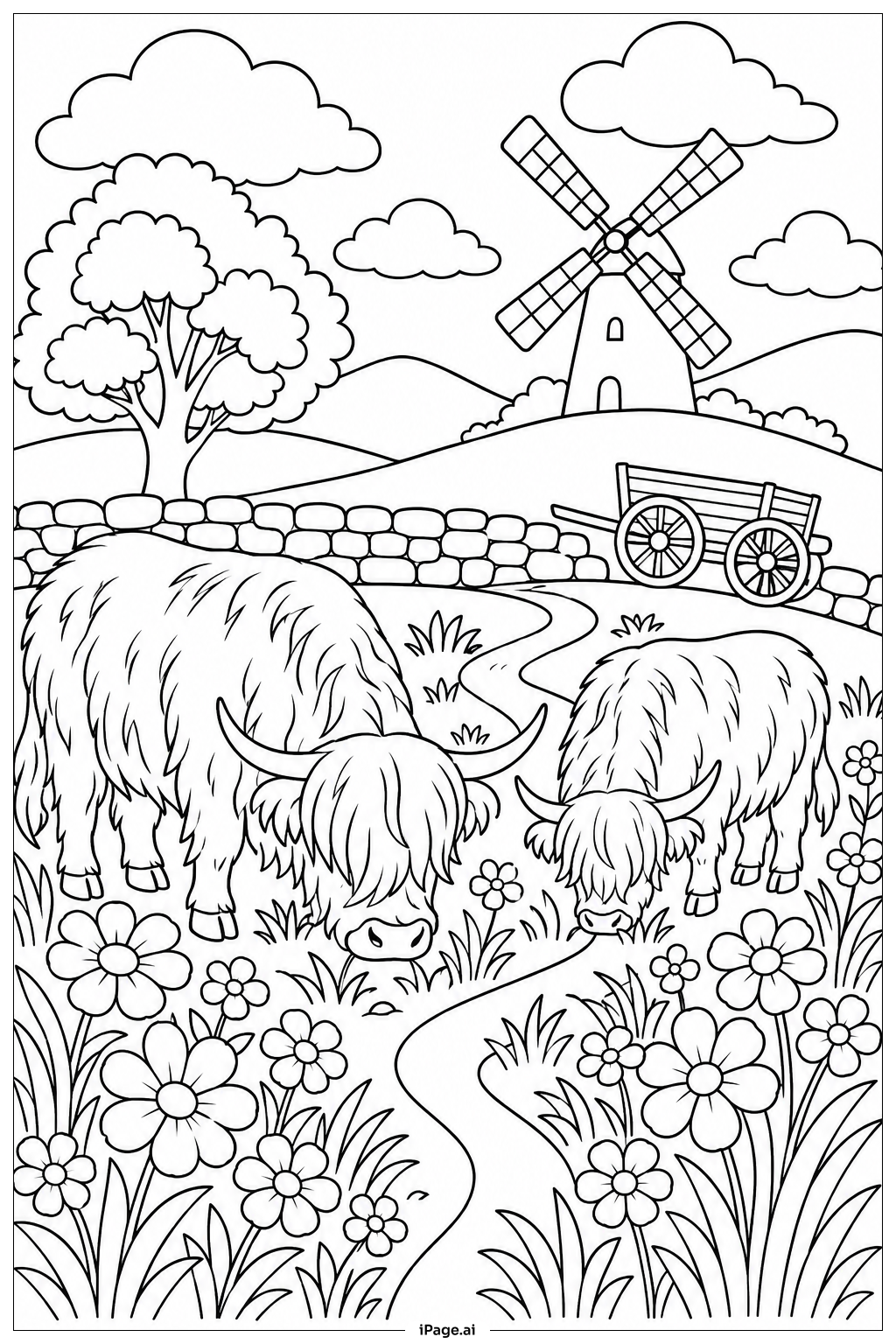
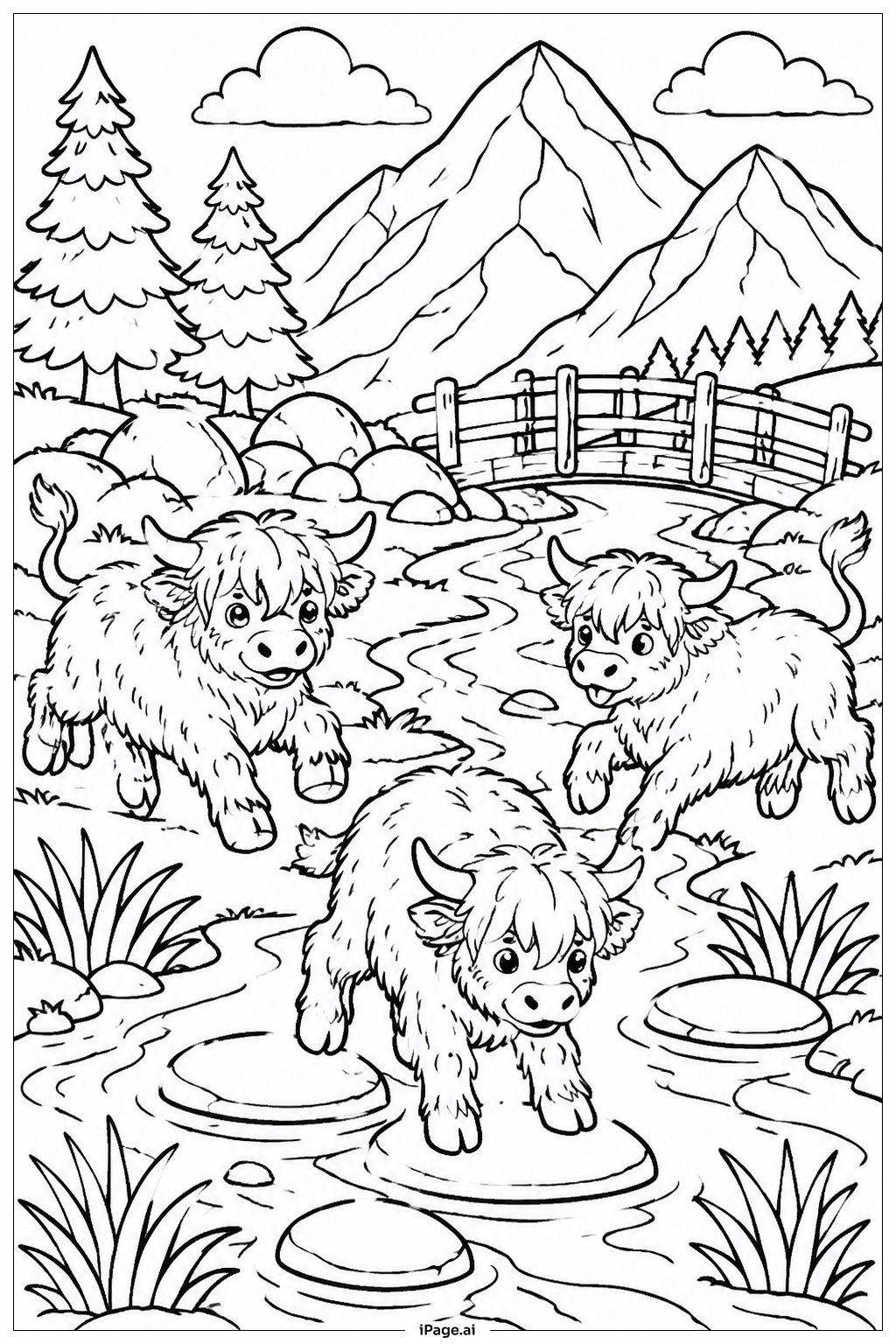
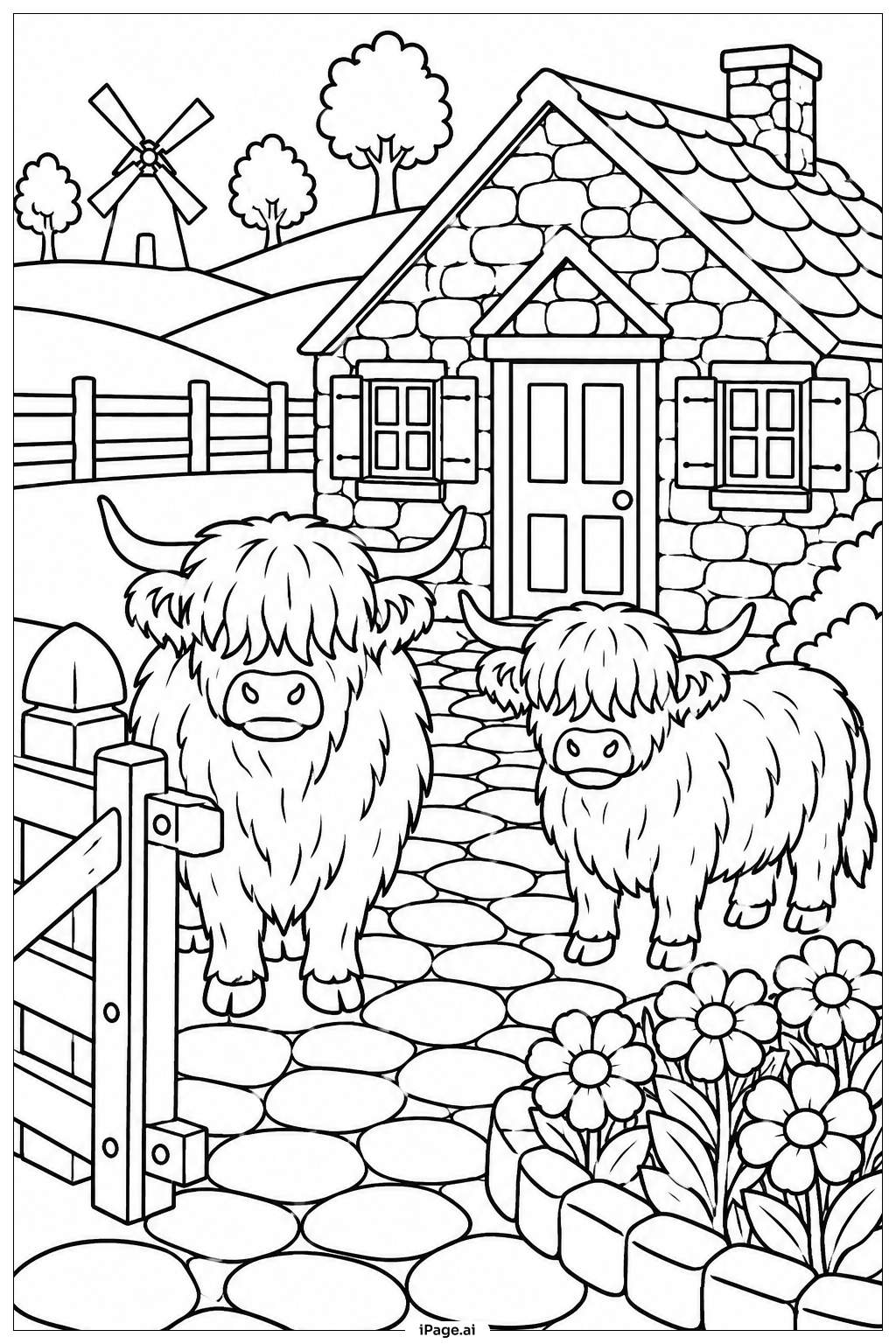
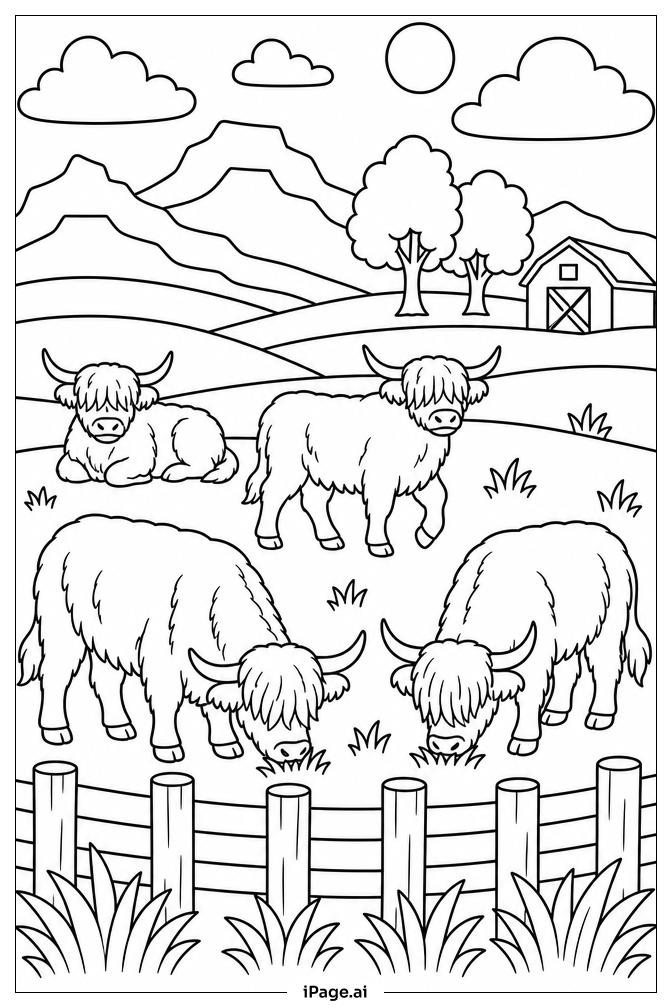
When coloring this Highland Cow, you might want to start with warm, earthy tones like shades of brown, tan, or reddish-orange to represent its thick fur. Use lighter yellows or creams to highlight softer, fluffy hair areas around the eyes and nose. The horns can be colored in light grey or pale ivory to keep a natural look. Try using darker browns or even black to add depth to the shadows in the fur. Feel free to use greens, blues, or purples in the background to make the warm colors of the cow stand out. If you want to add a playful touch, you can color the eyes softly with warm browns and add little white spots to show their gentle sparkle.
Coloring challenges: Which parts are difficult to color and need attention for Highland Cow Gentle Eyes coloring page?
- Capturing the thick and layered texture of the Highland Cow’s long fur can be tricky. The fur flows in different directions, so careful shading or coloring in strokes that show natural hair movement is needed.
- The horns have a smooth, curved surface that requires gradual shading to look three-dimensional and realistic.
- Drawing attention to the gentle eyes without making them look flat means balancing the dark pupils and light reflections carefully.
- Small detailed areas like the strands of hair over the forehead and ears require patience to color inside fine lines without overlapping.
- Maintaining the softness of the cow’s expression while coloring in strong natural colors can be challenging; using blends and gradients helps without overpowering the gentle look.
Benefits of coloring books: Advantages of drawing Highland Cow Gentle Eyes coloring page
Coloring this Highland Cow image helps children and adults improve their attention to detail, especially in replicating natural textures like fur. It encourages patience and fine motor skills when working with small and flowing lines. The calm expression of the cow inspires relaxation and mindfulness during coloring time. Choosing colors and shading helps develop creativity and understanding of light and shadow. Additionally, engaging with this image connects colorers to nature and farm life, fostering appreciation for animals and rural beauty.