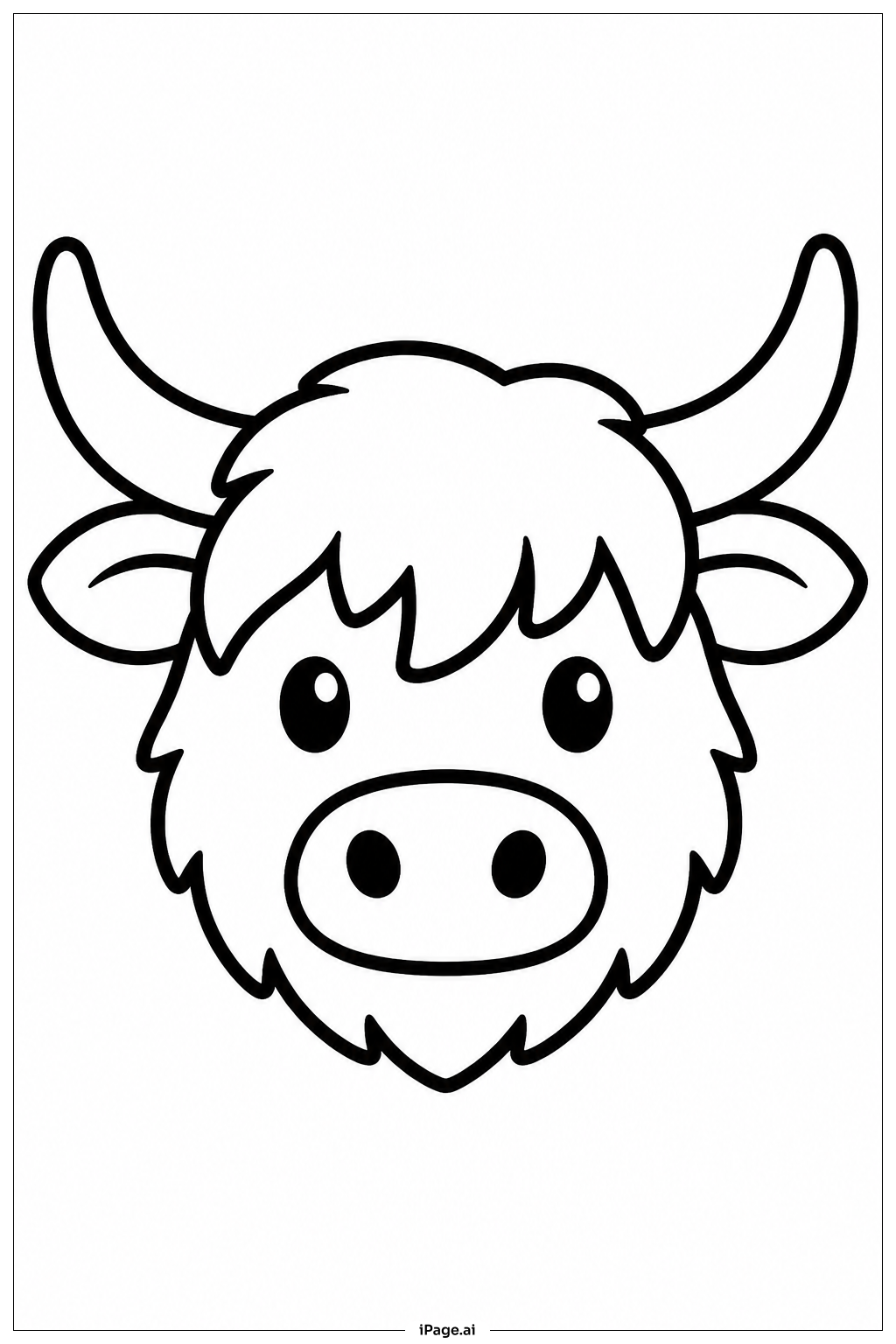
Coloring tips: How to color Highland Cow Face coloring page well?
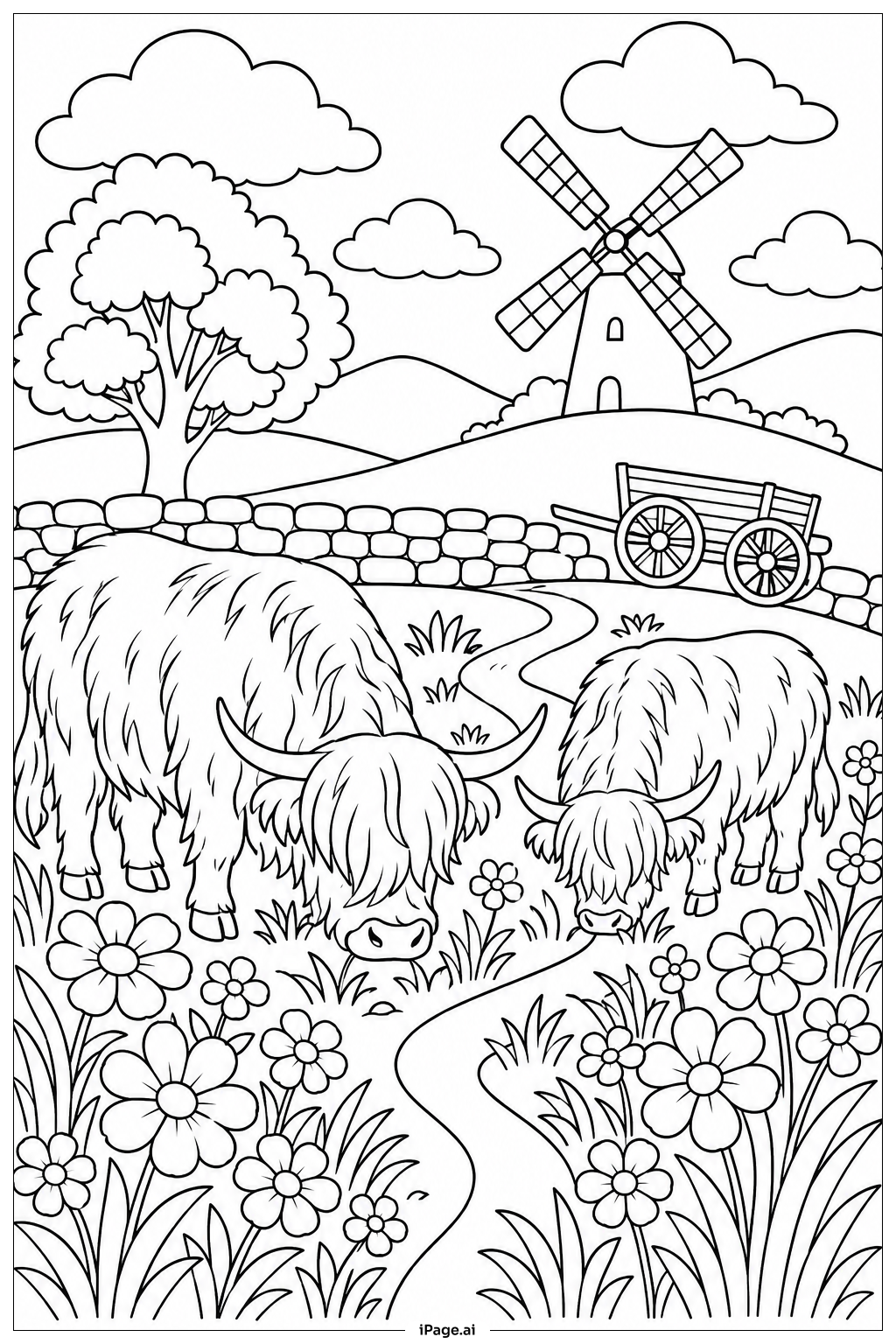
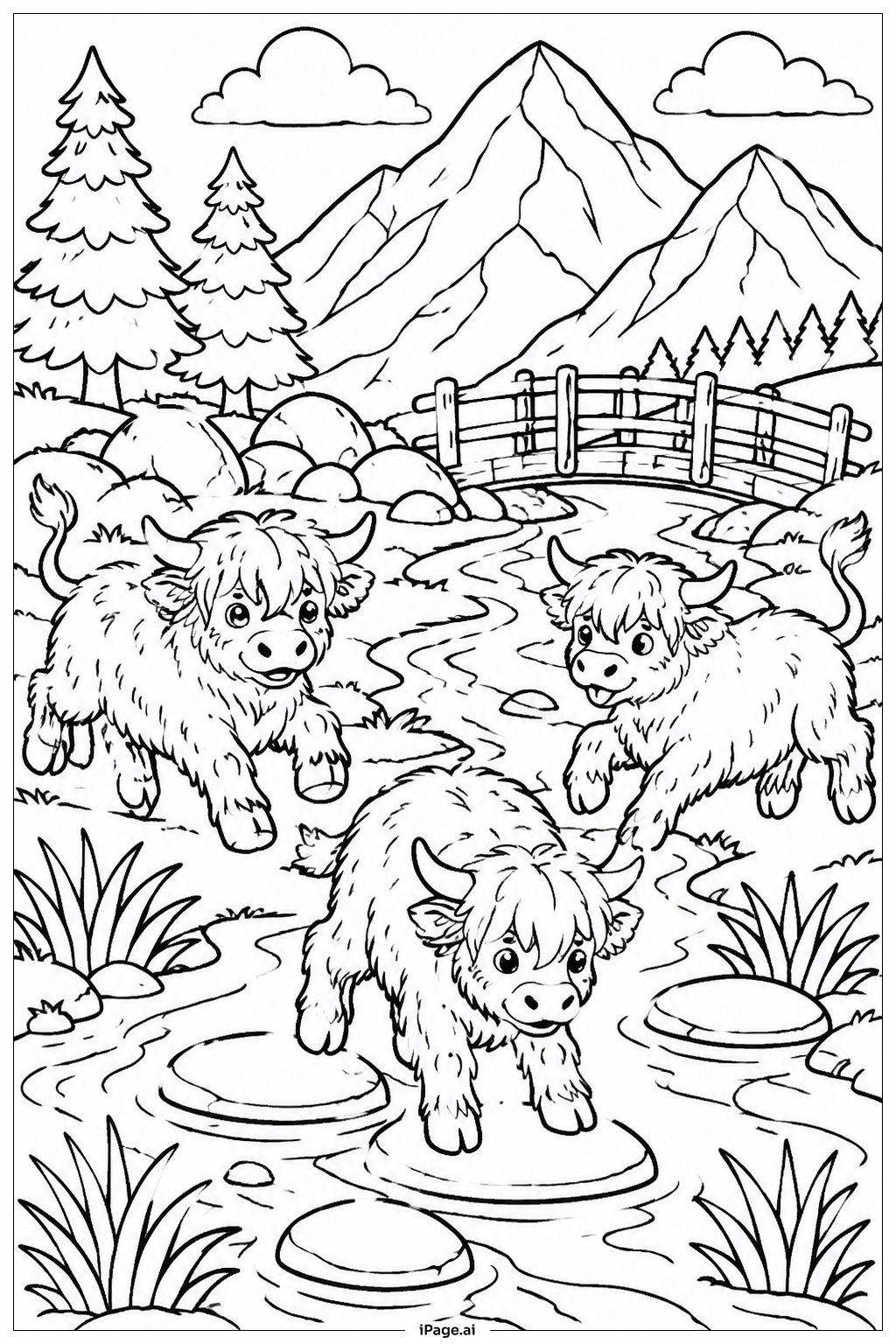
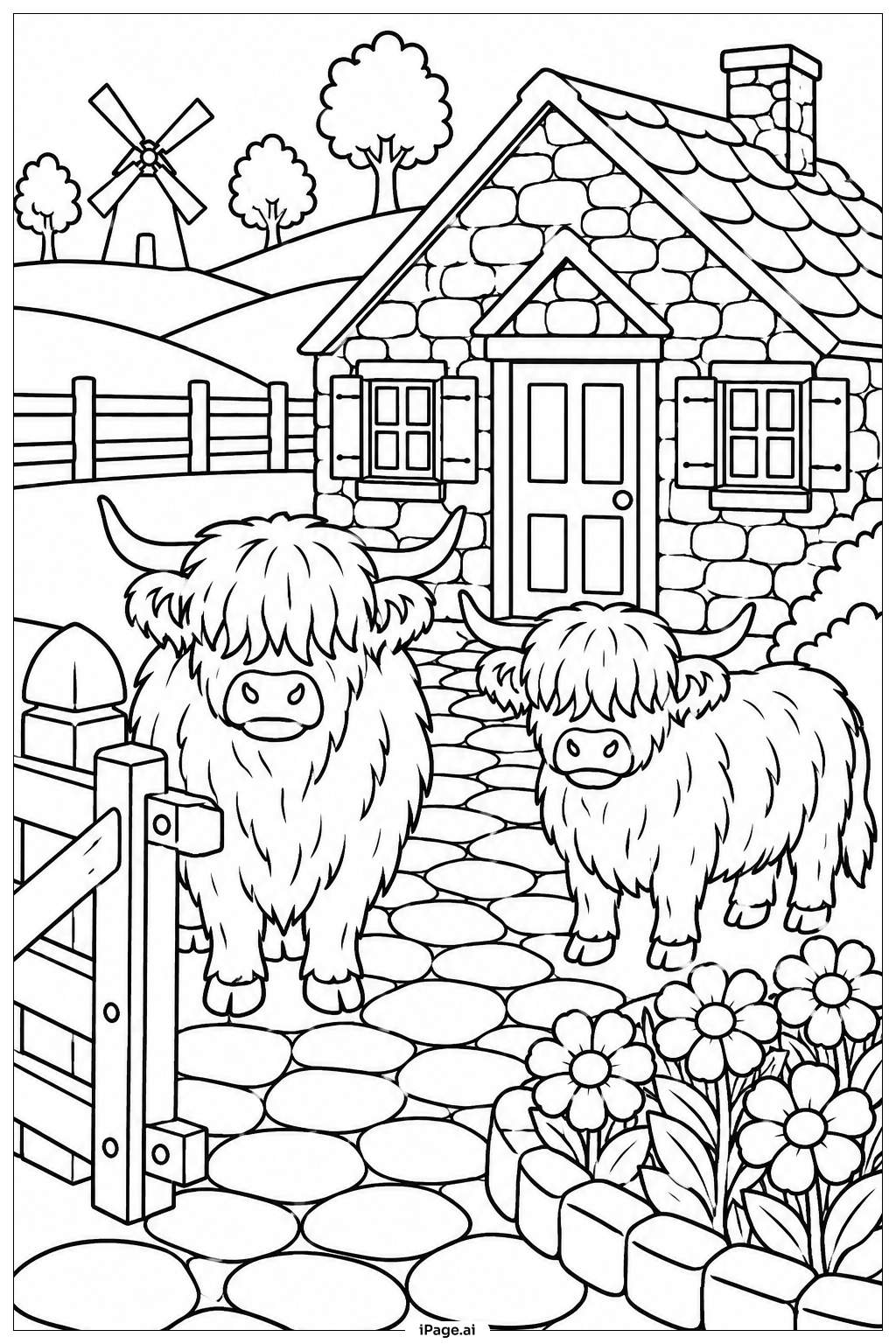
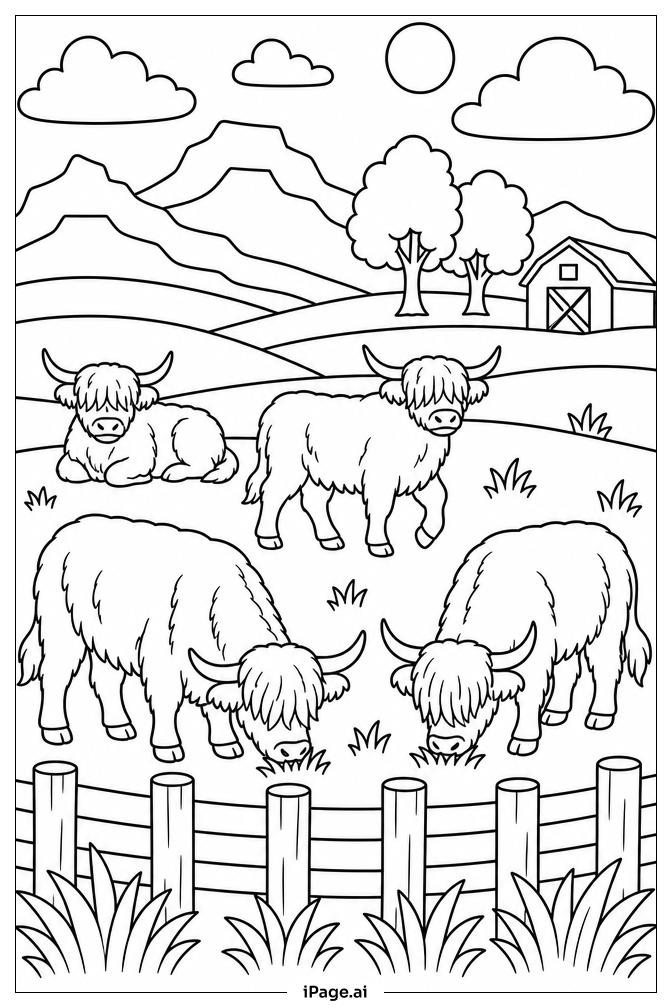
For this Highland Cow Face, you can use warm and natural shades to show its furry texture. Try coloring the hair in rich browns or reddish tones, or get creative with softer cream or golden colors. The horns can be colored in light gray or beige to give them a smooth, hard look. Don’t be afraid to add depth by using darker browns or oranges to shade the fur around the eyes and cheeks. You might also add a light pink or gray for the nose to make it stand out. Since the hair covers the eyes partly, you could even have fun imagining colorful eyes peeking through. Feel free to use crayons, colored pencils, or markers to explore different textures and layers.
Coloring challenges: Which parts are difficult to color and need attention for Highland Cow Face coloring page?
- The Highland Cow’s face has many fine lines representing the long, shaggy hair. Carefully coloring between these lines without going over can be challenging, especially for younger children.
- The curved horns have subtle shading that can be tricky to replicate to make them look three-dimensional and natural.
- The fringe covering the eyes means there are overlapping hair strands, requiring attention to detail to make the layers look realistic.
- Balancing the coloring between light and dark tones on the fur might be difficult but is important to show depth and texture.
- Maintaining clean edges along the cow’s broad nose and cheeks while shading the hair can test fine motor skills and patience.
Benefits of coloring books: Advantages of drawing Highland Cow Face coloring page
Coloring this Highland Cow Face helps children develop fine motor skills as they work carefully within detailed lines and subtle shapes. It encourages observation skills by focusing on the different textures of fur and horns. Using a range of warm colors allows kids to practice blending and shading, improving their understanding of color theory and depth. Additionally, coloring this calm animal image can have a soothing effect, promoting patience and focus. It also sparks creativity and imagination by allowing children to choose natural or imaginative colors, making the activity both educational and fun.