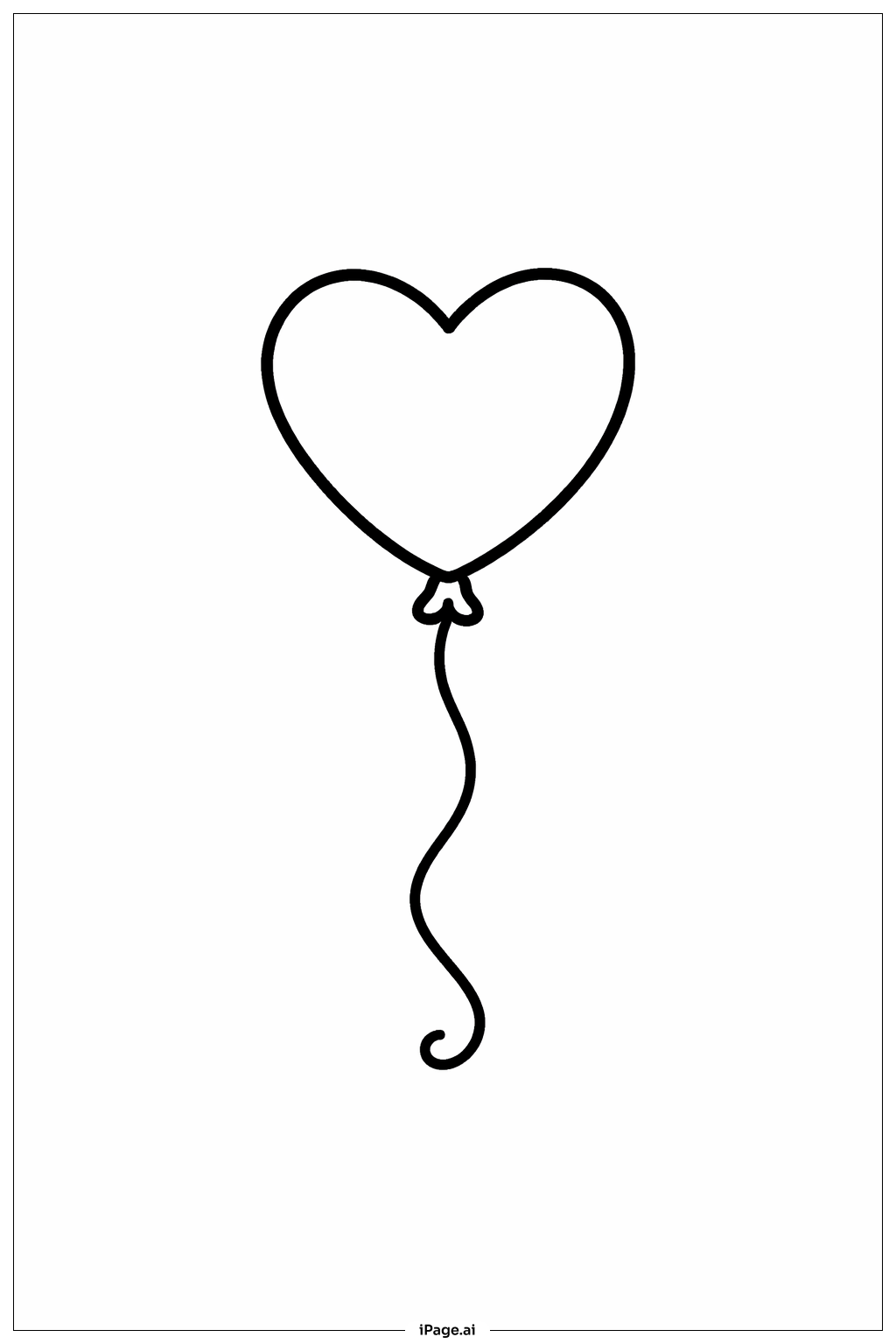
Coloring tips: How to color Heart Balloon coloring page well?
For the heart balloon, try using bright red or pink shades to create a classic romantic look. You could also experiment with purple, magenta, or even rainbow gradients for a more playful effect. Consider adding lighter tones in the center and darker shades around the edges to create dimension and make the balloon look three-dimensional and shiny. For the ribbon, use a complementary color like gold, silver, or white to make it stand out. You might also try matching the ribbon to the balloon or using a contrasting color like blue or yellow. Add small highlights with white or light colors to create a glossy, reflective balloon surface. For a festive touch, consider adding patterns like stripes, dots, or sparkles inside the heart shape. The background can be left white or filled with soft pastel colors to make the balloon pop forward.
Coloring challenges: Which parts are difficult to color and need attention for Heart Balloon coloring page?
• Smooth Color Blending: The large surface area of the heart balloon requires even color application to avoid streaks or patches. Children may find it challenging to maintain consistent pressure and achieve smooth gradients when trying to create a shiny, three-dimensional effect. Practicing gentle, overlapping strokes will help develop better coloring control and patience.
• Ribbon Curves and Spirals: The curling ribbon features multiple loops and twists that can be tricky to color without going outside the lines. The narrow spaces between the ribbon curves require careful hand control and precision. Young colorists might struggle with keeping colors within these small sections, making it an excellent exercise for improving fine motor skills and hand-eye coordination.
• Creating Realistic Shine: Adding highlights and shadows to make the balloon look glossy and dimensional requires understanding where light would naturally hit the surface. Children need to plan where to leave lighter areas or add white highlights before coloring, which involves spatial thinking and planning ahead. This teaches color theory and how light interacts with objects.
• Color Selection and Harmony: Choosing colors that work well together for the balloon and ribbon can be challenging. Understanding which colors complement or contrast effectively requires some knowledge of color relationships. This provides an opportunity to learn about warm and cool colors, complementary pairs, and how different combinations create different moods and visual effects.
Benefits of coloring books: Advantages of drawing Heart Balloon coloring page
Coloring this heart balloon image helps children develop important fine motor skills through controlling crayons or markers within the lines, especially around the curved edges and spiral ribbon. It encourages creativity as children choose their own color combinations and decide whether to create realistic or imaginative effects. The simple yet appealing design builds confidence, as it is achievable for various skill levels while still offering room for artistic expression. Working on the smooth surfaces teaches color blending techniques and patience. The heart shape naturally connects to themes of love, kindness, and celebration, making it emotionally engaging. This image also provides a calming, focused activity that can help reduce stress and improve concentration. Children learn about creating dimension through shading and highlights, developing their understanding of light and form while having fun with a joyful, uplifting subject.