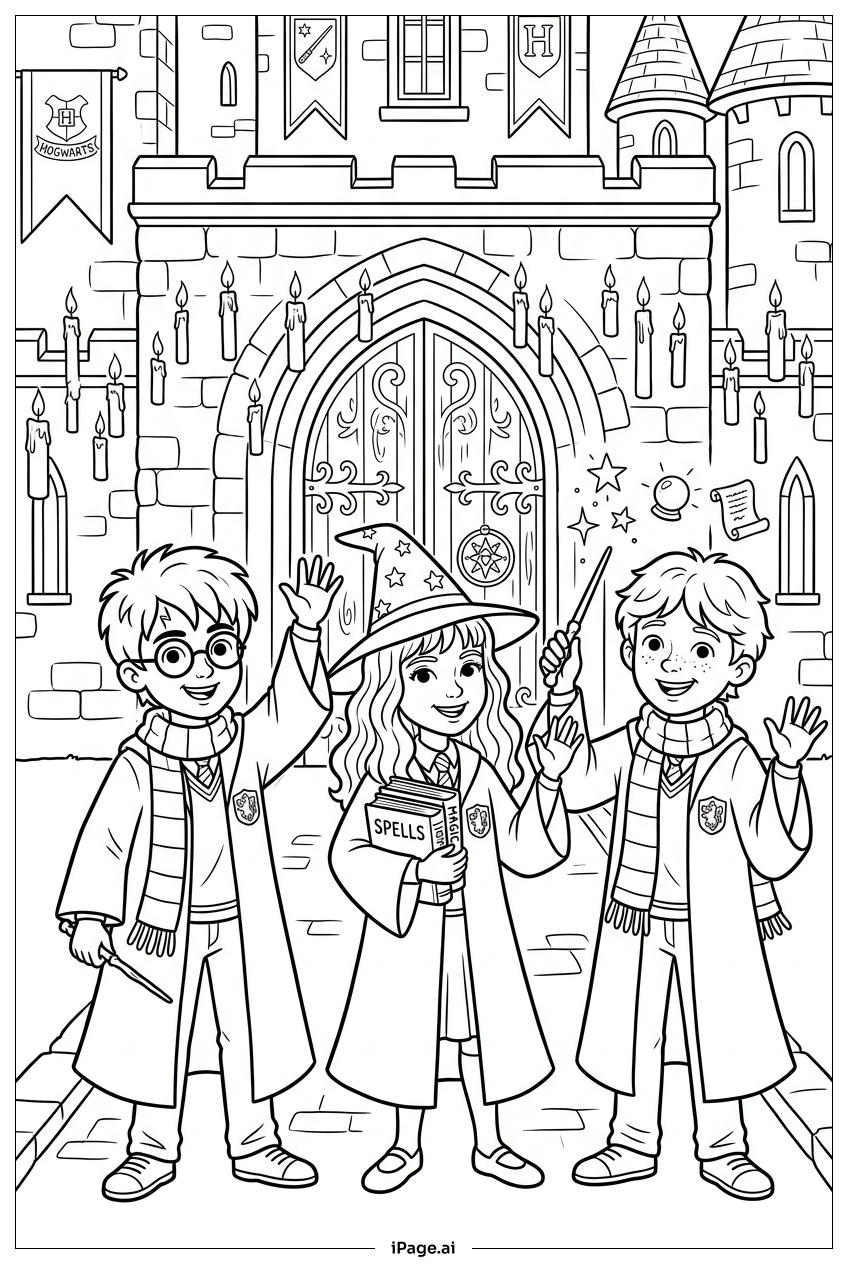
Coloring tips: How to color Harry Potter Waving Outside Hogwarts Grand Doors coloring page well?
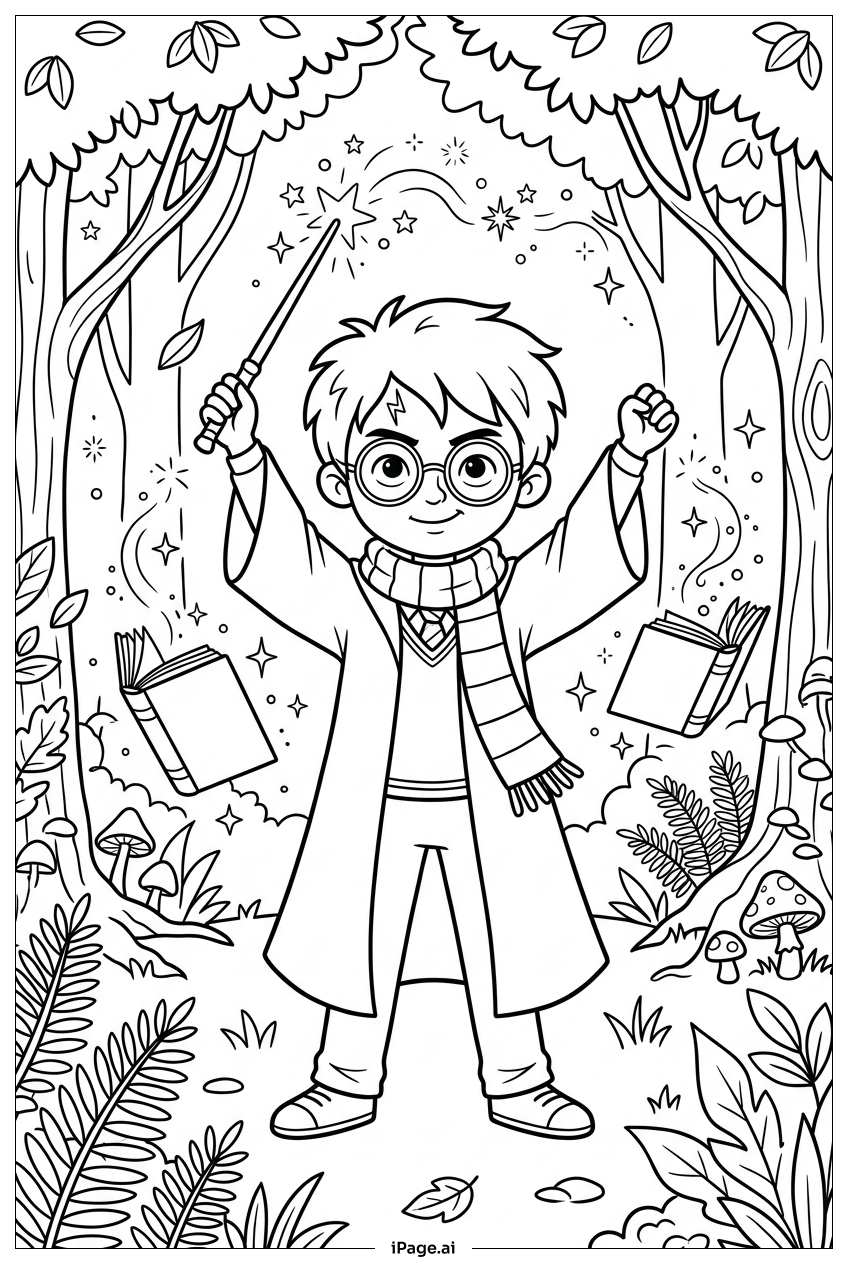
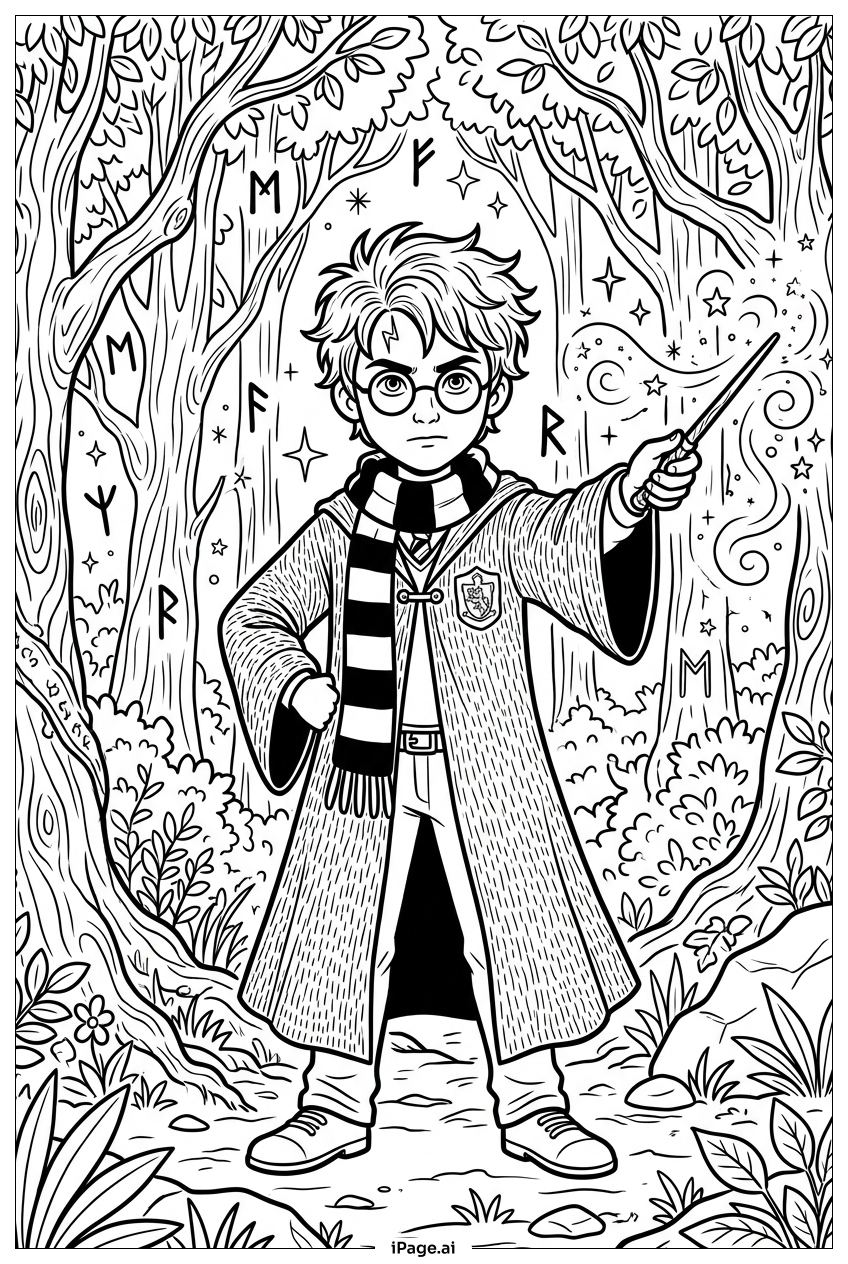
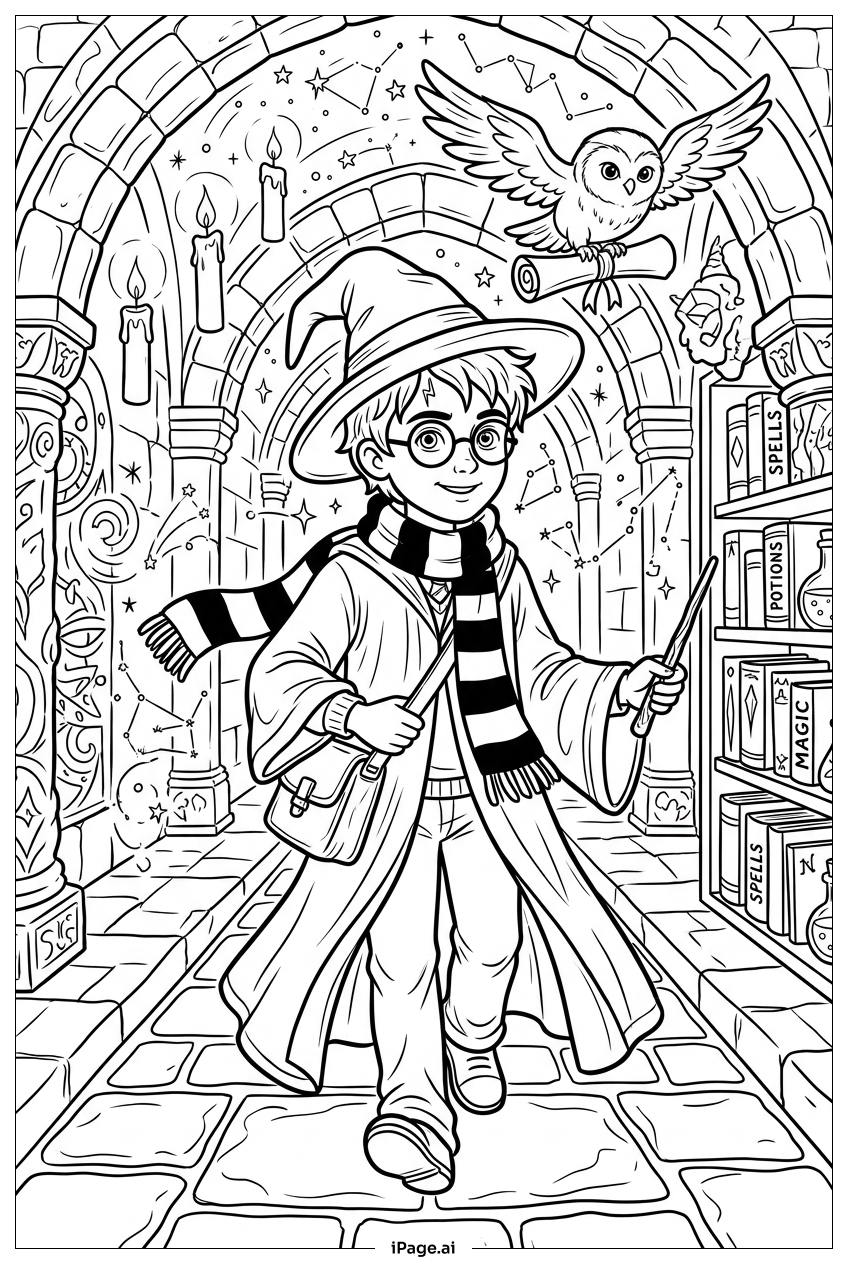
You can use classic colors to bring this scene to life. Color Harry’s robe black with a red and gold Gryffindor scarf or tie. His hair is dark brown, and his skin tone can be light or medium depending on your preference. For the Hogwarts doors, choose a rich dark brown to show the wood, and add silver or gold accents for the metal details. The stone walls and stairs can be gray with hints of mossy green for an aged look. Use a soft blue or gray for the sky to give a magical but calm atmosphere. Feel free to add colorful magic sparkles around Harry’s wand or hand to show he’s casting a spell. Bright colors will make the scene lively and engaging for any young colorer.
Coloring challenges: Which parts are difficult to color and need attention for Harry Potter Waving Outside Hogwarts Grand Doors coloring page?
• Intricate Door Details: The grand doors have many fine patterns and panels that require careful coloring to highlight their depth and design.
• Facial Features: Because Harry’s face is key to recognizing him, staying inside the lines for his glasses, eyes, and smile can be a bit tricky.
• Contrasting Textures: It can be challenging to show the difference between smooth surfaces like Harry’s robes and rough stone steps or walls using just colors.
• Shadows and Highlights: Adding shading to the folds in Harry’s clothes and the stone steps involves subtle blending techniques.
• Background Complexity: The castle towers and sky have detailed parts that may require patience to color neatly without smudging or overlapping.
Benefits of coloring books: Advantages of drawing Harry Potter Waving Outside Hogwarts Grand Doors coloring page
Coloring this image helps develop fine motor skills as children work on small details like Harry’s face and the ornate doors. It encourages focus and patience, especially when carefully filling in intricate patterns. The scene also fuels imagination by connecting color choices with storytelling about the magical world of Hogwarts. Kids can experiment with shades and textures, improving color awareness and creativity. Moreover, coloring a familiar and beloved character like Harry Potter can increase engagement and motivation, making it a fun learning activity. Overall, this image supports both artistic growth and a sense of connection to a magical story.