Coloring tips: How to color Harry Potter Enjoying Garden Study With Friends coloring page well?
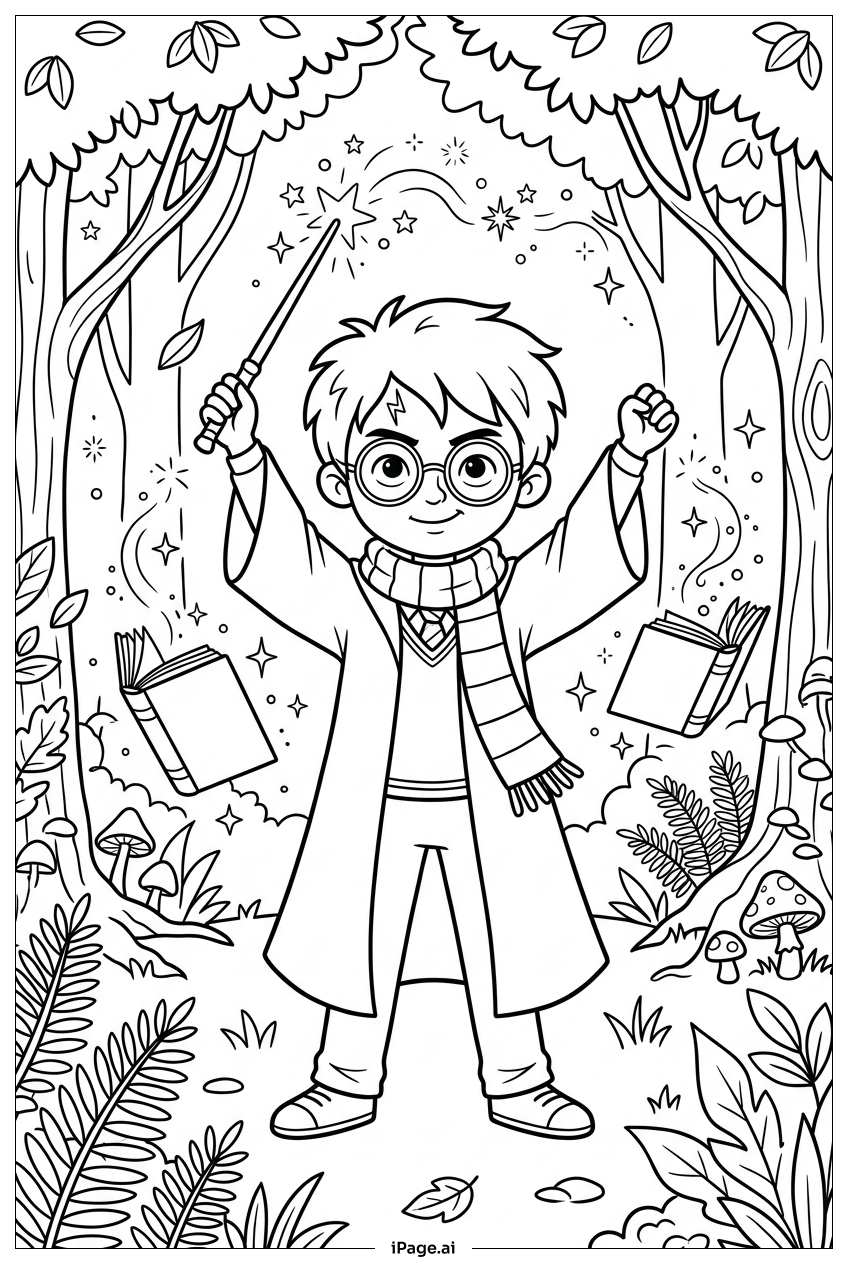
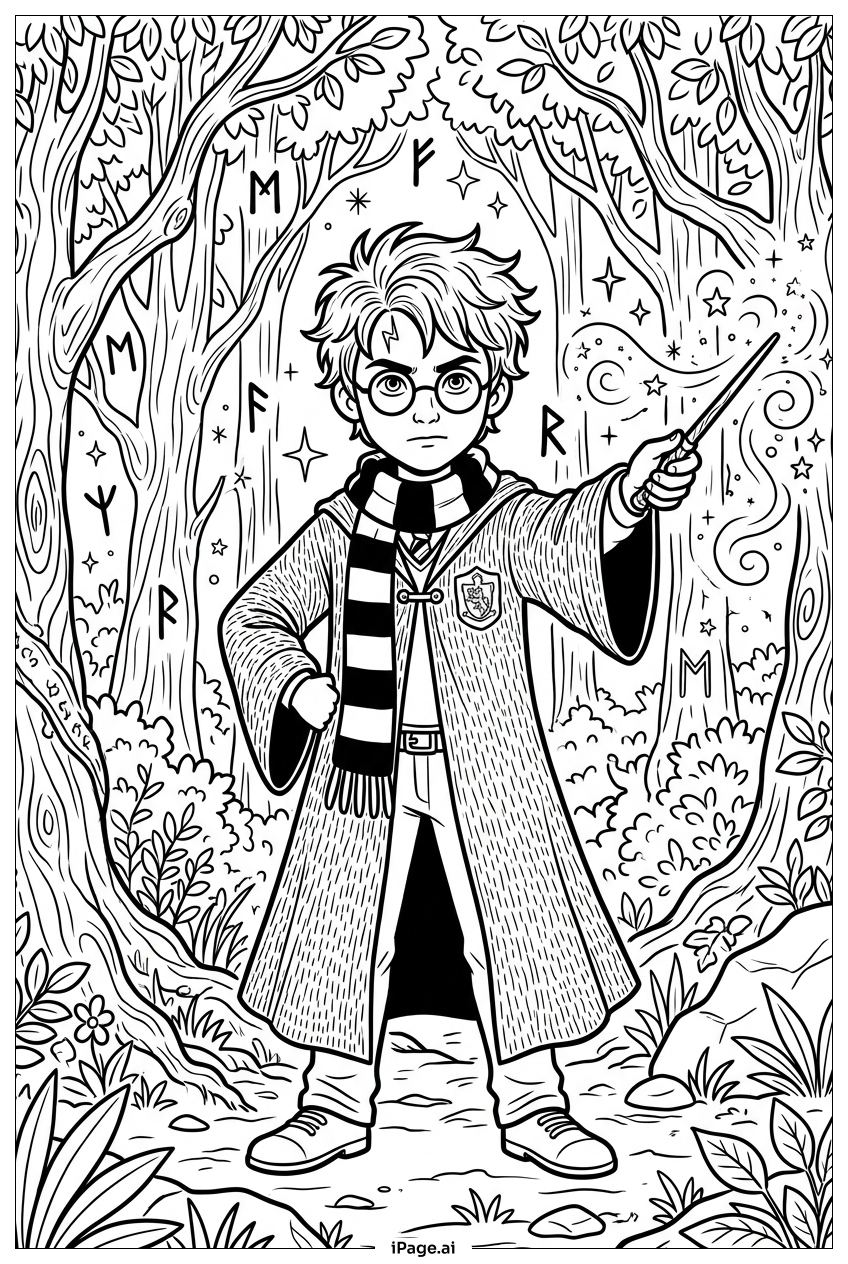
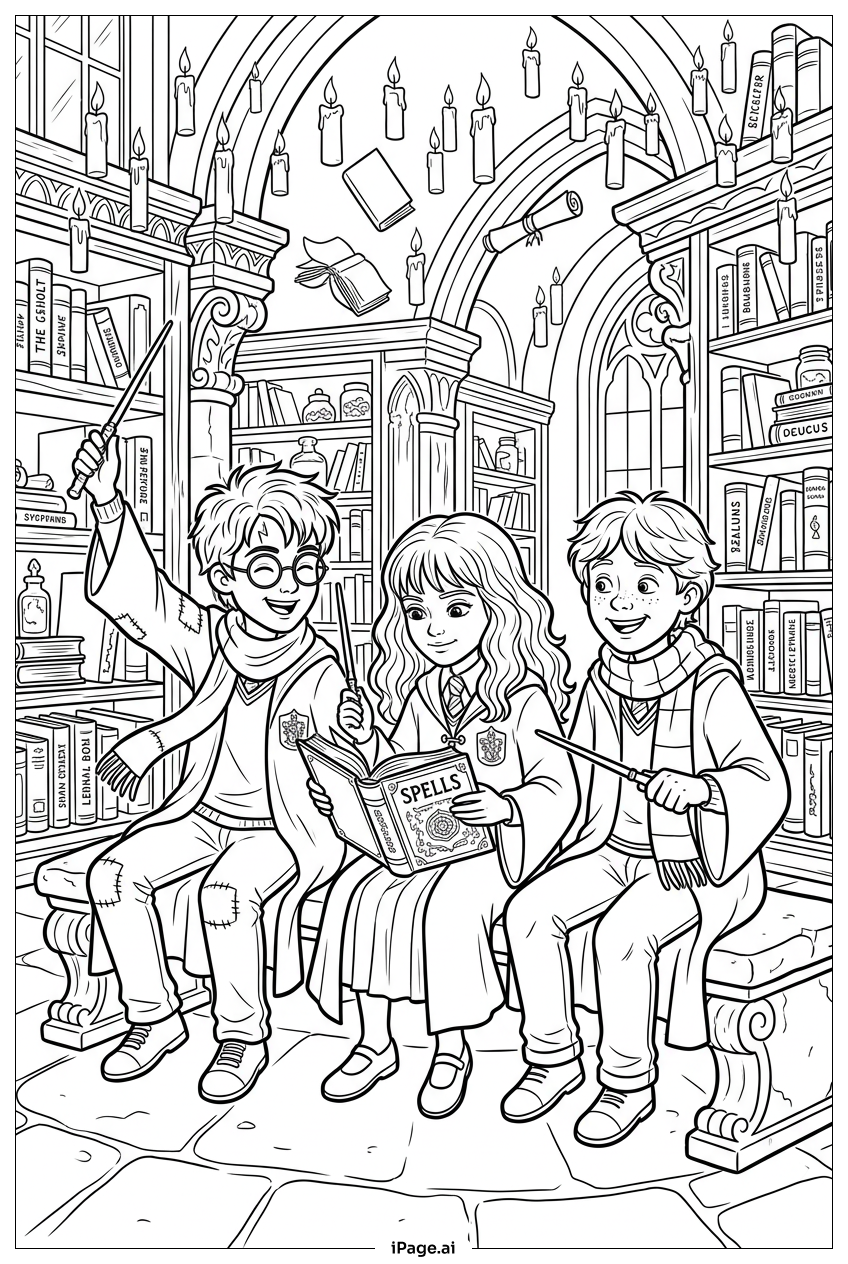
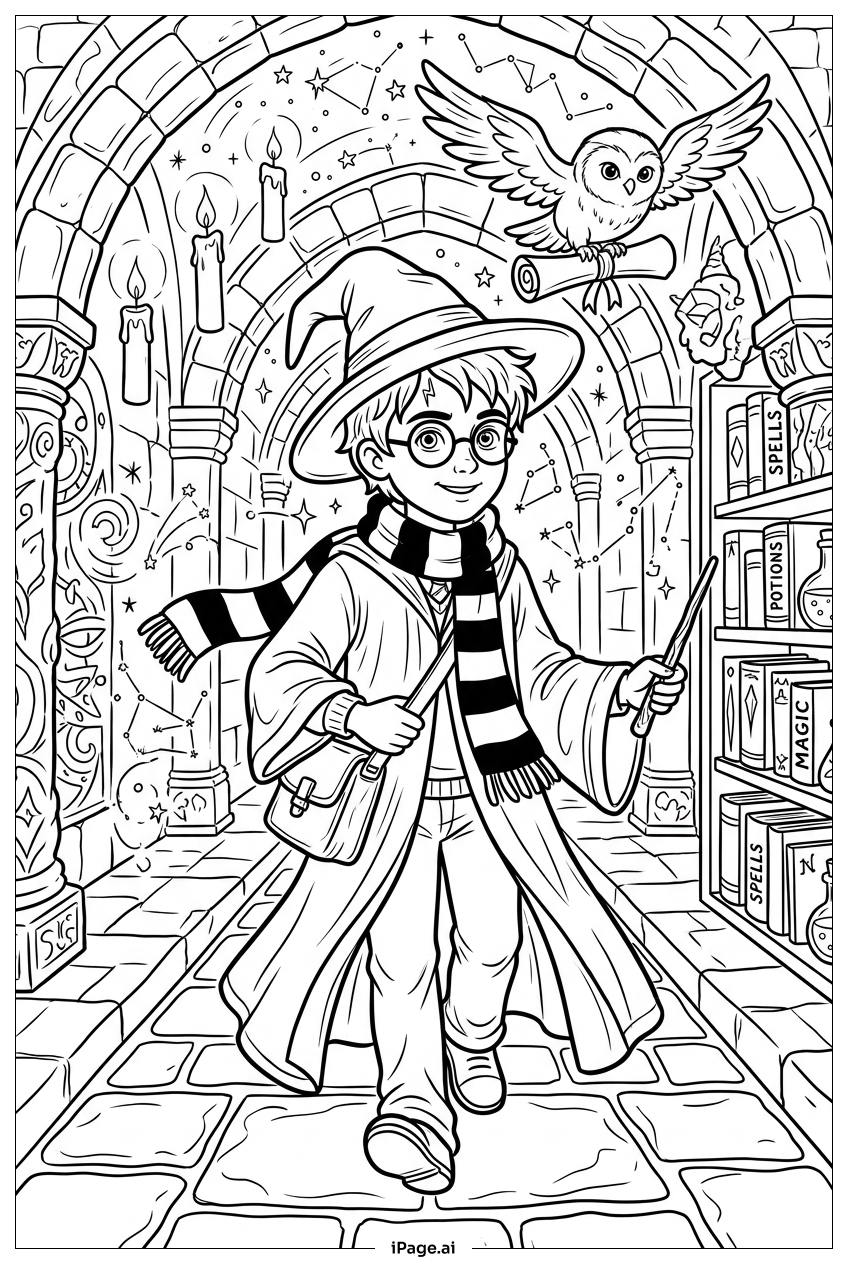
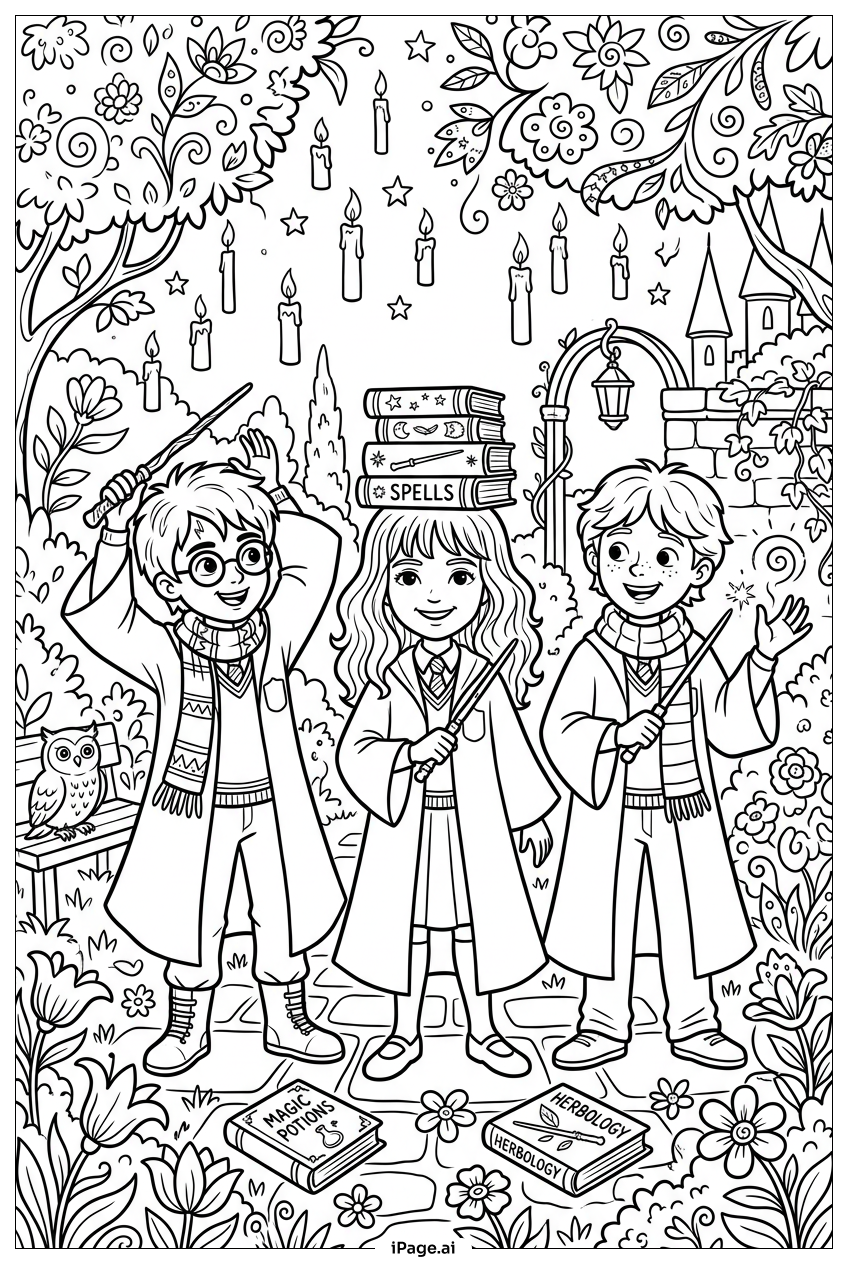
Start with the characters' skin tones using soft peach or warm tan shades, then move on to their Hogwarts robes. Harry looks great in deep black robes with a hint of dark navy. Give Hermione warm brown hair and Ron his signature bright red locks. For the garden, use a rich variety of greens for the leaves and vines, and add pops of color with purple, yellow, and pink flowers. The magical plants can have unusual colors like teal, violet, or glowing gold to give them a fantastical feel. Color the books in earthy tones like brown, red, and tan, with golden lettering on the spines. Use warm amber and cream tones for the parchment scrolls. The owl can be colored in soft white, grey, or brown. Let the sky peek through in a gentle light blue. Don't be afraid to add your own magical details, like sparkling stars or glowing runes on the pages. Take your time with each section and enjoy the process of bringing this cozy wizarding scene to life.
Coloring challenges: Which parts are difficult to color and need attention for Harry Potter Enjoying Garden Study With Friends coloring page?
• Character Facial Details: Harry's round glasses, lightning bolt scar, and expressive face require careful attention. Small features like these demand a fine-tipped tool such as a thin marker or colored pencil. Rushing through facial areas can cause colors to bleed into each other, so take your time and work slowly around these precise details.
• Layered Clothing and Robes: Each character wears robes with folds, creases, and layered fabric. Showing depth in fabric means using at least two shades of the same color — a lighter tone for highlights and a darker tone for shadows. Blending these smoothly takes patience and practice, especially for younger colorists who are still learning shading techniques.
• Dense Garden Foliage: The background is filled with overlapping leaves, twisting vines, and clusters of flowers. Keeping each plant element visually distinct requires using different shades of green and carefully staying within small, irregular shapes. Without attention, the garden section can look flat or muddy if similar colors are placed too close together.
• Magical Plant Variety: Some plants in the garden have unusual, fantastical shapes. Deciding on imaginative colors that still look believable within the scene is a creative challenge. Younger colorists may need guidance in choosing colors that stand out while still fitting harmoniously with the rest of the image.
• Small Prop Details: Objects like the wand, book spines, scroll edges, and the owl's feather textures are tiny and closely spaced. Coloring these small areas neatly without smudging or overlapping neighboring sections requires a steady hand and tools with fine, precise tips.
Benefits of coloring books: Advantages of drawing Harry Potter Enjoying Garden Study With Friends coloring page
Coloring this Harry Potter garden study scene offers a wonderful range of benefits for kids and fans of all ages. First, it sharpens fine motor skills. Carefully filling in small details like glasses, wand tips, and flower petals trains hand control and pencil grip, which are important skills for writing and drawing. Second, it encourages creativity. The magical garden setting invites colorists to make imaginative color choices, from glowing spell books to fantastical plants with impossible colors. This kind of open-ended creative decision-making builds confidence and self-expression. Third, it supports focus and concentration. Sitting quietly with a coloring page and working through each section helps children practice sustained attention, which is a valuable habit for school and learning. Fourth, it connects to a beloved story world. Engaging with familiar characters like Harry, Ron, and Hermione through art deepens emotional connection to the story and can inspire a love of reading and storytelling. Finally, it is simply relaxing and enjoyable. The peaceful garden setting, paired with the satisfying act of filling in color, creates a calming activity that reduces stress and provides a healthy screen-free break for both children and adults.