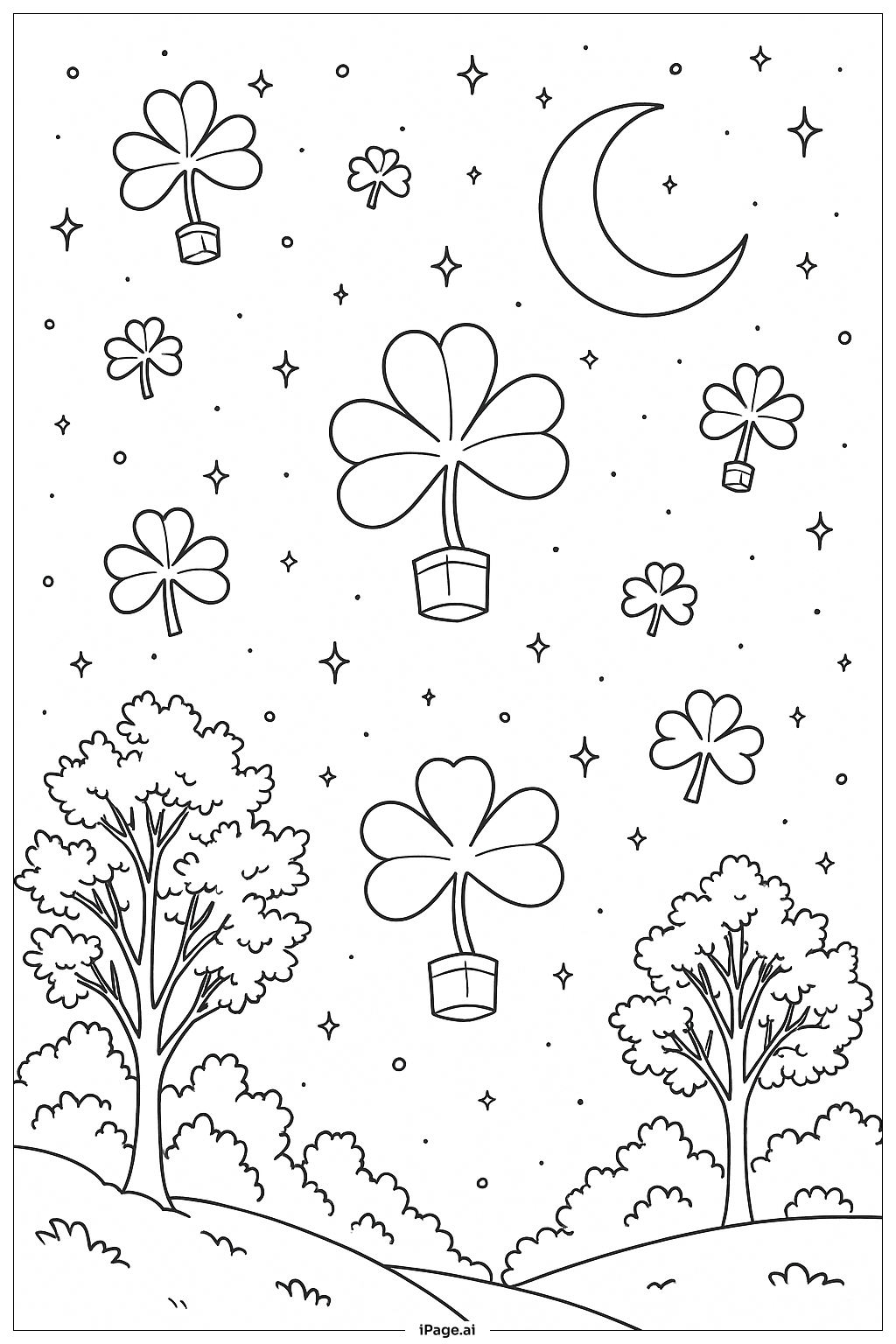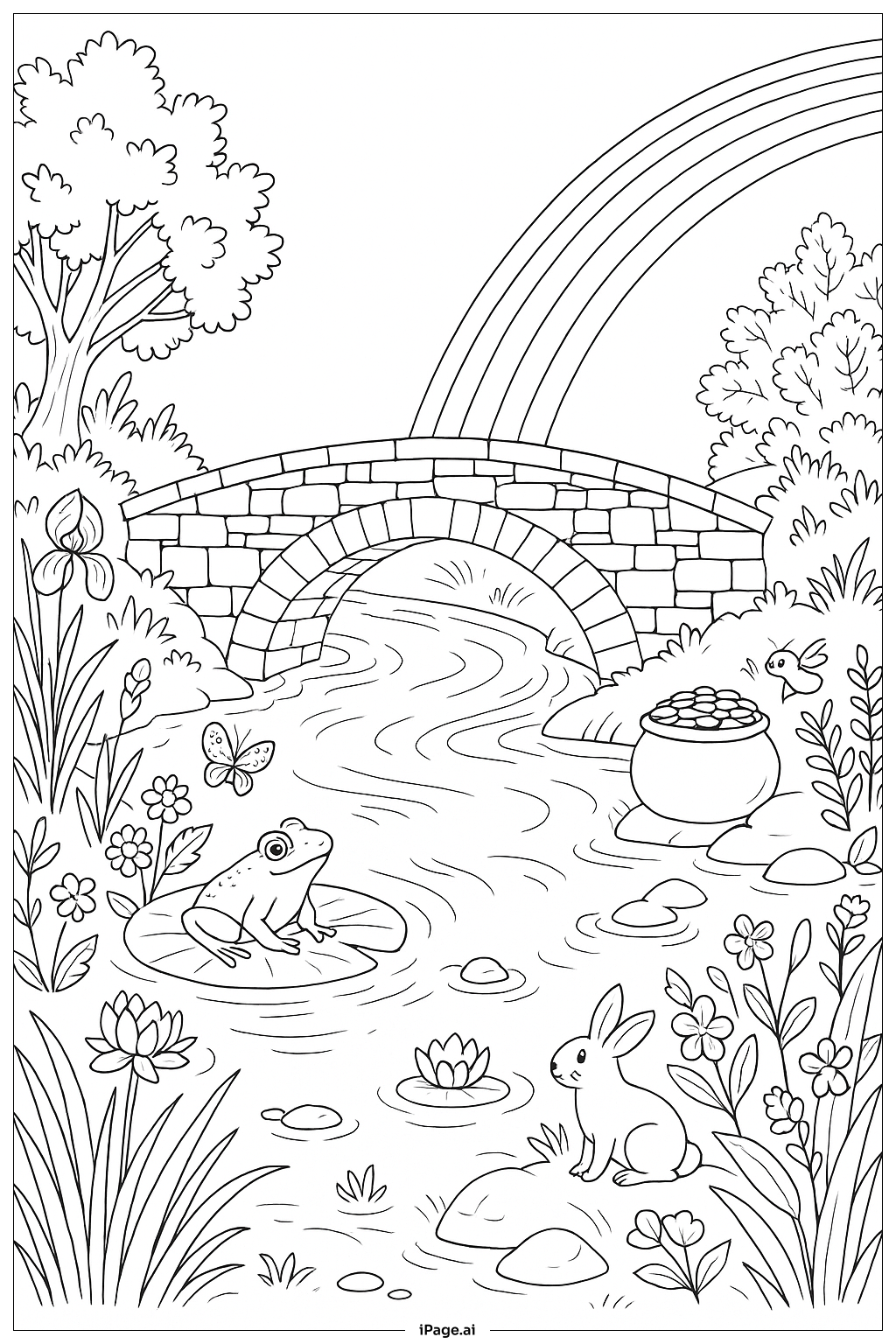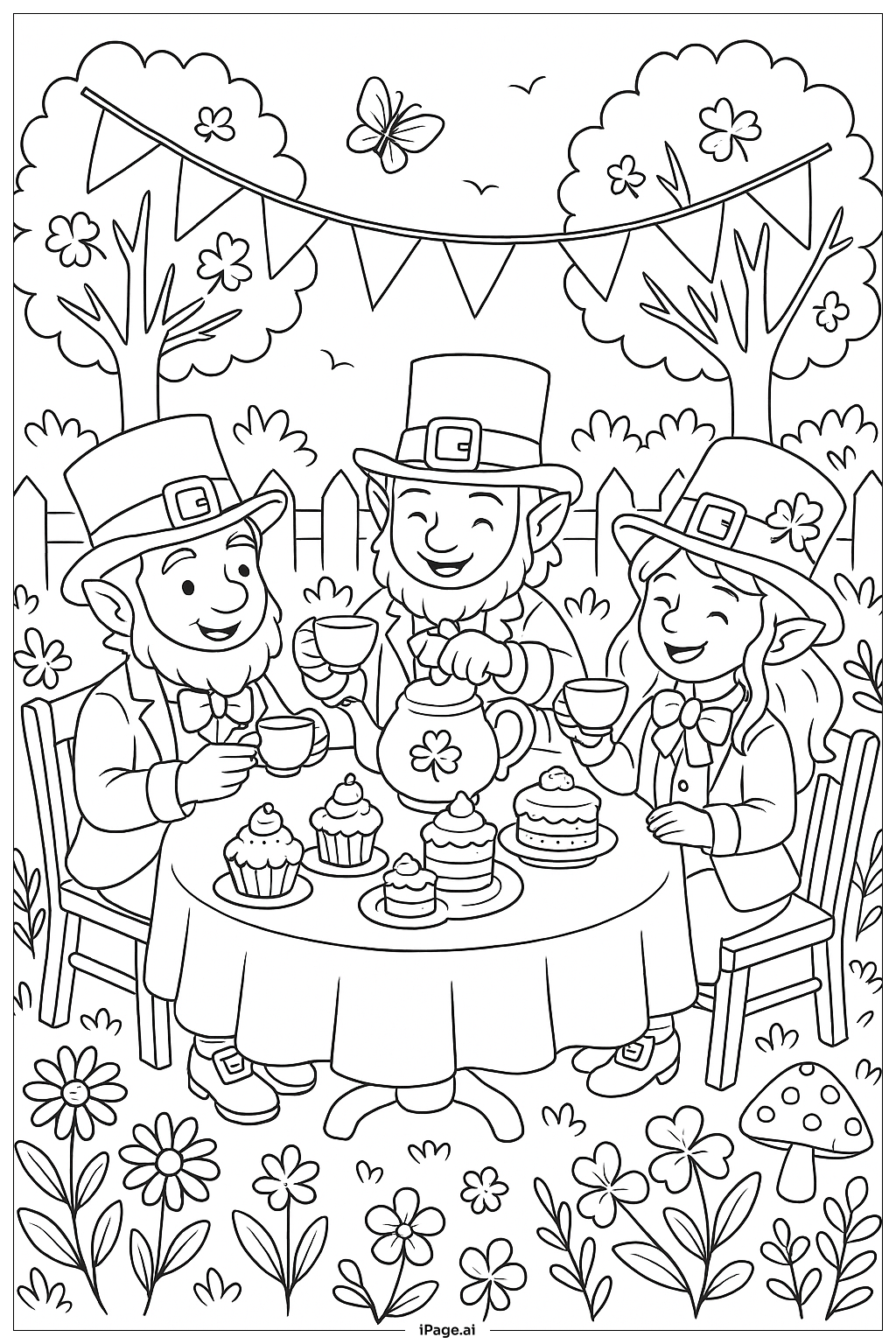
Coloring tips: How to color Happy St Patrick's Day Shamrock Single coloring page well?
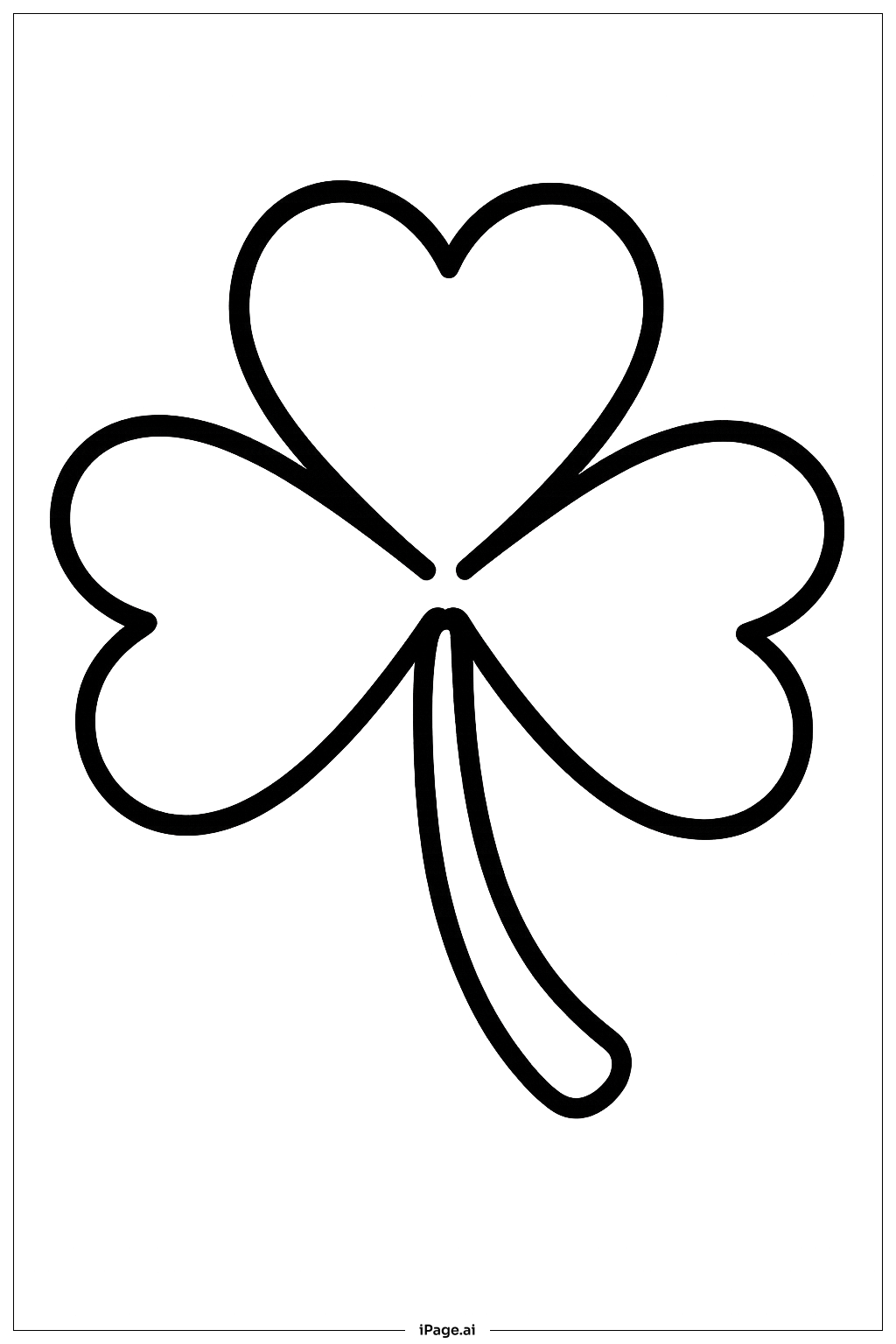
For this Happy St Patrick's Day shamrock, traditional bright green is the classic choice for the three leaves. Consider using different shades of green to add depth - a darker green for shadows along the edges and a lighter, almost lime green for highlights in the center of each leaf. You might add a yellow-green tone where light would naturally hit the shamrock. For a magical touch, try adding gradient effects by blending from dark to light green within each petal. The stem can be colored in a deeper forest green or brown for contrast. Don't forget to add small white highlights to make the shamrock look shiny and fresh. You could also outline the shamrock in gold or add sparkles around it to enhance the festive St Patrick's Day feeling. For a creative twist, some artists use emerald green with touches of blue.
Coloring challenges: Which parts are difficult to color and need attention for Happy St Patrick's Day Shamrock Single coloring page?
• Smooth Color Blending: Creating smooth transitions between different shades of green on each shamrock leaf can be challenging, especially when trying to achieve a natural gradient effect from dark to light. Children may find it difficult to blend colors without leaving visible lines or patches, requiring practice with gentle pressure and overlapping strokes to create professional-looking results.
• Staying Within Lines: The curved edges of the shamrock leaves require steady hand control and patience. Younger colorists might struggle to follow the smooth, rounded outlines without going outside the lines, particularly where the three leaves meet at the center. This demands concentration and fine motor skills that develop over time with practice.
• Consistent Pressure: Maintaining even pressure throughout the coloring process is essential to avoid streaky or uneven color coverage. Children often press too hard in some areas and too lightly in others, creating an inconsistent appearance. Learning to apply steady, moderate pressure across the entire shamrock takes practice and awareness.
• Adding Depth and Dimension: Understanding where to place shadows and highlights to make the shamrock look three-dimensional rather than flat requires spatial awareness. Deciding which parts should be darker and which lighter to create realistic depth can be confusing for younger artists who are still learning about light sources and shading techniques.
Benefits of coloring books: Advantages of drawing Happy St Patrick's Day Shamrock Single coloring page
Coloring this Happy St Patrick's Day shamrock offers wonderful benefits for young artists. It helps develop fine motor skills and hand-eye coordination as children carefully color within the curved lines of each leaf. The simple yet engaging design builds confidence, especially for beginners who can complete it successfully and feel proud of their work. This activity encourages focus and concentration, helping children practice patience and attention to detail. It's also a perfect opportunity to learn about Irish culture and St Patrick's Day traditions while being creative. The shamrock's symmetrical shape teaches children about balance and patterns in nature. Experimenting with different shades of green promotes color recognition and understanding of how colors work together. This calming activity reduces stress and provides a peaceful break from busy activities. Completing the coloring page gives children a sense of accomplishment and creates a festive decoration they can display proudly during St Patrick's Day celebrations.