Coloring tips: How to color Happy St Patrick's Day Leprechaun Workshop Interior coloring page well?
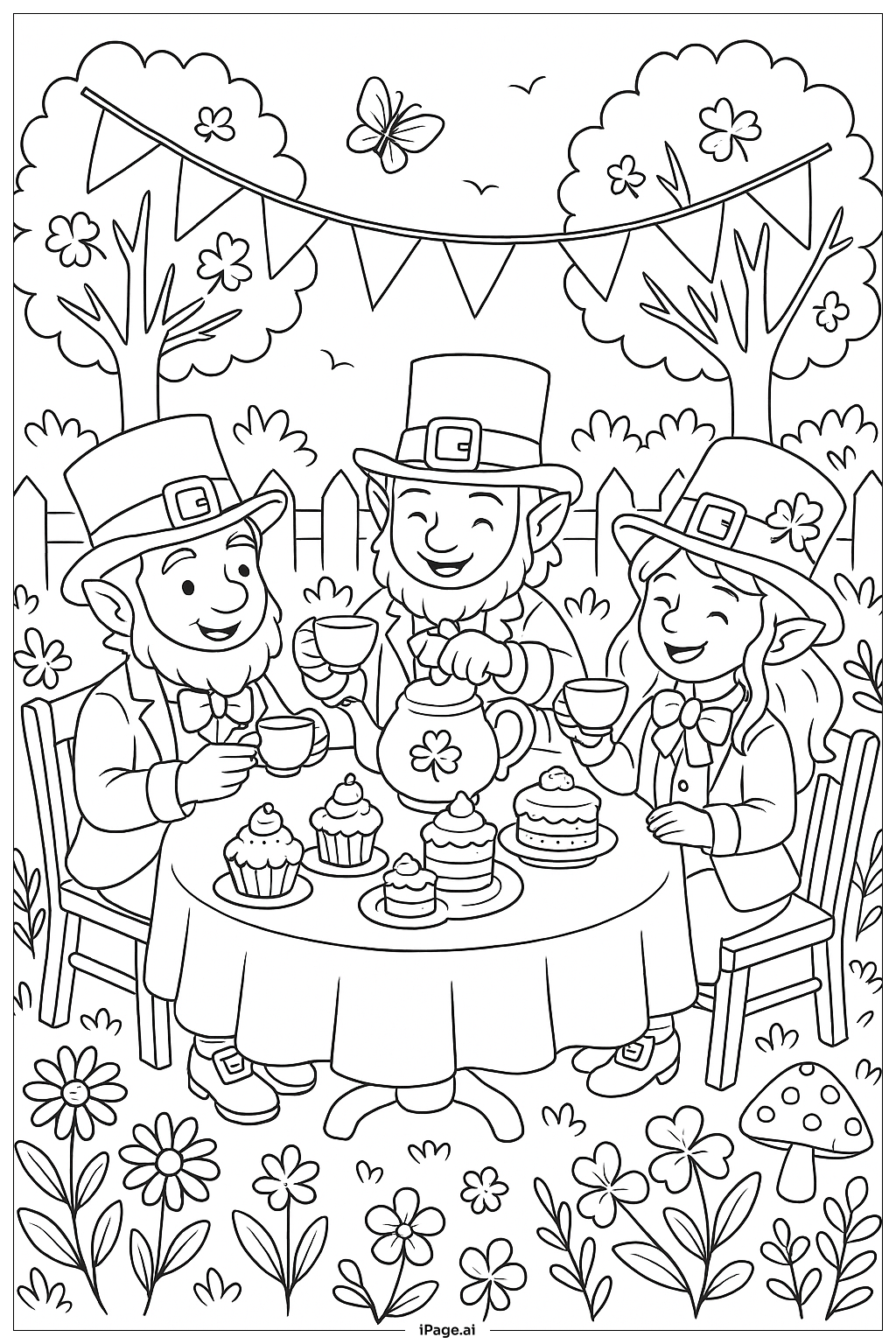
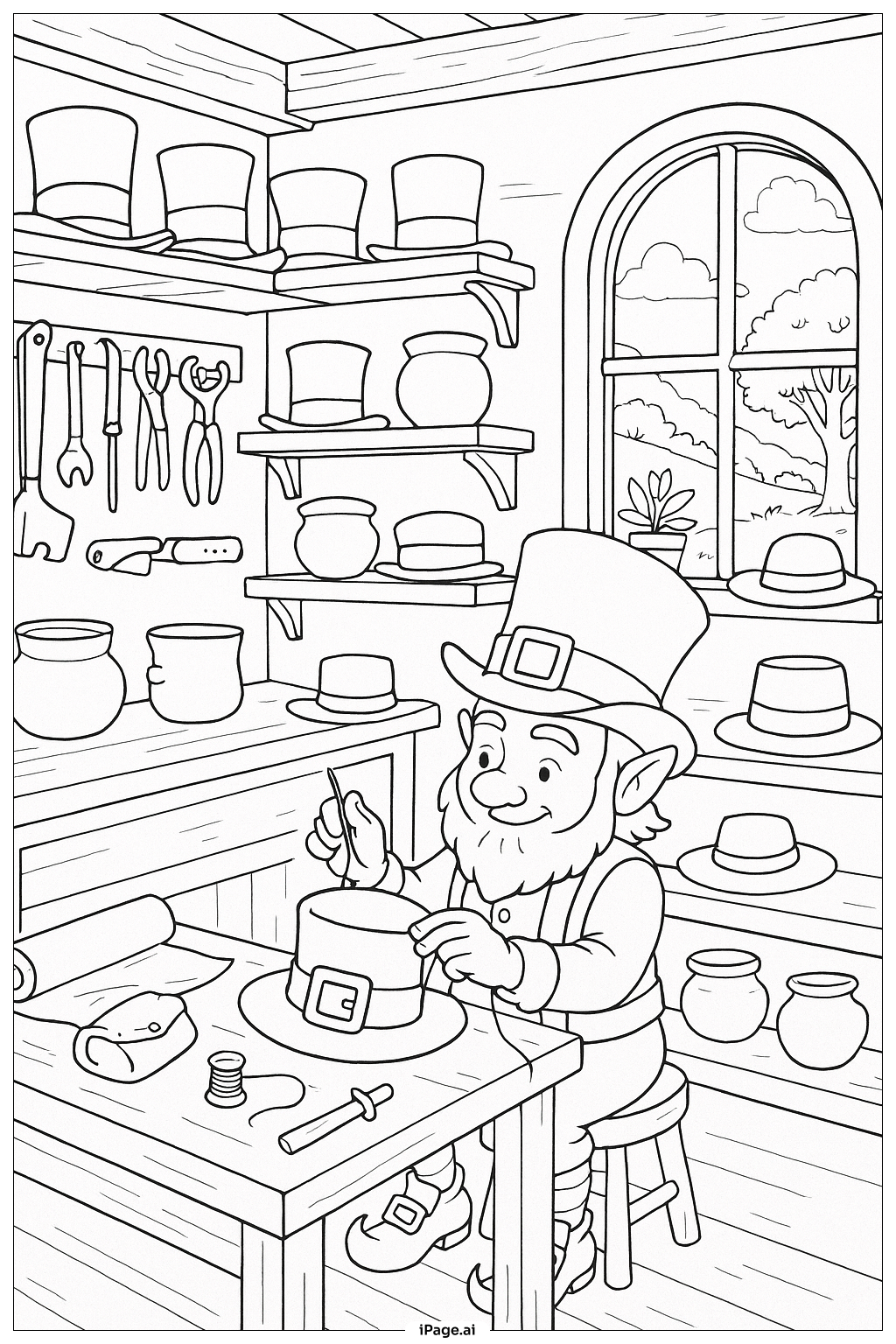
Use bright and cheerful colors to bring this scene to life. The leprechaun’s hat and clothes can be colored in shades of green, which is the classic color for St. Patrick’s Day. You can color the hats on the shelves in different colors like green, yellow, orange, and brown to make them stand out. The pots can be in earthy tones like brown or gray. The wooden table and shelves can be colored in light brown to show the natural wood texture. Don’t forget to color the background outside the window with blue sky, white clouds, and green trees and hills. Use darker greens for the trees and lighter greens for the hills to add depth. The tools on the wall can be colored in metallic shades like silver or gray.
Coloring challenges: Which parts are difficult to color and need attention for Happy St Patrick's Day Leprechaun Workshop Interior coloring page?
1. The many hats on the shelves have similar shapes and small details, making it tricky to color each one distinctly without mixing colors.
2. The window and the view outside require careful coloring to create a sense of depth with trees, hills, clouds, and sky.
3. The small tools on the wall have fine lines and details that might be challenging for younger children to fill in neatly.
4. The table and sewing materials, like thread and fabric pieces, need attention to avoid coloring outside the lines.
5. The leprechaun’s clothing, especially the hat with its buckle and the shoes with buckles, require precision for a clean look.
Benefits of coloring books: Advantages of drawing Happy St Patrick's Day Leprechaun Workshop Interior coloring page
Coloring this picture helps develop fine motor skills by practicing staying inside the lines and controlling hand movements. It encourages attention to detail, especially with the small tools and many hats. The scene also sparks creativity as children choose colors for the leprechaun and the workshop items. Coloring the window’s outdoor view can help children learn about nature and landscapes. Overall, this activity combines fun with skill-building, making it perfect for children aged 4 to 16.