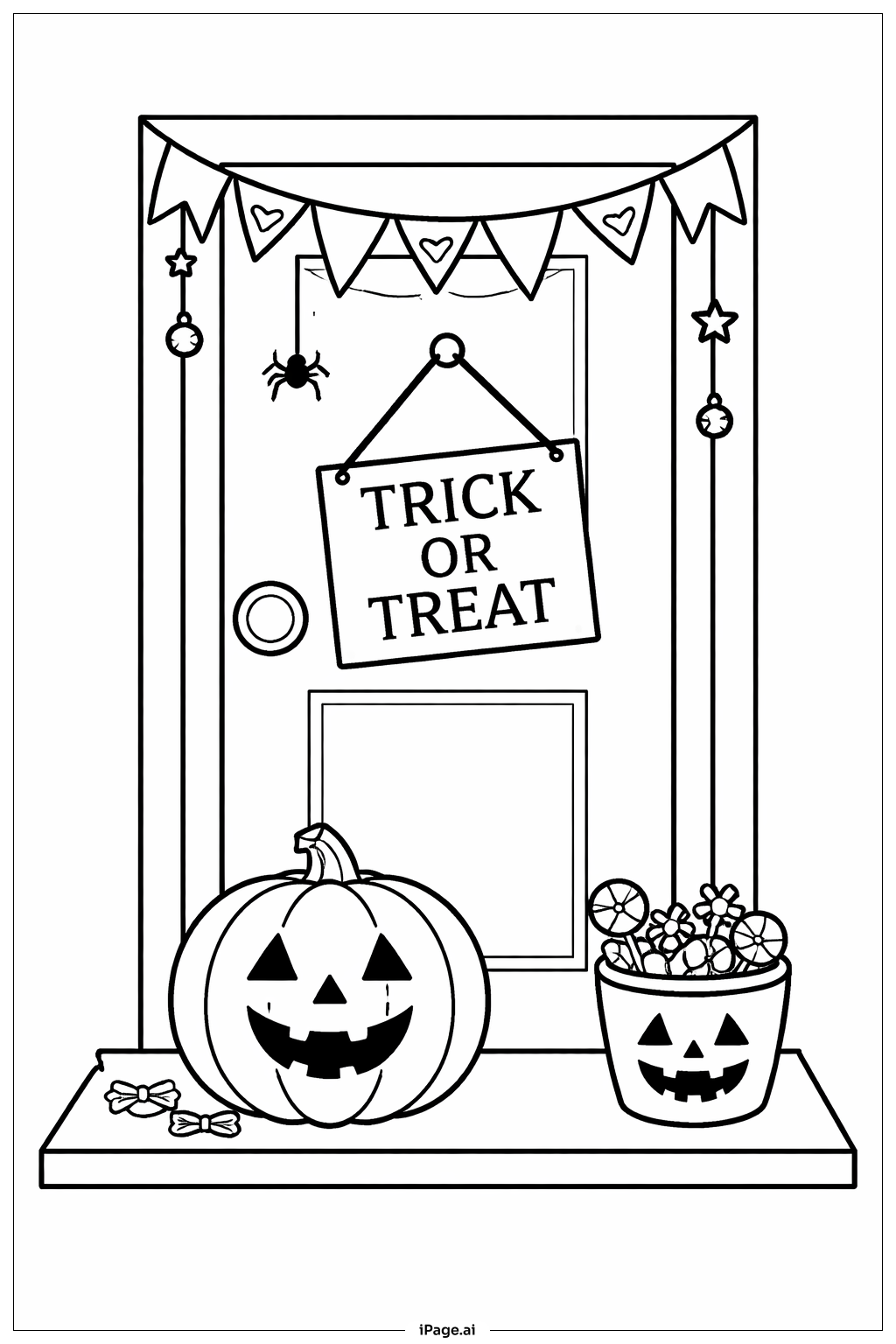
Coloring tips: How to color Halloween Trick Or Treat Doorway coloring page well?
Start with the pumpkins using bright orange, adding darker orange or brown shading on one side to create depth. Color the carved jack-o-lantern faces with glowing yellow or golden yellow inside to suggest candlelight. The door can be painted in warm autumn colors like deep brown, burgundy, or forest green. Use various shades of brown and gray for the brickwork, alternating colors to create realistic texture. The wreath offers a great opportunity for creativity: try traditional greens with orange and purple accents, or go for autumn colors like gold, rust, and brown. Paint the scattered leaves in classic fall hues including red, orange, yellow, and brown. The vines or garlands can be colored in deep greens or autumn tones. Consider adding a purple or dark blue sky in the background to set a Halloween evening mood.
Coloring challenges: Which parts are difficult to color and need attention for Halloween Trick Or Treat Doorway coloring page?
• Brickwork Texture: The detailed brick pattern around the archway requires patience and precision. Each brick should be colored individually to create a realistic stone or brick effect. Alternating between different shades of brown, gray, and red-brown helps achieve dimension. Leaving small gaps between bricks for mortar lines adds authenticity but demands careful control.
• Pumpkin Shading and Dimension: Creating realistic, three-dimensional pumpkins involves more than flat orange coloring. The vertical ridges on each pumpkin need lighter and darker shading to show their curved surfaces. The carved faces require special attention, with darker areas for the cut-out sections and bright yellow or orange glowing from within to suggest candlelight.
• Layered Details and Overlapping Elements: This scene contains many overlapping components including pumpkins, leaves, vines, the door, and decorations. Deciding which elements are in front and which are behind requires careful planning. Coloring overlapping areas while maintaining distinct boundaries between objects takes concentration and steady hand control.
• Small Intricate Spaces: The scattered autumn leaves, vine details, wreath decorations, and door panel designs contain many small areas that need precise coloring. Using fine-tipped markers or sharp colored pencils helps, but these tiny spaces can be challenging for younger colorists or those still developing fine motor control.
• Color Coordination and Harmony: With so many different elements, choosing a cohesive color scheme that feels both festive and harmonious requires thoughtful planning. Balancing warm autumn tones with traditional Halloween colors while ensuring nothing clashes or looks too busy presents an artistic challenge that develops color theory understanding.
Benefits of coloring books: Advantages of drawing Halloween Trick Or Treat Doorway coloring page
Coloring this Halloween doorway scene offers wonderful benefits for young artists. The detailed brickwork and small decorative elements help develop fine motor skills and hand-eye coordination as children carefully stay within the lines. The variety of textures including smooth pumpkins, rough bricks, delicate leaves, and twisted vines encourages creative thinking about how different materials look and feel. Planning a color scheme for multiple pumpkins, the door, decorations, and background teaches color coordination and artistic decision-making. The festive Halloween theme makes coloring fun and engaging while connecting to seasonal celebrations children enjoy. Working through the intricate details builds patience, focus, and the ability to complete longer projects. The overlapping elements help children understand spatial relationships and depth perception. Successfully finishing this detailed scene boosts confidence and provides a sense of accomplishment. This coloring page also offers a calm, mindful activity that helps reduce stress while celebrating the exciting Halloween season.