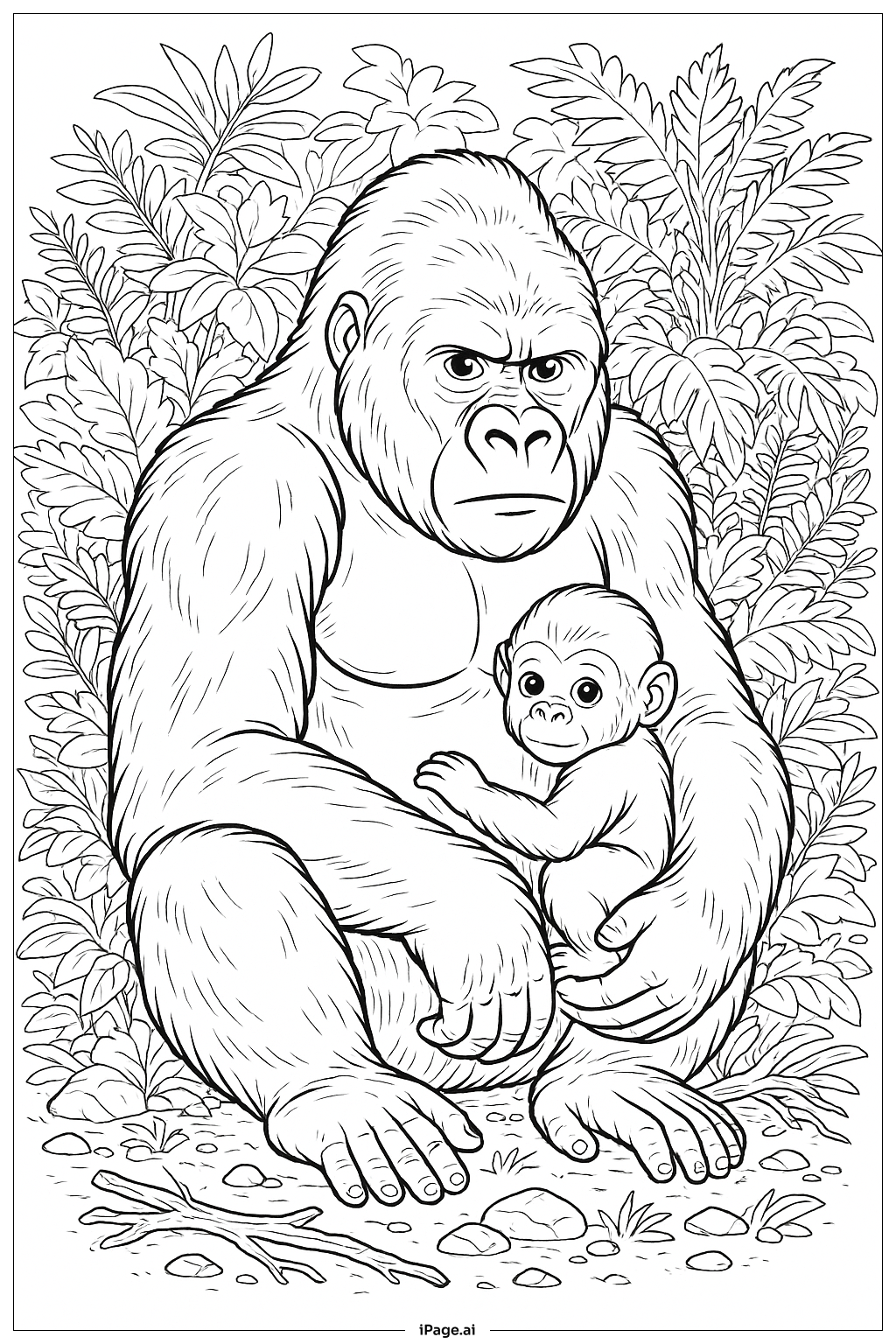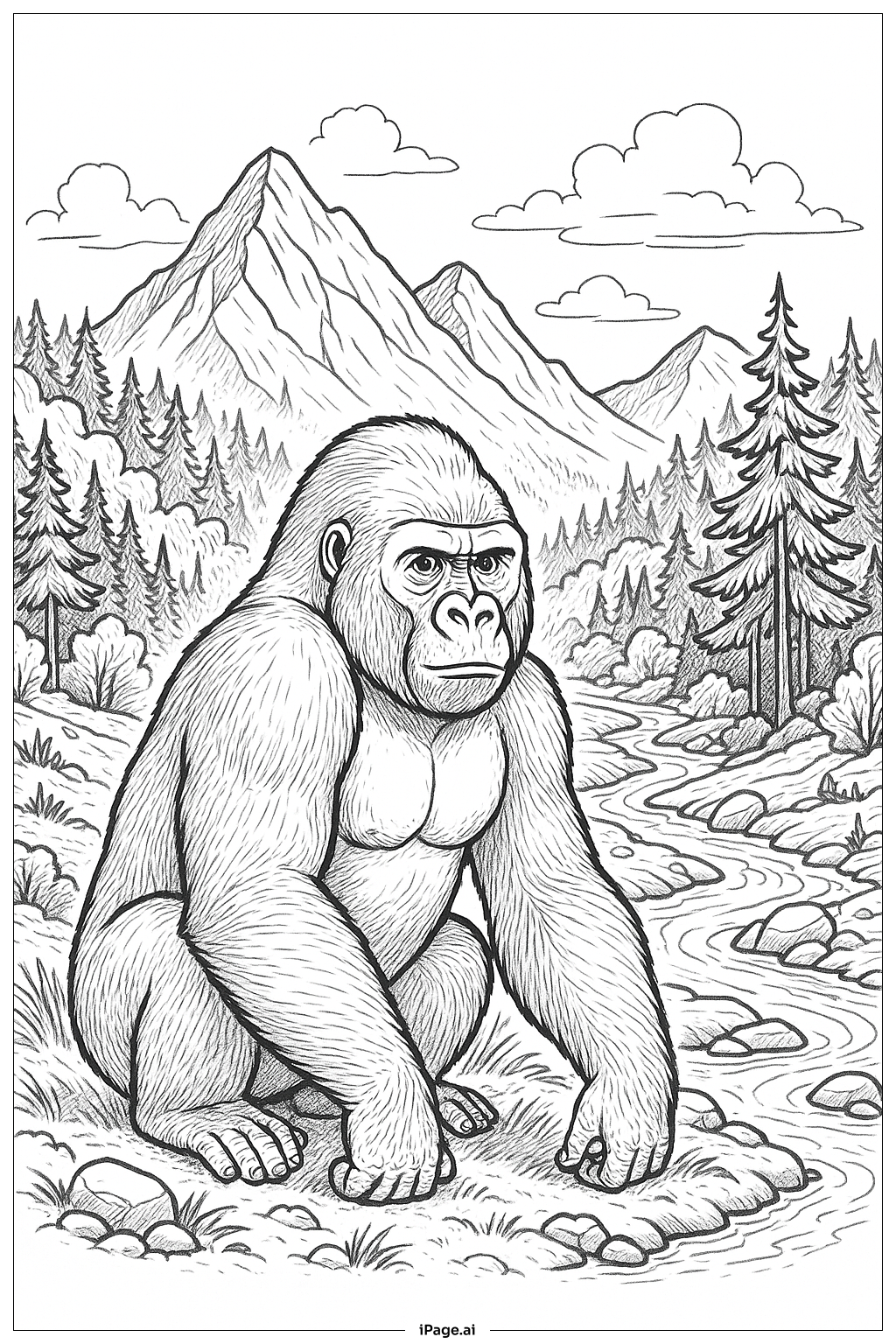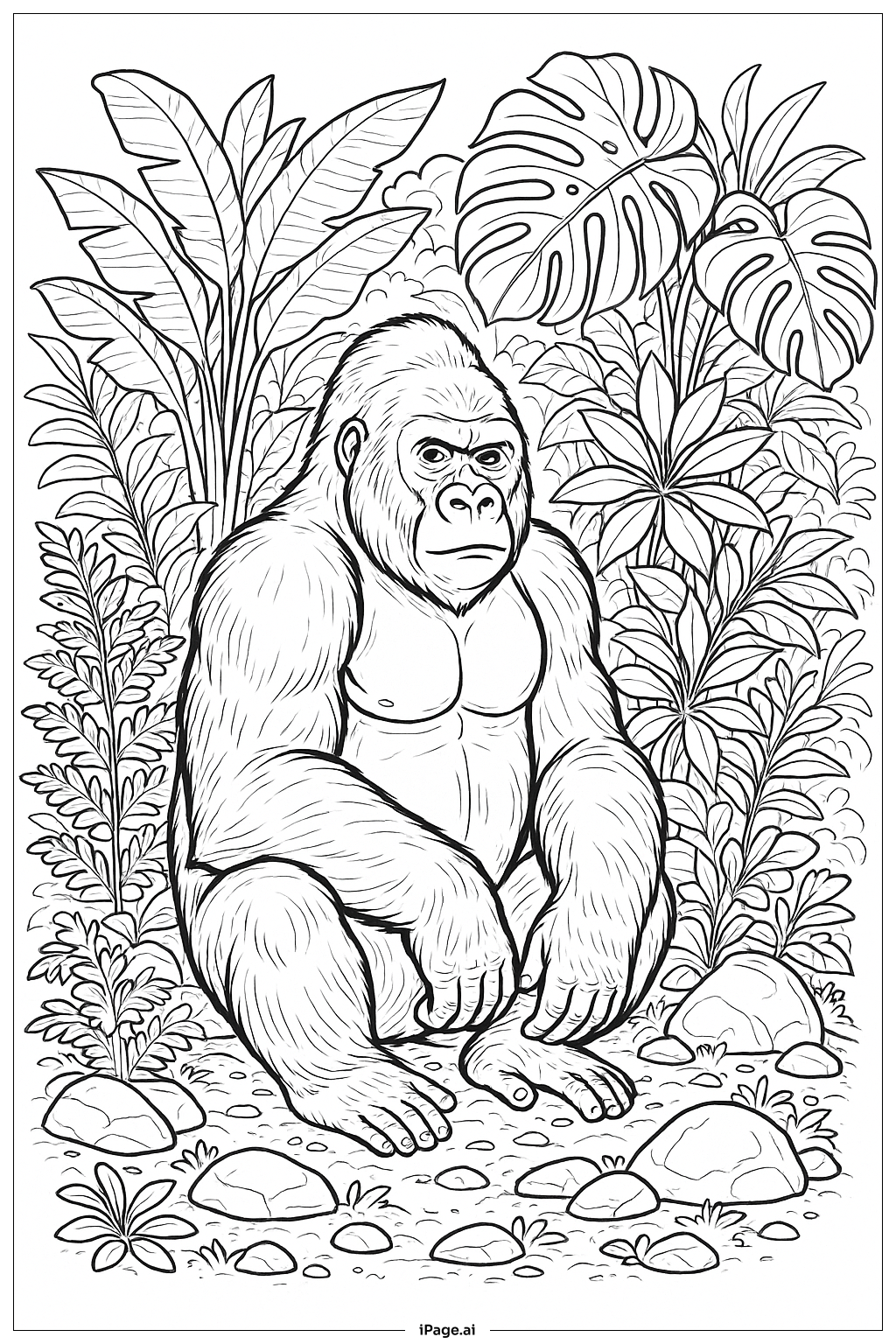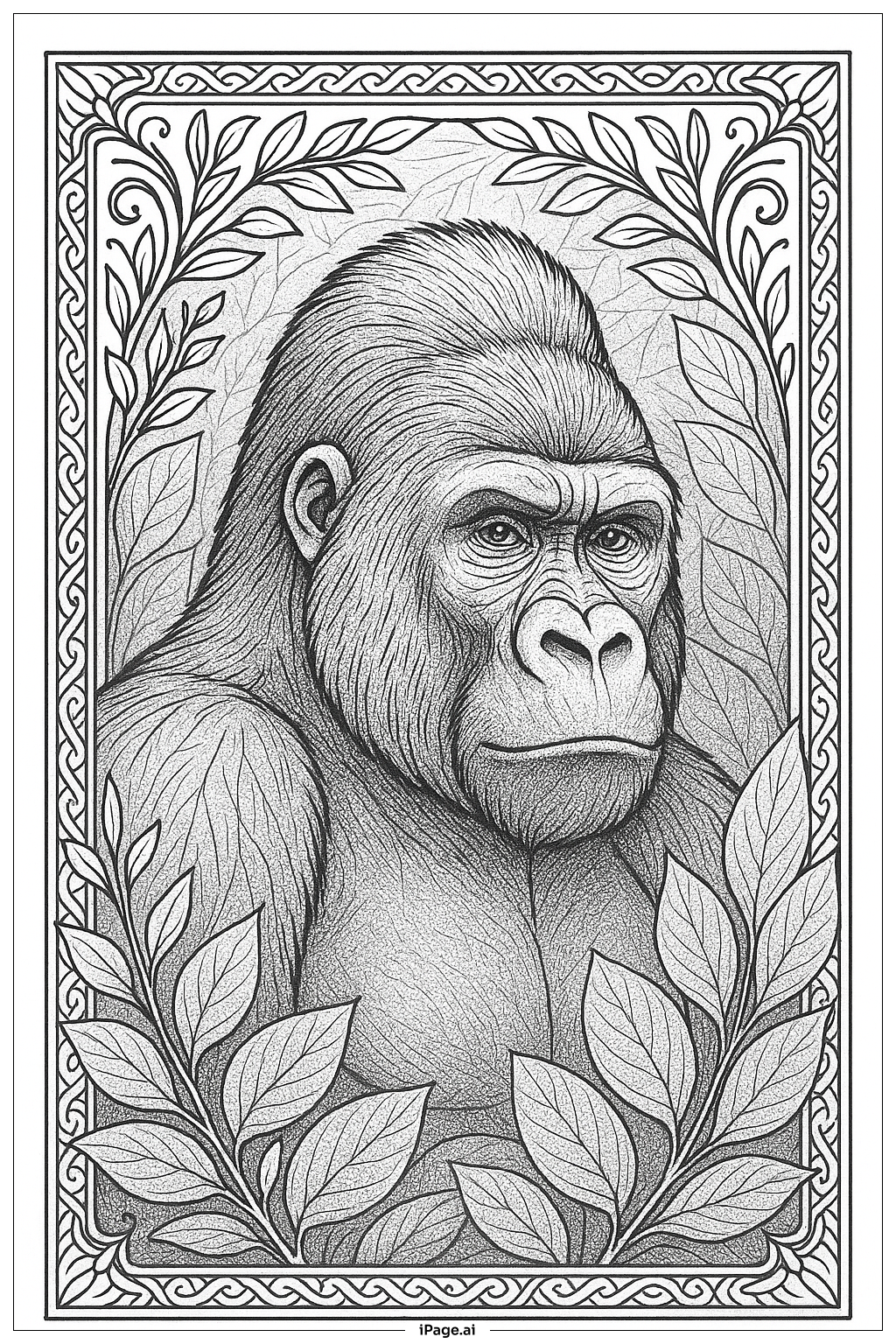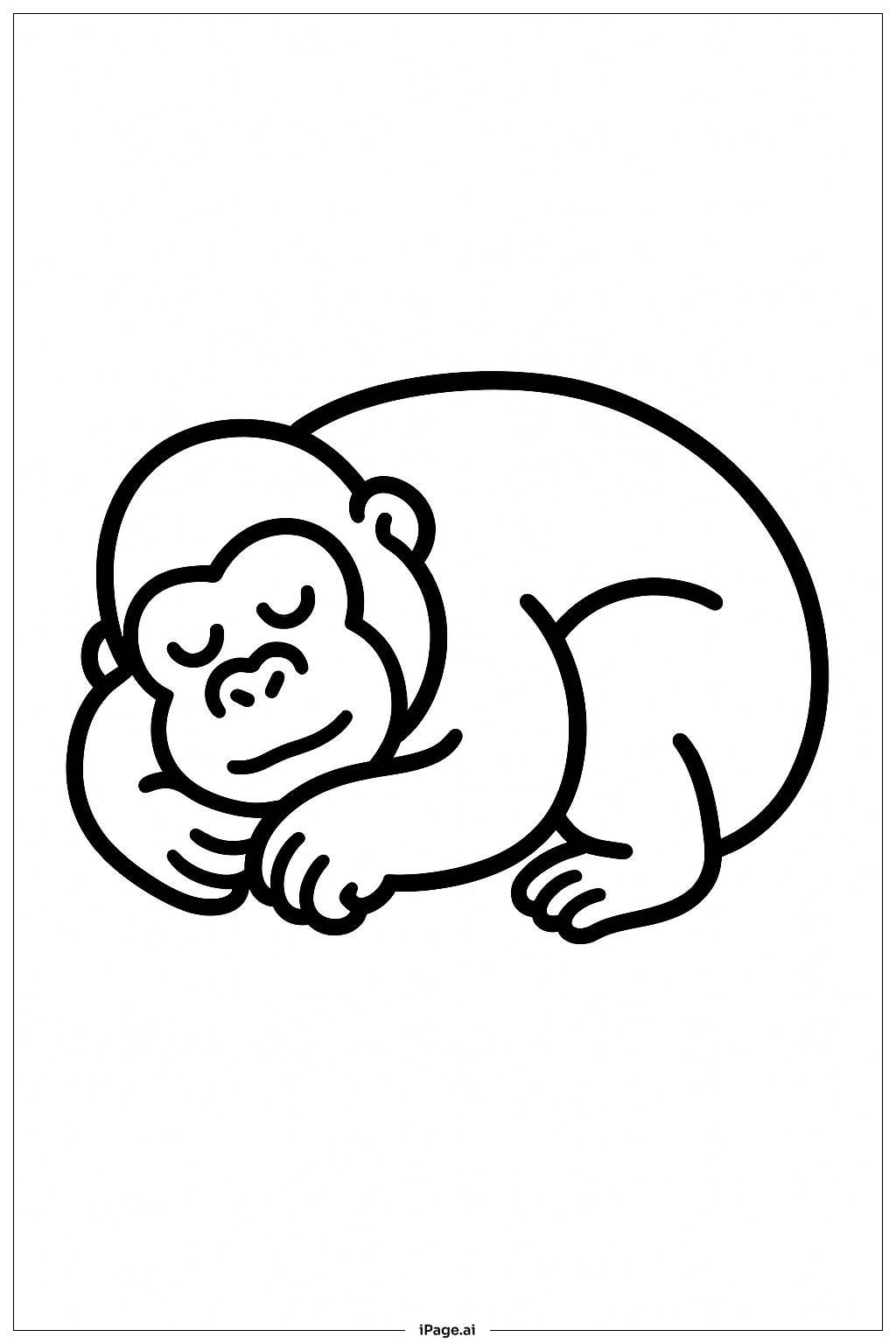
Coloring tips: How to color Sleeping Gorilla Curl coloring page well?
Start with the gorilla's fur using shades of dark gray, charcoal, or black. Leave the face, palms, and soles slightly lighter, using medium gray or warm tan, since real gorillas have less hair there. Use a soft brown or dark olive tone to add warmth to the fur along the belly and inner arms. Add gentle highlights using light gray or white to show where light falls on the rounded, curled body. This creates a sense of depth and fullness. For the face, use a muted dark gray or brown for the skin. Color the closed eyelids softly with a slightly lighter shade. If you want a natural background, try soft greens or earthy browns to suggest a forest floor or nest of leaves. Keep the overall palette calm and natural to match the peaceful sleeping mood of the image.
Coloring challenges: Which parts are difficult to color and need attention for Sleeping Gorilla Curl coloring page?
• Fur Texture and Direction: The gorilla's entire body is covered in thick, layered fur. Coloring the fur realistically means following the direction of each line carefully. If you color in random directions, the fur will look flat and unnatural. Try using short, light strokes that follow the flow of the lines to build up texture gradually.
• Creating Depth on a Curled Body: Because the gorilla is curled into a ball shape, different parts of the body curve away from the viewer. Showing this three-dimensional roundness requires shading. The areas facing away from a light source should be darker, while the top and outer edges should be slightly lighter. Getting this balance right takes patience and practice.
• Facial Detail with Closed Eyes: The gorilla's face has subtle features, including closed eyelids, a broad nose, and a relaxed mouth. These small details need careful, controlled coloring. Using too much pressure or the wrong shade can make the face look harsh instead of peaceful and restful.
• Distinguishing Skin from Fur: Gorillas have visible bare skin on their face, palms, and feet. These areas need a different texture and color treatment compared to the surrounding fur. Keeping clear transitions between skin and fur without smudging or blending too much is a common challenge for younger colorists.
• Tonal Consistency Across the Whole Body: Because the gorilla fills much of the page, keeping a consistent color tone from head to toe is harder than it looks. Running out of a color mid-way, or pressing harder in some areas than others, can create uneven patches. Working slowly and steadily across the whole image helps keep the final result looking polished and uniform.
Benefits of coloring books: Advantages of drawing Sleeping Gorilla Curl coloring page
Coloring this sleeping gorilla image offers a wonderful range of benefits for kids and beginners alike. The large, curved shapes of the curled body are satisfying to fill in and help younger children build confidence with coloring tools. At the same time, the detailed fur lines and facial features give older kids and more experienced colorists a genuine challenge to work through.
Focusing on a calm, sleeping animal naturally encourages a slower, more relaxed coloring pace. This helps children practice patience and stay present in the moment, which is a great way to reduce stress and quiet a busy mind.
Learning to shade the rounded body and textured fur introduces kids to basic artistic concepts like light, shadow, and depth. These are foundational skills that support creativity and visual thinking in school and everyday life.
The subject itself, a gentle giant at rest, also sparks curiosity about gorillas and wildlife. Children may be inspired to learn more about these amazing animals and their natural habitats, turning a fun coloring activity into a small step toward a love of nature and conservation.