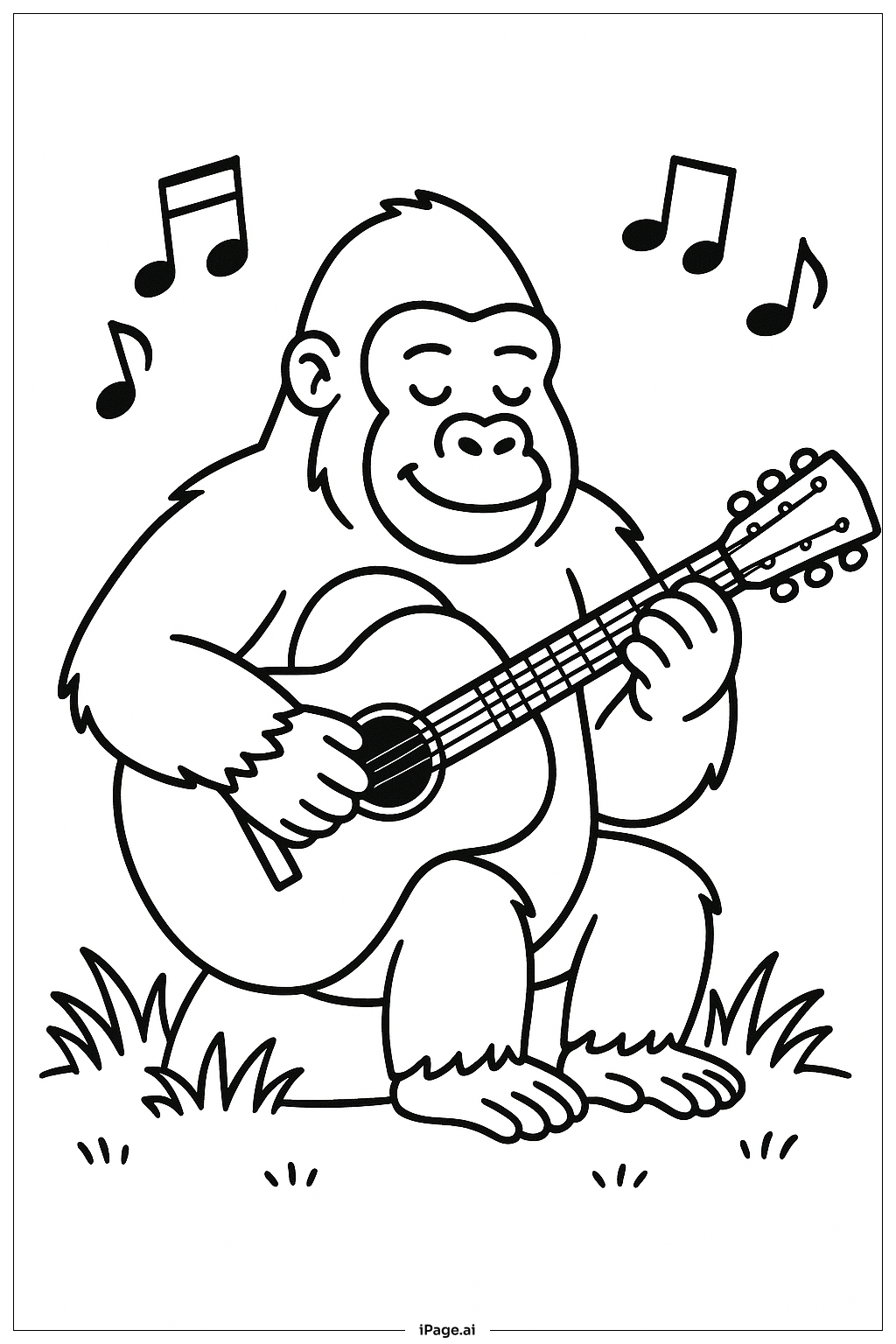
Coloring tips: How to color Gorilla With Guitar coloring page well?
For the gorilla, consider using various shades of black, dark gray, and charcoal for the fur, with lighter gray or silver highlights on the chest and face to create depth and dimension. The facial features can incorporate subtle browns or tans around the eyes and muzzle. For the guitar, choose warm wood tones like golden brown, honey, or chestnut for the body, with a darker walnut or mahogany shade for the fretboard. The strings can be colored in metallic silver or gold. Add a touch of pink or light brown to the gorilla's palms and fingertips for realistic detail. Consider using layering techniques with colored pencils to blend the fur texture smoothly. You might also add a subtle background color like soft blue or green to make the gorilla and guitar stand out prominently.
Coloring challenges: Which parts are difficult to color and need attention for Gorilla With Guitar coloring page?
• Fur Texture and Direction: The gorilla's body is covered entirely in fur, which requires careful attention to create a realistic texture. Children need to consider the direction of fur growth, using short strokes that follow the natural flow across different body parts. The chest area typically has longer fur patterns, while the face has shorter, more detailed fur around the eyes and nose. Maintaining consistent stroke direction while varying pressure to create light and shadow can be challenging for younger colorists.
• Facial Feature Details: The gorilla's face contains intricate details including expressive eyes with highlights, nostrils, mouth contours, and subtle skin textures. Coloring the eyes requires precision to maintain the shine and emotion, while the nose and mouth need careful shading to appear three-dimensional. The transition between the darker fur and lighter facial skin areas requires smooth blending skills.
• Guitar Structure and Wood Grain: The acoustic guitar presents technical challenges with its curved body, circular sound hole, multiple strings, and fretboard details. Creating realistic wood grain patterns requires steady hand control and layering techniques. The strings need to remain thin and distinct, while the sound hole requires darker shading to show depth. The neck and fretboard have small sections that demand precision coloring.
• Hand and Finger Positioning: The gorilla's large hands holding the guitar involve complex overlapping elements where fingers wrap around the guitar neck and body. Distinguishing each finger while maintaining proper shadowing where hands meet the instrument requires careful observation and color differentiation to avoid visual confusion.
Benefits of coloring books: Advantages of drawing Gorilla With Guitar coloring page
Coloring this musical gorilla helps children develop fine motor skills through the detailed fur textures and intricate guitar components. The image encourages focus and patience as young artists work through the various elements, from the expressive facial features to the precise guitar strings. It introduces children to the concept of texture differentiation, learning to represent fur differently from smooth wood surfaces. This page also promotes an appreciation for music and animals simultaneously, creating cross-subject learning opportunities. The friendly, musical theme can spark conversations about different instruments, animal behavior, and creative expression. For older children and adults, this page offers relaxation benefits through meditative coloring of repetitive fur patterns while allowing creative freedom in color choices. The combination of organic animal forms and geometric instrument shapes provides a balanced coloring experience that exercises both creative and analytical thinking skills.