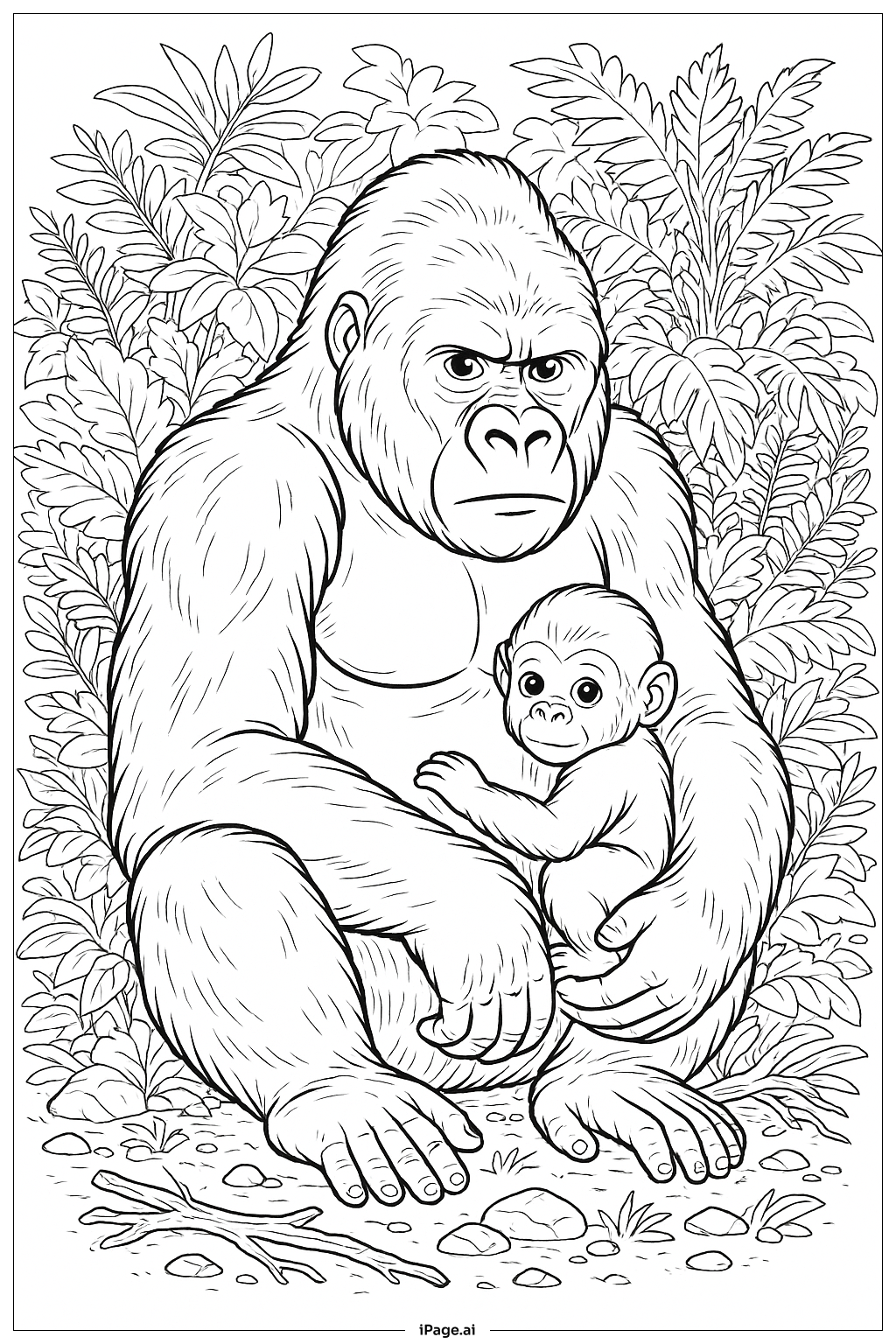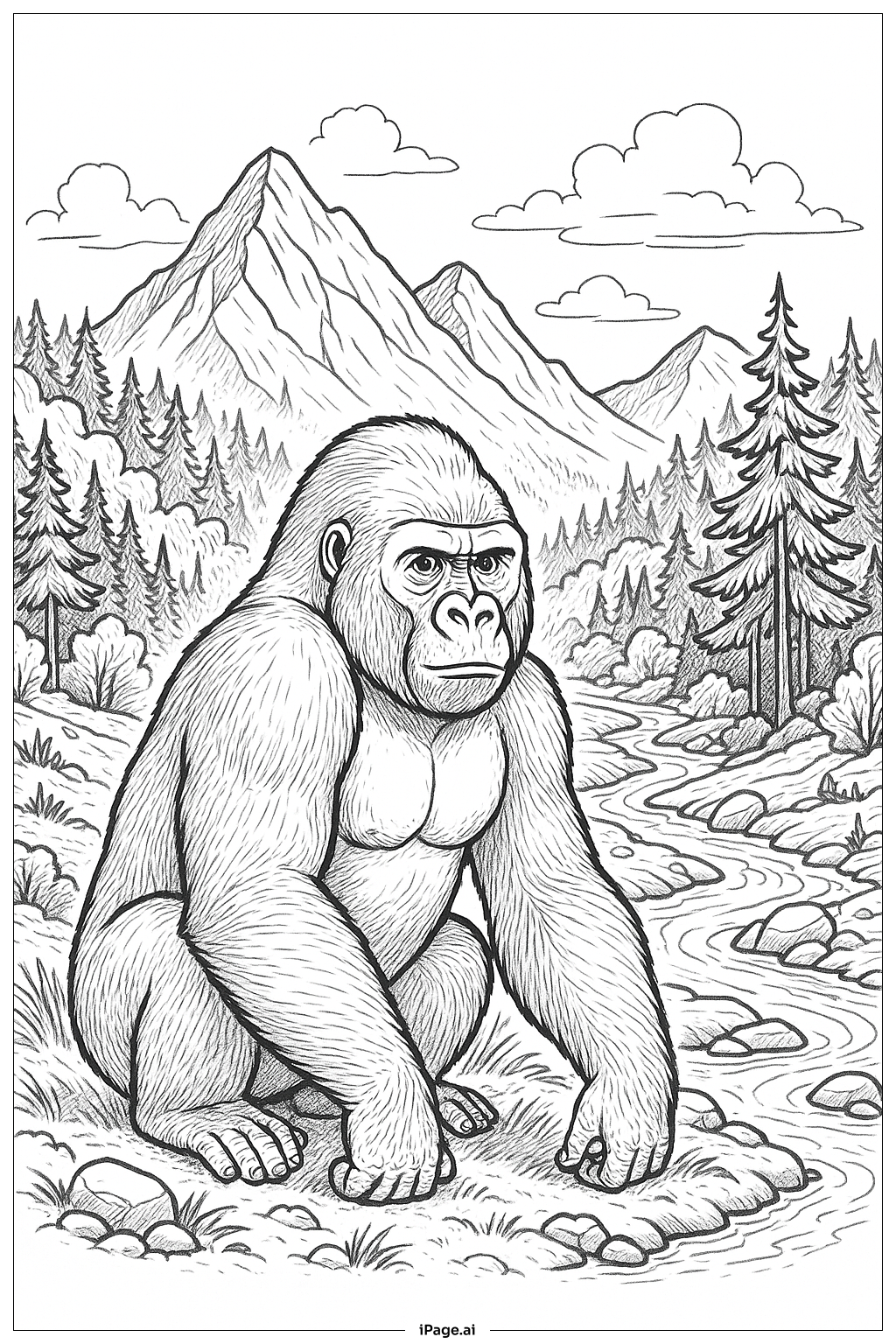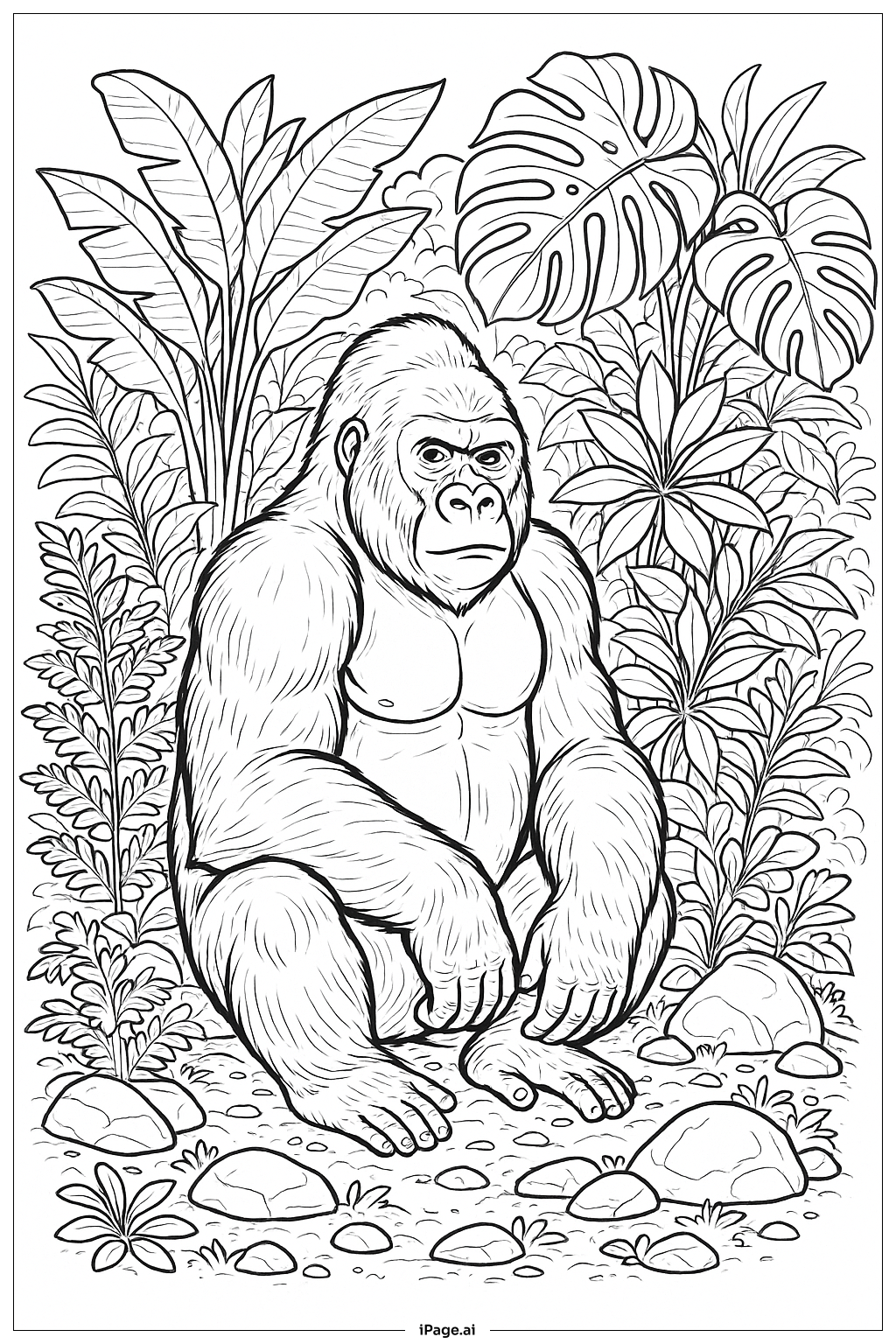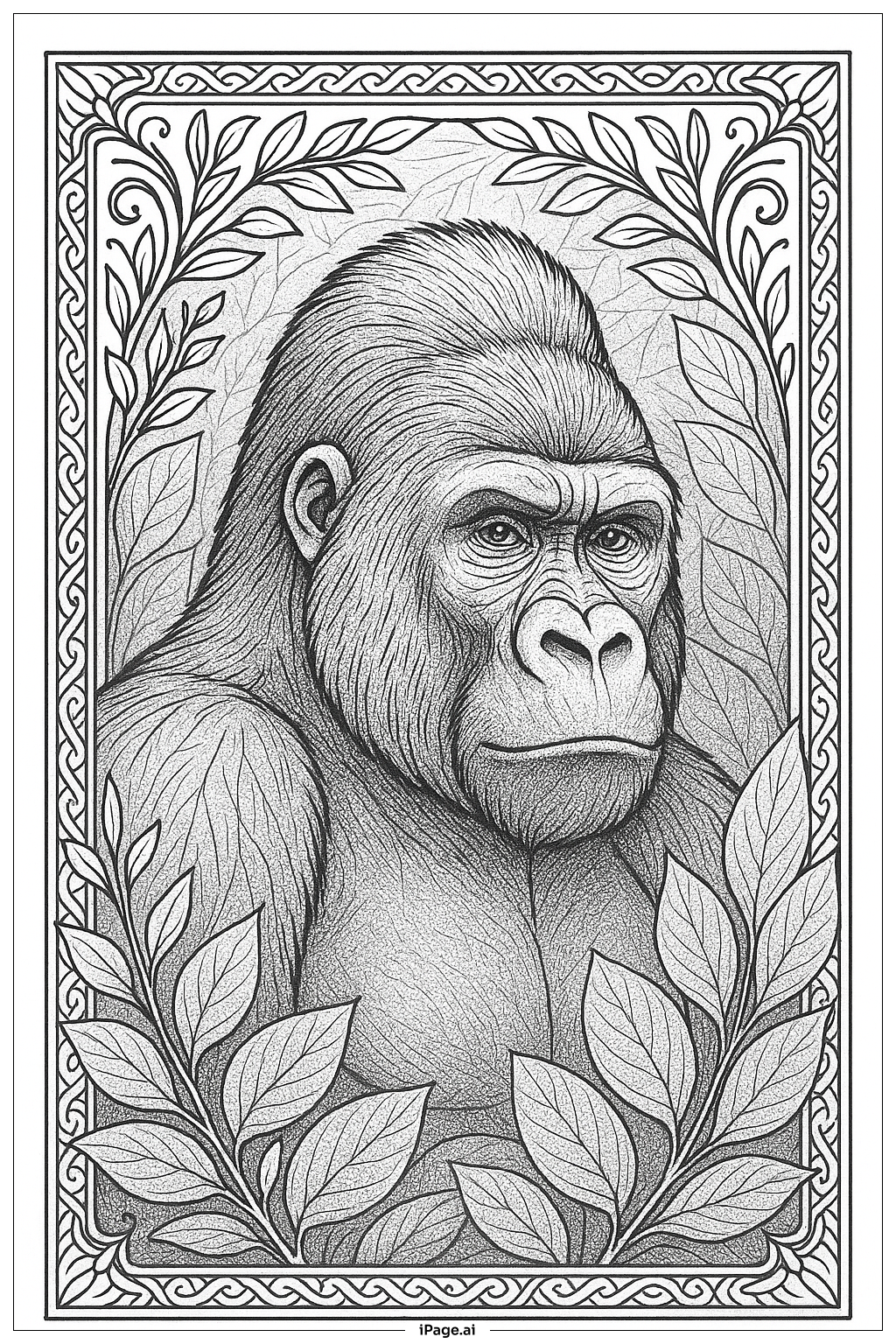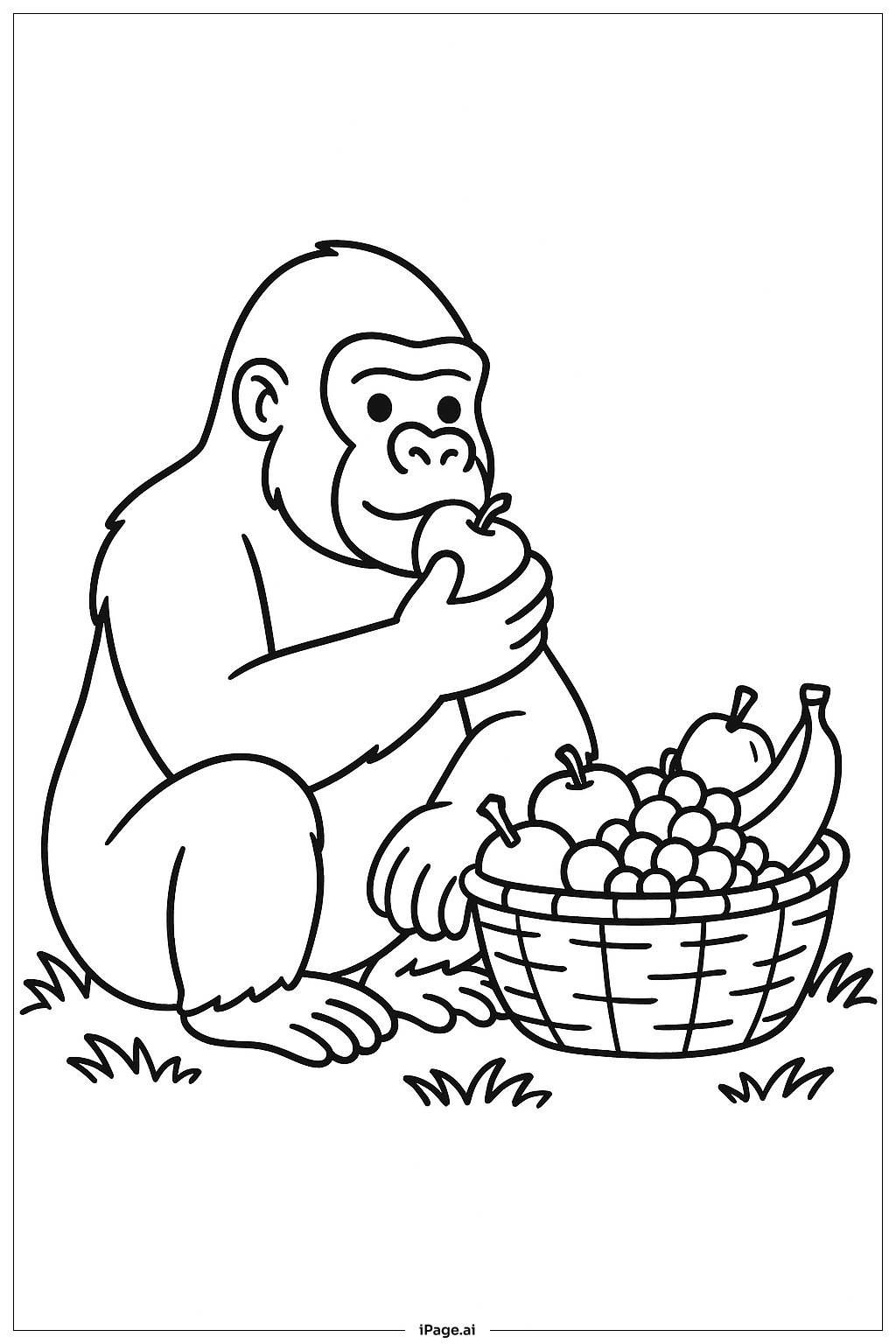
Coloring tips: How to color Gorilla Eating Fruit Pile coloring page well?
Start with the gorilla's fur using shades of black, dark gray, or brown, adding lighter gray highlights for dimension. Color the gorilla's face and hands with dark brown or gray tones. For the fruit pile, use vibrant colors: bright yellow for bananas and pineapples, pink or red for watermelon flesh with green rinds, orange for oranges or mangoes, and purple for grapes. Consider adding green leaves to accent the fruits. Use light brown for any exposed ground or surface. To create depth, apply darker shades in shadowed areas under the gorilla and between fruits. Add rosy cheeks to the gorilla for extra charm. Experiment with blending techniques to make the fur look soft and the fruits look juicy and appetizing.
Coloring challenges: Which parts are difficult to color and need attention for Gorilla Eating Fruit Pile coloring page?
• Fur Texture Challenge: The gorilla's fur requires careful attention to create a realistic appearance. Children need to decide whether to color each strand individually or use broader strokes to suggest texture. Layering different shades of black, gray, and brown while maintaining consistent direction creates the illusion of thick, coarse gorilla fur. This requires patience and may be challenging for younger colorists who might rush through larger areas.
• Fruit Variety and Detail: The abundance of different fruits presents a complexity challenge. Each fruit type has unique characteristics: bananas need subtle shading curves, watermelons require distinct rind and flesh coloring, and pineapples demand attention to the diamond-pattern skin. Keeping track of which fruits have been colored and maintaining consistent colors for each type throughout the pile requires organizational thinking and focus.
• Overlapping Elements: The composition shows the gorilla sitting among fruits with many overlapping areas where the gorilla's body, arms, and the various fruits intersect. Children must carefully stay within lines when colors change at these boundaries. Deciding which elements appear in front versus behind requires spatial reasoning and can be tricky when multiple objects overlap in the same area.
• Shading and Dimension: Creating three-dimensional effects through shading is essential for making both the gorilla and fruits look realistic rather than flat. Children need to identify light sources and apply darker colors in shadowed areas under the gorilla's chin, arms, and between fruits. This requires understanding of how light works and the coordination to vary pressure or choose different shade intensities appropriately.
Benefits of coloring books: Advantages of drawing Gorilla Eating Fruit Pile coloring page
Coloring this gorilla scene offers wonderful developmental benefits for children. It enhances fine motor skills and hand-eye coordination as they carefully color within the detailed lines of fur texture and fruit shapes. The variety of elements encourages decision-making skills as children choose color combinations and plan their approach. Learning about gorillas and healthy eating habits happens naturally while coloring, sparking conversations about wildlife and nutrition. The scene promotes focus and concentration as children work through the complex composition with multiple overlapping elements. Color recognition and matching skills develop as they identify appropriate colors for realistic fruits. The rewarding nature of completing such a detailed image builds confidence and patience. Additionally, the cheerful subject matter creates positive associations with both animals and healthy foods, making it an enjoyable and educational activity for various age groups.