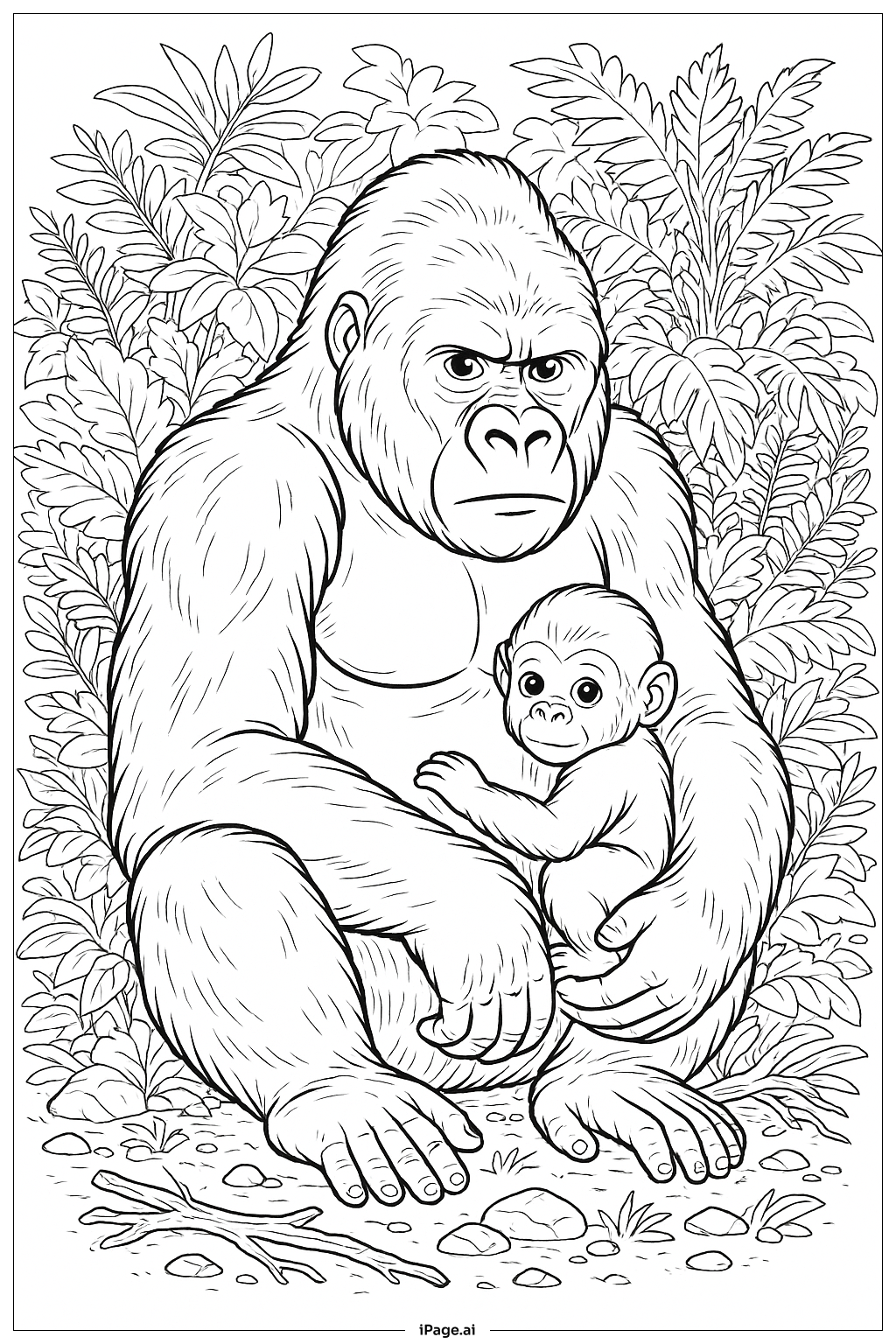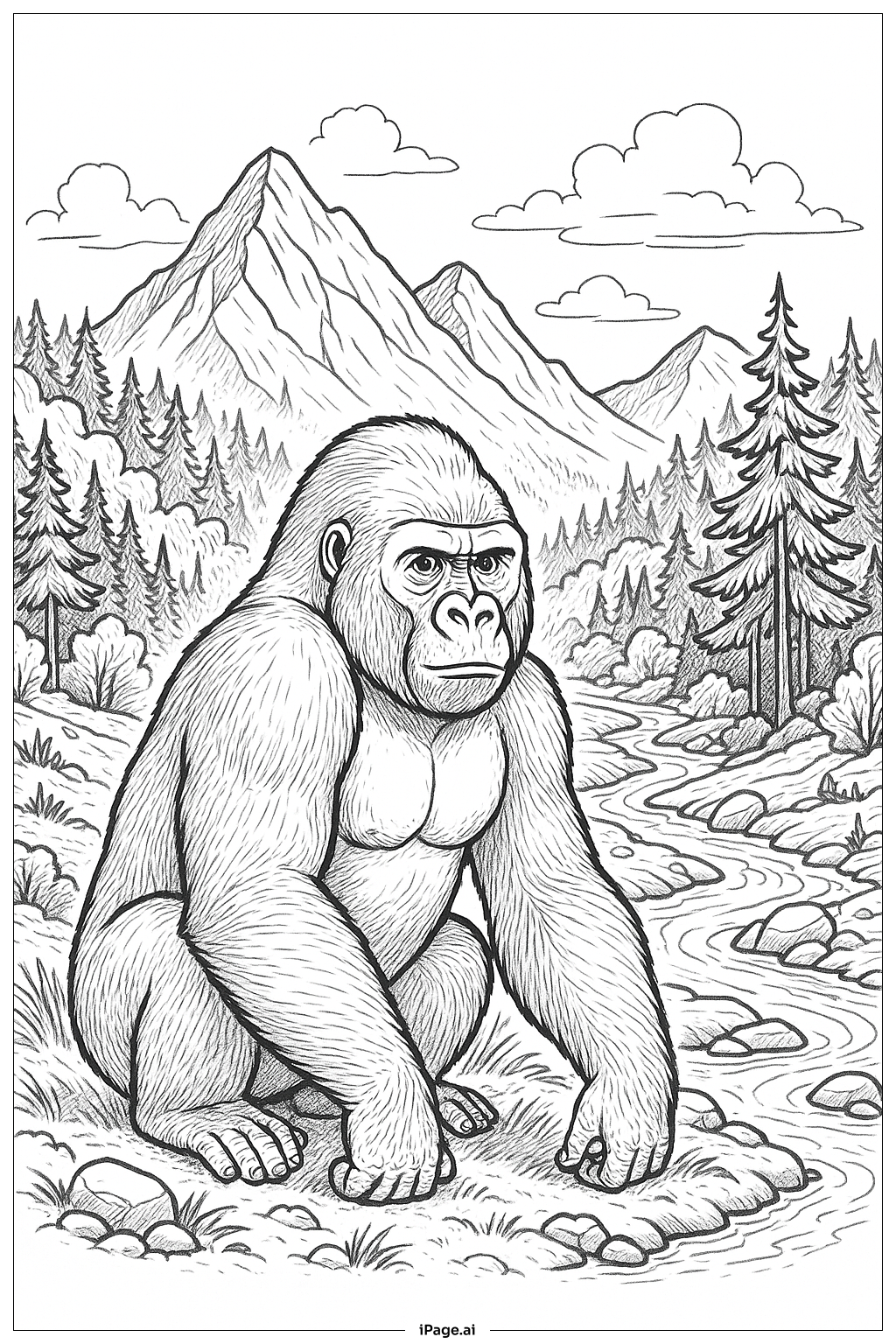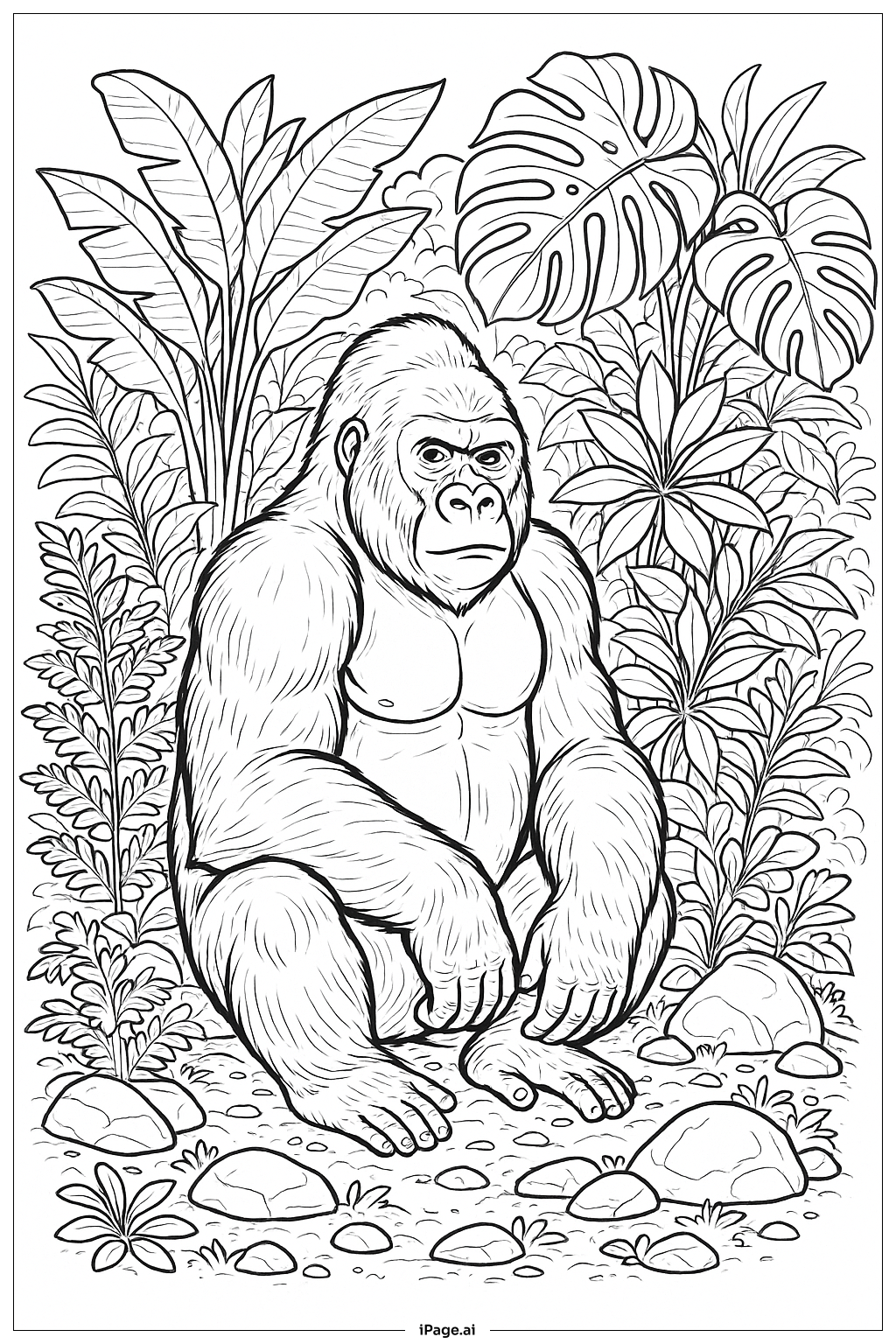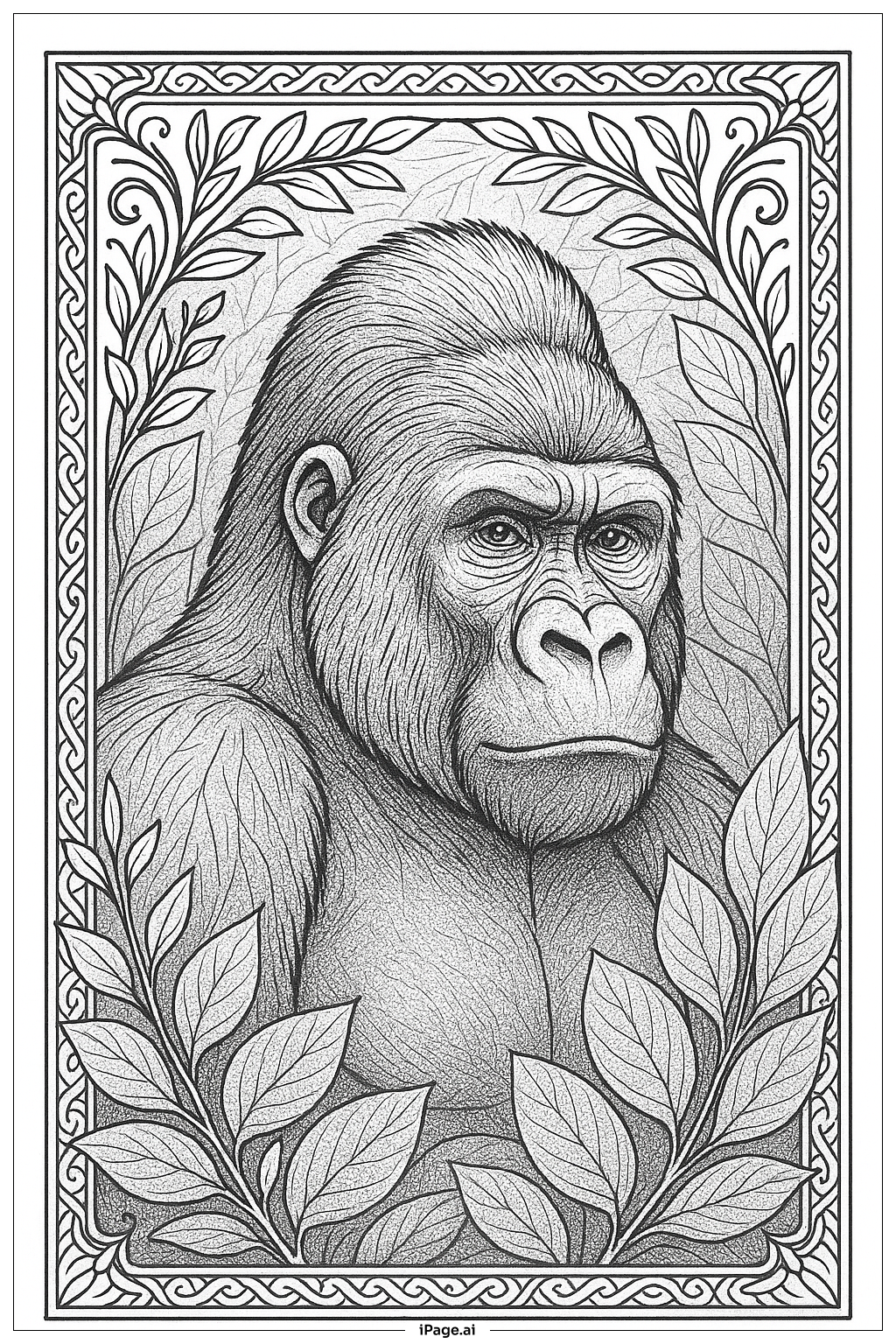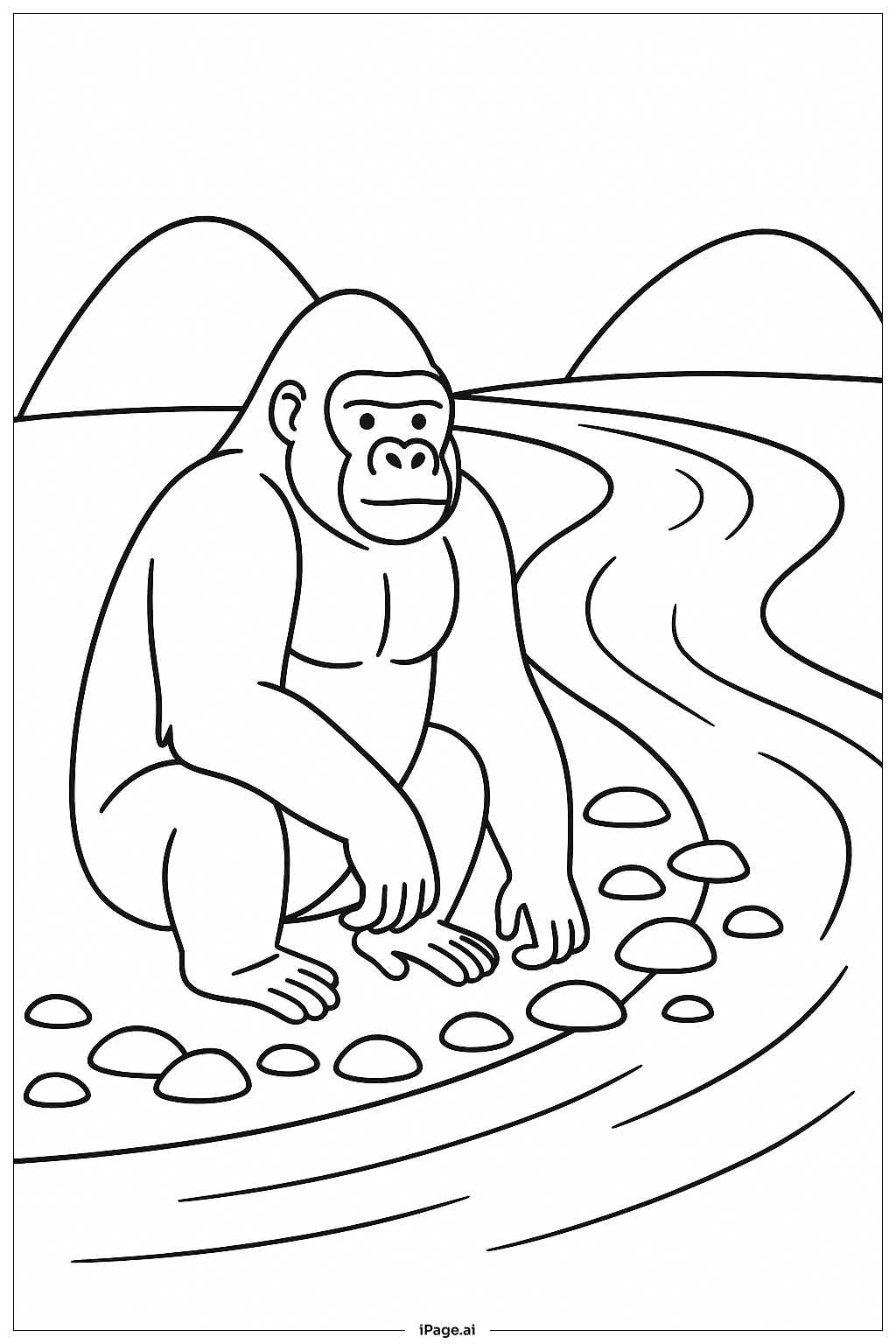
Coloring tips: How to color Gorilla By River coloring page well?
For the gorilla, use various shades of black, dark gray, and charcoal for the fur, with lighter gray tones on the chest and face. Add brown or tan highlights to create dimension and texture. The river can be colored in blues and teals, with white or light blue for water highlights and foam. Use darker blues in shadowed areas to show depth. For the riverbank, choose browns, tans, and grays for rocks and pebbles. The surrounding vegetation offers great variety: use different shades of green for leaves and bushes, from deep forest green to bright lime. Tree trunks can be brown with darker bark texture. Add yellow-green for sunlit leaves and blue-green for shaded areas. Consider adding touches of color with tropical flowers in red, orange, or purple hidden among the foliage. The sky or background areas can be soft blue or golden yellow to suggest time of day.
Coloring challenges: Which parts are difficult to color and need attention for Gorilla By River coloring page?
• Fur Texture and Shading: The gorilla's fur requires careful attention to create realistic texture and depth. Coloring each section with consistent pressure while varying tones from dark to light gray helps achieve a three-dimensional appearance. The chest and face areas need lighter values, while the outer body should be darker. Blending multiple shades smoothly without harsh lines takes patience and practice, especially when working with colored pencils or crayons.
• Water Movement and Reflections: Rivers present unique coloring challenges because water is translucent and reflective. Young artists must consider how to show flowing water movement through curved lines and varying blue tones. Creating the illusion of depth requires darker blues in deeper areas and lighter shades where sunlight hits the surface. Adding white highlights for sparkles and foam without overusing them demands restraint and planning.
• Layered Vegetation Depth: The multiple layers of plants, trees, and bushes at different distances require understanding of perspective and atmospheric depth. Foreground plants should be more detailed and vibrant, while background foliage needs softer, lighter colors. Distinguishing between overlapping leaves and branches while maintaining visual clarity challenges spatial reasoning skills.
• Rock and Pebble Variety: The riverbank stones each need individual attention to avoid a flat, monotonous appearance. Each rock should have highlights, mid-tones, and shadows to appear three-dimensional. Varying colors between rocks using grays, browns, and tans while keeping them harmonious with the overall scene requires color coordination skills and attention to detail.
Benefits of coloring books: Advantages of drawing Gorilla By River coloring page
Coloring this gorilla by river scene offers wonderful developmental benefits for children. It enhances fine motor skills through detailed work on fur texture, small rocks, and individual leaves. The complex composition improves focus and concentration as children work through different sections methodically. Learning to create realistic animal fur and natural water effects develops observational skills and understanding of light and shadow. The nature theme encourages appreciation for wildlife and environmental awareness, sparking curiosity about gorillas and their habitats. Working with multiple color families for vegetation, water, and the animal promotes color theory knowledge and decision-making abilities. The satisfying challenge of bringing this detailed scene to life builds confidence and patience. Children also practice spatial reasoning by distinguishing foreground, middle ground, and background elements, which supports cognitive development and artistic growth.