Coloring tips: How to color Frozen Olaf Befriends Chirping Bird In Winter coloring page well?
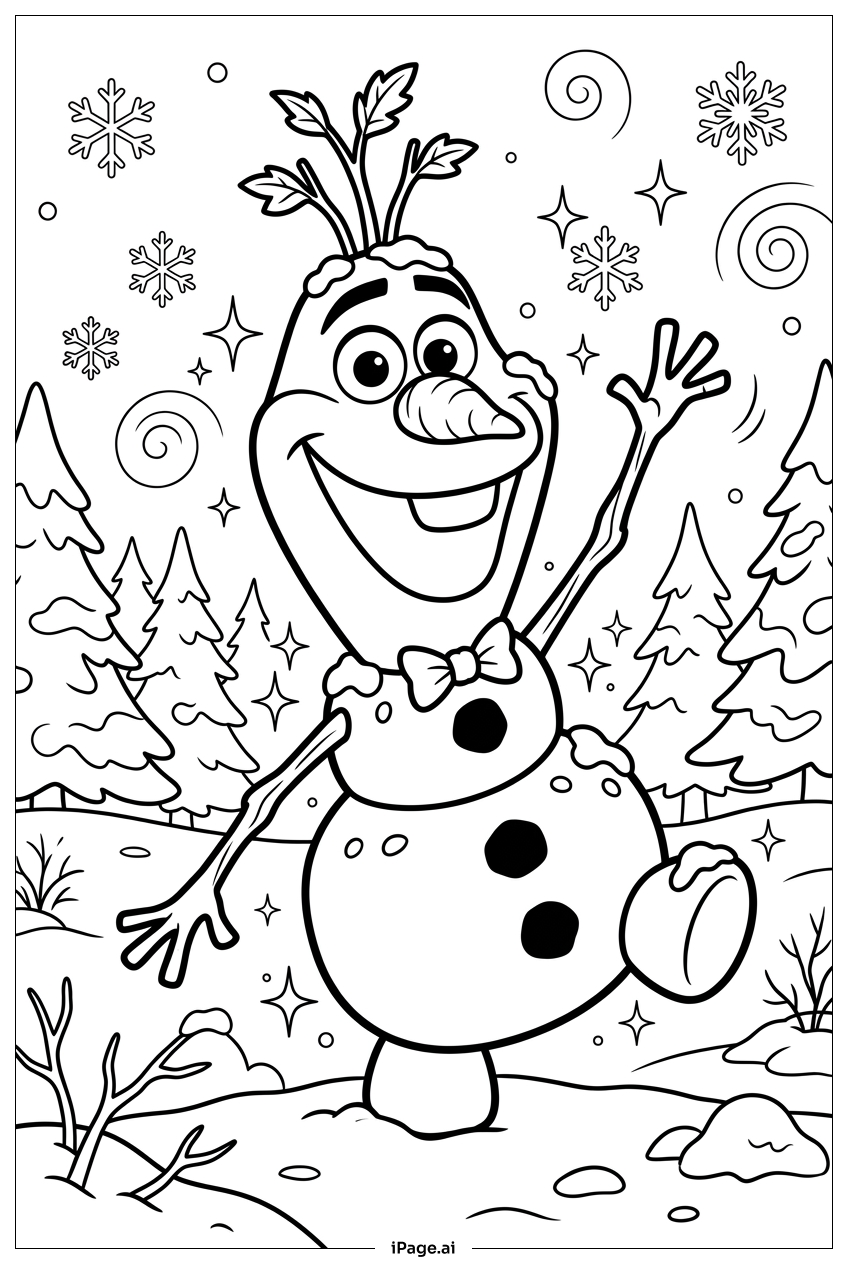
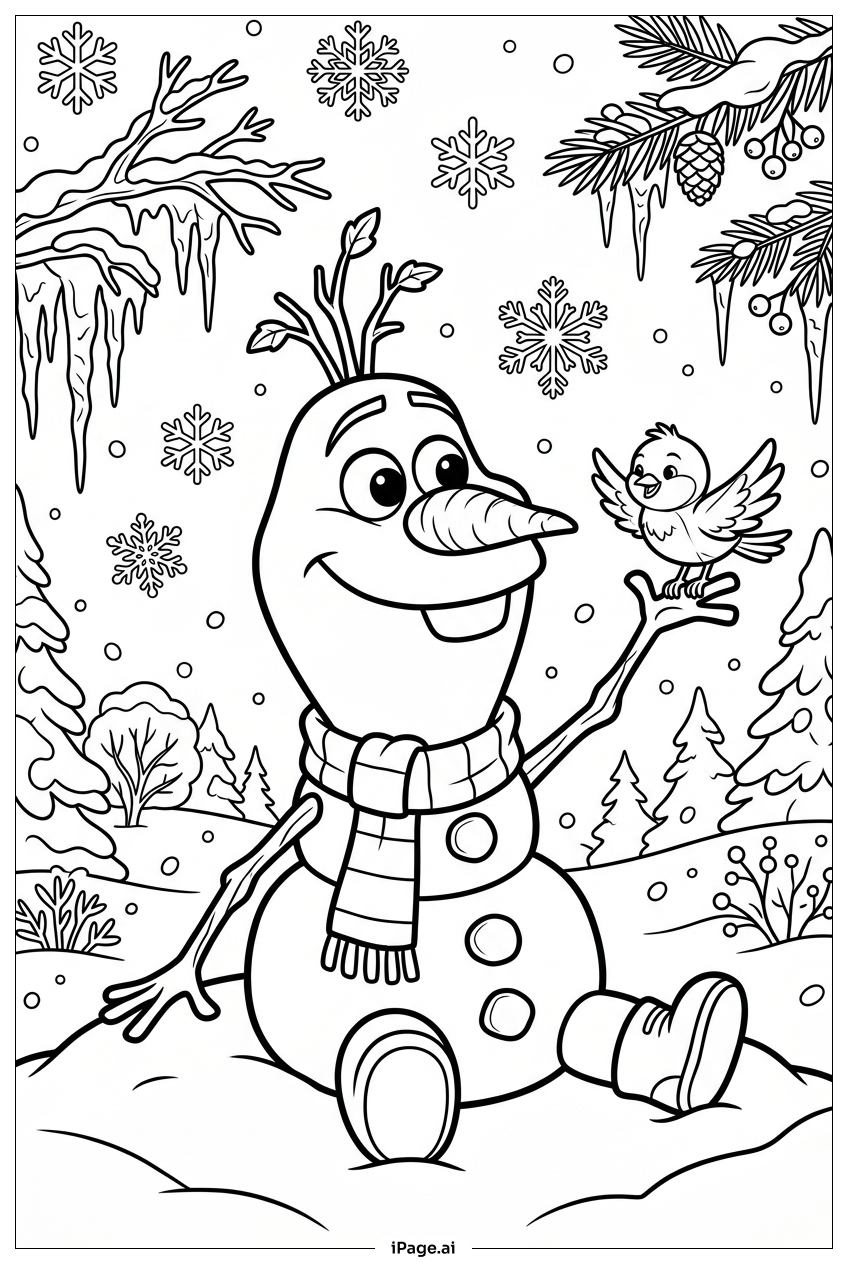
Start with Olaf's body by using bright, clean white or a very pale sky blue to give him that frosty snowman look. His carrot nose should be a vivid orange, while his button eyes and smile can be filled in with dark charcoal gray or black. Use warm brown for his stick arms to contrast nicely with the cool snow tones. For the little bird, try a cheerful yellow or bright red to make it pop against the wintry background. Its beak can be a small dash of orange or golden yellow. Color the falling snowflakes in light blue or leave them white with a soft gray outline. The snowy ground can be filled with pale blue and white blended together for a soft, wintry feel. Keep the overall palette cool and icy, then add one or two warm accent colors — like the bird and carrot nose — to bring the scene to life. This balance makes the picture feel magical and full of Frozen charm.
Coloring challenges: Which parts are difficult to color and need attention for Frozen Olaf Befriends Chirping Bird In Winter coloring page?
• Olaf's Rounded Body Sections: Olaf is made up of three large round shapes that need smooth, even coloring. Keeping the white or pale blue consistent across all three sections without streaks or uneven patches can be tricky, especially for younger colorists. Using light, circular strokes helps achieve a clean, fluffy snow effect.
• Small Bird Details: The chirping bird is a tiny figure perched on Olaf's arm. Its small size means that coloring within its outline requires careful, controlled strokes. Staying inside the lines while adding detail to the wings, beak, and body takes patience and a fine-tipped coloring tool.
• Stick Arms and Twig Texture: Olaf's twig arms have an irregular, branch-like shape. Coloring them with a natural wood brown while suggesting texture — such as darker brown lines along the edges — adds realism but demands a steady hand and some layering technique.
• Snowflake and Background Details: The scattered snowflakes and snowy ground in the background require light, delicate coloring. Using too dark a shade can make the background overpower the main characters. A gentle touch with light blues and whites keeps the wintry atmosphere soft and airy without losing depth.
• Balancing Warm and Cool Tones: One of the biggest challenges is harmonizing the warm tones — like the orange carrot nose and the colorful bird — with the cool icy blues and whites of the snow scene. Coloring too heavily with warm shades can upset the balance and make the image feel less like a winter wonderland.
Benefits of coloring books: Advantages of drawing Frozen Olaf Befriends Chirping Bird In Winter coloring page
Coloring this scene of Olaf and his chirping bird friend offers a wide range of benefits for children and fans of Frozen. First, it helps develop fine motor skills as kids practice controlling their coloring tools to stay within the lines of Olaf's round body, tiny bird details, and delicate snowflakes. This kind of careful, focused work strengthens hand-eye coordination over time. Second, choosing colors for the snowy background, Olaf's features, and the little bird encourages creative thinking and color awareness. Kids learn how warm and cool tones interact to create mood and atmosphere. Third, the calming, repetitive motion of coloring promotes focus and mindfulness, helping children relax and unwind. It is a great quiet activity after a busy day. Fourth, completing the image gives children a sense of accomplishment and pride in their work, boosting confidence and self-expression. Finally, the theme of friendship and kindness shown between Olaf and the bird sparks conversation about compassion and connection, reinforcing positive social values in a fun and engaging way. Overall, this coloring page is both educational and joyful.