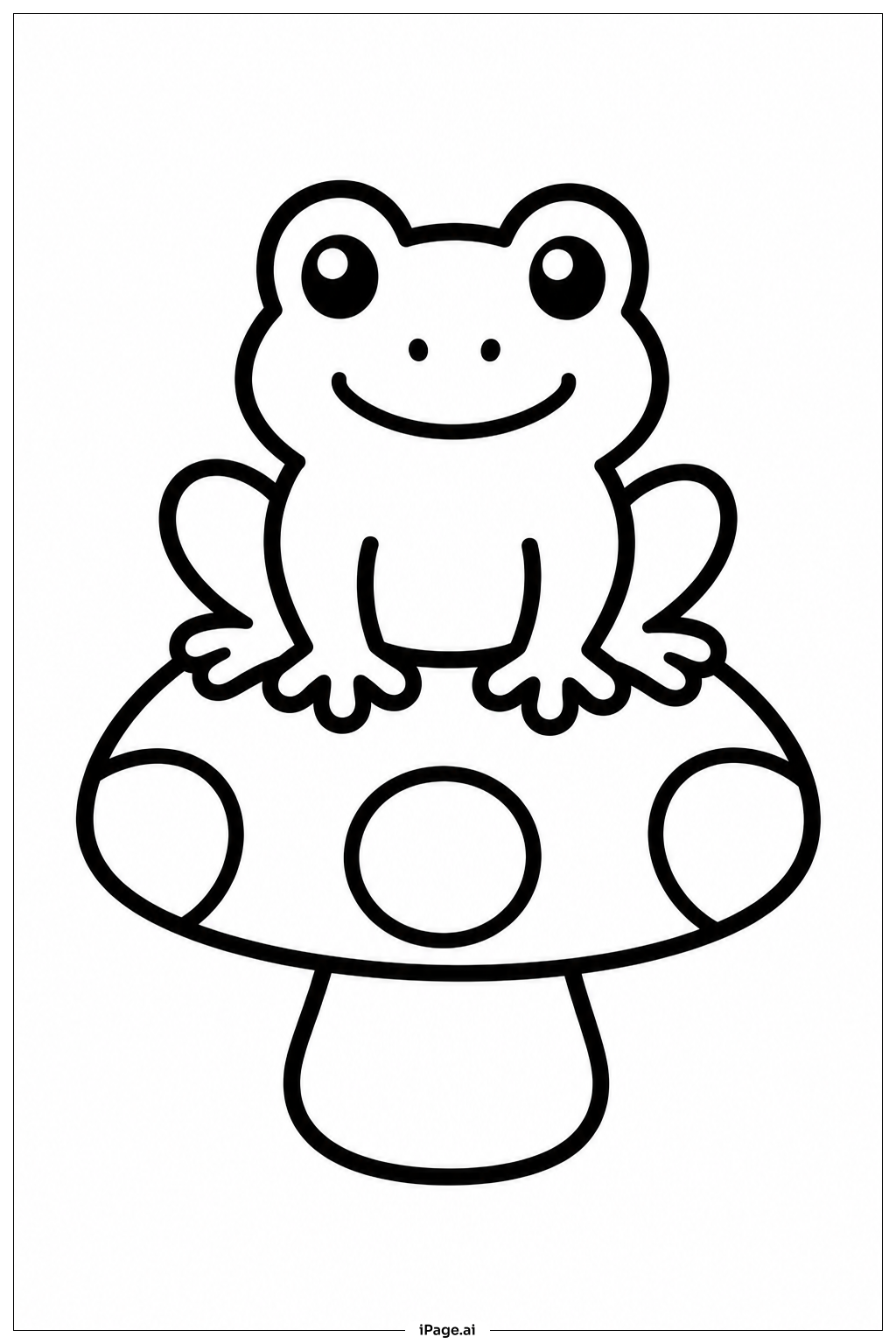
Coloring tips: How to color Frog On Mushroom coloring page well?
Start with the frog's body. Use a bright green like lime or emerald for most of the skin. Add a lighter yellow-green on the belly to give it a soft, rounded look. Use darker green for the shadows under the legs and chin.
For the mushroom cap, try a warm red or orange and add white or cream for the spots. The stem can be a pale tan or beige with hints of brown for depth.
Color the background grass in two or three shades of green to make it feel lush. Use yellow, pink, or purple for the small flowers to add cheerful pops of color.
Keep the frog's eyes bright. A golden yellow or light brown iris with a dark pupil looks great. Add a tiny white dot to each eye to make them look shiny and alive.
Take your time with each section. Use light strokes first, then layer darker tones to build depth. This image is great for experimenting with blending colors!
Coloring challenges: Which parts are difficult to color and need attention for Frog On Mushroom coloring page?
• Frog Skin Texture: The frog's body has subtle texture lines that define its smooth, bumpy skin. Staying inside these small areas while applying color takes patience and a sharp-tipped pencil or thin marker. Blending two or three shades of green within the curved body sections can be tricky but adds a realistic, three-dimensional effect.
• Mushroom Cap Spots: The mushroom cap features multiple circular spots scattered across its curved surface. Coloring around each spot without accidentally filling them in requires careful control. The spots are typically left white or cream, so preserving that contrast while shading the rest of the cap is a key challenge.
• Small Background Details: The scene includes tiny grass blades, miniature flowers, and small leaves around the base of the mushroom. These elements are closely spaced and quite small, making them difficult to color individually without the colors bleeding into one another. A fine-tip tool works best here.
• Depth and Shading on Curved Surfaces: Both the frog and the mushroom have rounded, three-dimensional shapes. Creating the illusion of depth by adding shadow on one side and highlight on the other requires understanding of basic shading techniques. Without this, the image may look flat.
• Color Consistency Across the Whole Scene: Keeping the overall color palette balanced and harmonious across the frog, mushroom, and background elements is a subtle but real challenge. Choosing colors that complement each other and repeating tones throughout the image helps tie the whole scene together beautifully.
Benefits of coloring books: Advantages of drawing Frog On Mushroom coloring page
Coloring this fun frog and mushroom scene offers a wonderful range of benefits for kids and beginners alike.
Fine Motor Skills: Carefully coloring inside the frog's textured body and the tiny background flowers helps children develop hand control and pencil grip, which supports writing skills too.
Focus and Patience: Working through the detailed spots on the mushroom and the small grass blades encourages kids to slow down, concentrate, and build patience one section at a time.
Color Awareness: Choosing shades for the frog, mushroom, and flowers helps children explore how colors work together. They learn about warm and cool tones, contrast, and how layering creates depth.
Creativity and Self-Expression: There is no single right way to color this scene. Kids can choose wild, imaginative colors or realistic ones, giving them a safe space to express themselves freely.
Stress Relief and Relaxation: The calm, nature-themed setting of a frog resting on a mushroom creates a soothing atmosphere. The repetitive motion of coloring is known to reduce anxiety and promote a sense of calm for both children and Adults.
Overall, this image makes coloring both educational and genuinely enjoyable.