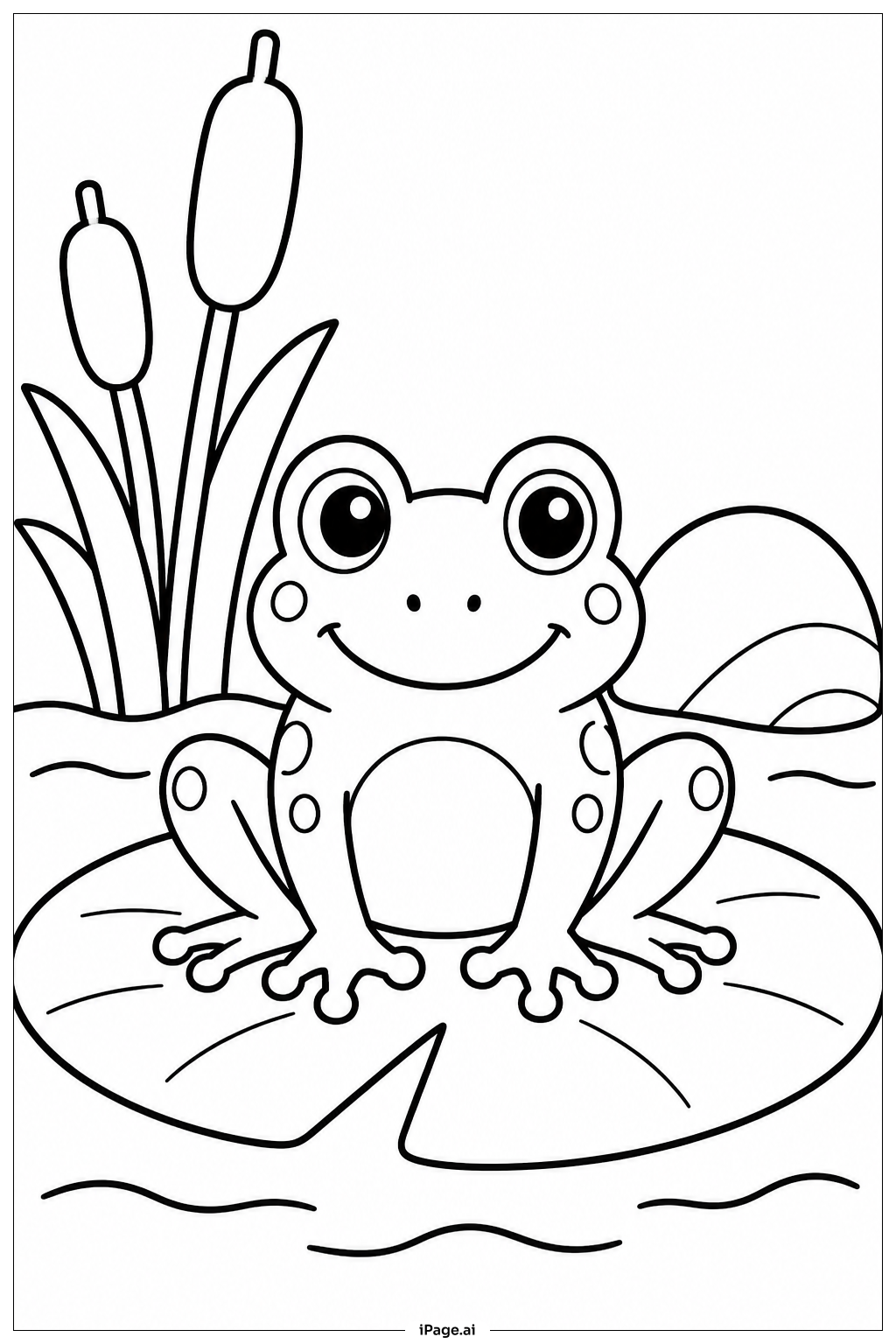
Coloring tips: How to color Frog In Pond coloring page well?
Start with the frog by using bright greens for its body. Try a lighter green on the belly and a deeper green on the back to add depth. Use yellow-green for the lily pad to keep it looking fresh and natural. Color the lotus flower in soft pink or white with a yellow center for a delicate touch. For the water, light blue or aqua shades work well. Add subtle darker blue lines to show ripples and movement. The reeds and grasses can be colored in olive green or golden yellow. Use brown or tan for the stems. Feel free to mix colors and experiment. There are no strict rules here. Kids can even try fun, imaginative colors like a purple frog or a rainbow lotus. The goal is to enjoy the process and make the scene come alive with your own creative choices.
Coloring challenges: Which parts are difficult to color and need attention for Frog In Pond coloring page?
• Frog Skin Texture: The frog's body has a smooth, rounded surface that can be tricky to shade. Getting the right mix of light and dark green tones helps the frog look three-dimensional rather than flat. Young colorists may find it challenging to blend colors smoothly without streaking.
• Lily Pad and Leaf Details: The lily pad has fine lines and veins running across its surface. Staying inside these small sections requires a steady hand and a sharpened pencil or thin marker. Rushing through this area can cause colors to bleed into each other.
• Water Ripples: Representing water in a coloring page is one of the more advanced challenges. The ripple lines are close together and curved. Coloring each band in slightly different shades of blue gives a realistic water effect, but selecting the right color gradient takes patience and practice.
• Lotus Flower Petals: The lotus bloom has multiple overlapping petals with subtle shadows between them. Each petal needs careful attention to shading so the flower looks layered and full. Using two or three shades of the same color family works best here.
• Background Reeds and Grasses: The tall reeds surrounding the pond are thin and close together. Coloring narrow vertical shapes without going outside the lines is a real test of precision, especially for younger children still developing fine motor control.
Benefits of coloring books: Advantages of drawing Frog In Pond coloring page
Coloring this Frog In Pond scene offers a wide range of benefits for children and beginners alike. Focusing on the details of the frog, lily pads, and water helps build concentration and patience. Kids learn to slow down and pay attention to small areas, which strengthens focus over time.
Working with different shades of green and blue encourages color awareness and creativity. Children start to understand how colors interact and how light and dark tones can make a flat image feel alive. This builds early artistic thinking and visual skills.
The fine details in this image, such as the ripples, petals, and reeds, give young hands a gentle workout. Gripping crayons or colored pencils and staying within the lines improves fine motor skills and hand-eye coordination, which supports writing and other school tasks.
Coloring a peaceful nature scene like a pond also has a calming effect. It can reduce stress and anxiety, helping children unwind after a busy day. The quiet, repetitive motion of coloring creates a relaxing experience similar to mindfulness.
Finally, completing the image gives children a real sense of pride and accomplishment. Displaying their finished artwork builds confidence and motivates them to keep creating.



