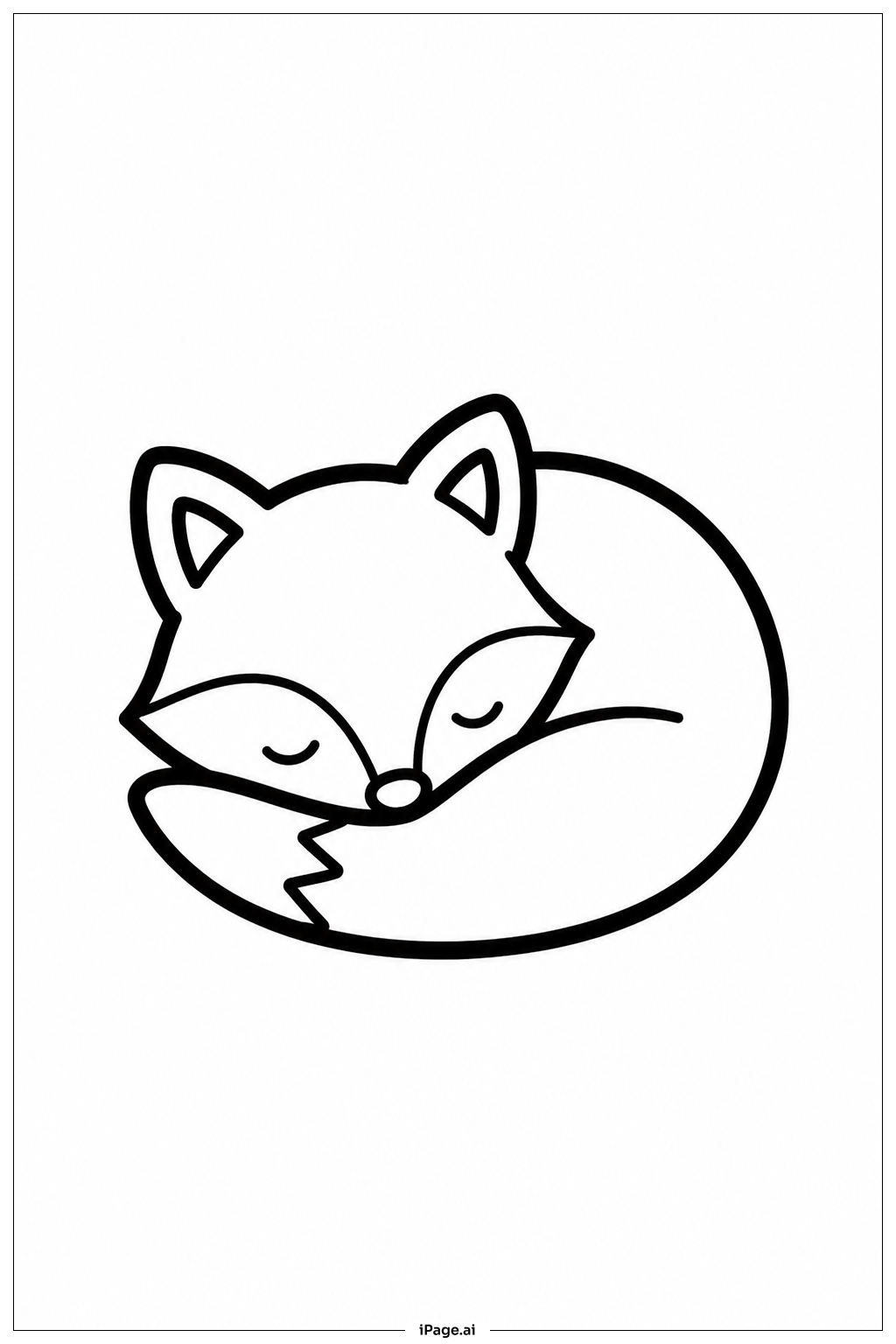
Coloring tips: How to color Sleeping Fox coloring page well?
Start with the fox's body using warm shades like orange, rust, or amber. Use a lighter tone — cream or pale yellow — for the belly, chest, and inner ears. The tail tip and paw accents look great in white or soft gray. Add subtle shading by blending a darker brown or burnt sienna along the edges of the fur to give it depth and a fluffy feel. For the face, keep the nose a soft pink or dark brown, and color the closed eyes with a gentle brown or black outline. The background, if present, can be filled with soft greens for grass or leaves. Keep colors gentle and warm to match the cozy, dreamy mood of the scene. Young colorists can stick to simple flat colors, while older kids can try layering and blending for a more lifelike effect.
Coloring challenges: Which parts are difficult to color and need attention for Sleeping Fox coloring page?
• Fur Texture and Layering: The fox's body is covered in detailed fur lines that require careful attention. Coloring along the direction of each fur stroke helps create a natural, realistic look. Staying within the fine lines can be tricky, especially for younger colorists. Using short, light strokes with colored pencils works best here.
• Smooth Belly Shading: The lighter area on the fox's belly and chest needs to blend gradually into the darker orange of the back and sides. Achieving a smooth gradient without harsh lines takes practice. Try using a cream or white base and slowly layering a warmer tone on top at the edges.
• Tail Details: The fluffy tail wraps around the fox's body and has its own flowing fur lines. Keeping the tail distinct from the body while still making it look connected requires thoughtful color choices. A slightly different shade of orange or a highlighted tip can help define the tail's shape.
• Small Facial Features: The fox's face includes delicate details like closed eyelids, a small nose, and subtle smile lines. These tiny areas are easy to color outside of, especially with thicker markers or crayons. Fine-tipped tools are strongly recommended for this section to keep details clean.
• Background Elements: If the image includes leaves, grass, or ground textures around the sleeping fox, choosing colors that complement the warm fox tones without clashing is important. Soft greens and earthy browns work well, but staying inside the background outlines neatly can be a challenge for beginners.
Benefits of coloring books: Advantages of drawing Sleeping Fox coloring page
Coloring this Sleeping Fox image offers a wonderful range of benefits for children and young learners. The calm, cozy subject matter helps create a relaxing and stress-free creative activity. Focusing on a peaceful scene encourages kids to slow down, breathe, and enjoy a quiet moment.
Working on the fox's detailed fur lines helps children develop fine motor skills and improve hand-eye coordination. Choosing colors for the warm orange body, soft belly, and fluffy tail encourages creative thinking and personal expression. Kids learn how colors can create mood — warm tones feel cozy and safe, just like a sleeping fox.
For older children, the challenge of blending and shading builds patience and attention to detail. Completing the full image gives a strong sense of accomplishment and boosts self-confidence. It also sparks curiosity about foxes and the natural world, making it a gentle introduction to learning about wildlife.
Whether coloring alone or with friends and family, this image makes a fun, screen-free activity that supports focus and imagination. It is a simple, joyful way for children of all skill levels to explore art and express themselves.