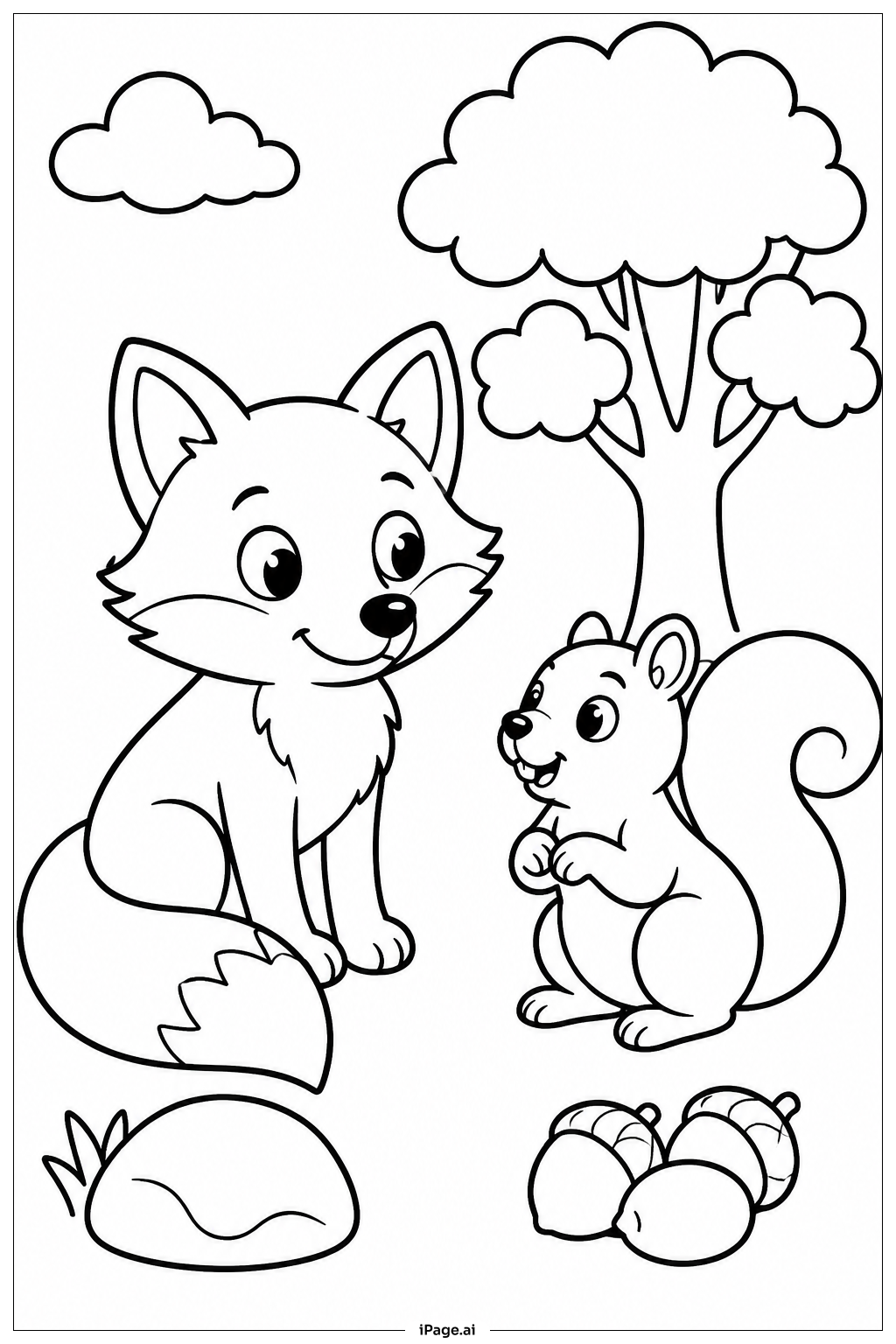
Coloring tips: How to color Fox With Squirrel coloring page well?
Start with the fox's body using warm shades of orange or burnt orange. Use a lighter cream or white for the chest, inner ears, and muzzle area. The tail tip and paw accents look great in white or soft beige. For the squirrel, try a medium brown or chestnut color on the body, with a lighter tan for the belly. The fluffy squirrel tail can be colored in a mix of brown and golden yellow for a natural look. The acorn can be painted in dark brown with a tan cap. Use greens for the grass and leaves, and add pops of yellow, orange, or red to the fallen leaves for a beautiful autumn feel. A light blue or soft purple background can make the whole scene feel magical. Feel free to experiment with shading by pressing lighter in some areas to add depth to the fur.
Coloring challenges: Which parts are difficult to color and need attention for Fox With Squirrel coloring page?
• Fox Fur Texture: The fox has layered fur patterns across its body, tail, and face. Capturing the natural look of fur requires blending multiple shades of orange, red, and brown smoothly. Young colorists may find it tricky to transition between the darker back fur and the lighter chest and muzzle areas without creating harsh color lines.
• Squirrel's Fluffy Tail: The squirrel's tail is one of the most detailed parts of this image. It has many curved lines suggesting individual strands of fur. Filling in this area evenly while still showing the texture of the tail takes patience and a light hand. Using short, directional strokes can help create a realistic fluffy effect.
• Small Detailed Areas: The squirrel's tiny paws holding the acorn, the small facial features on both animals, and the delicate flower petals around the scene are all quite small. These tight spaces are difficult to color neatly, especially for younger children. Fine-tipped colored pencils or thin markers work best in these areas.
• Overlapping Natural Elements: The leaves, grass, and ground details overlap with the animals in several places. Deciding which color belongs to each layer and keeping those areas clean and distinct from one another can be confusing. Planning the color scheme before starting helps avoid muddy or unintended color mixing.
• Consistent Color Balance: Keeping the colors of both animals balanced so that neither the fox nor the squirrel overpowers the other visually is a subtle challenge. Choosing colors that complement rather than clash with each other helps the whole scene feel harmonious and pleasing to the eye.
Benefits of coloring books: Advantages of drawing Fox With Squirrel coloring page
Coloring this fox and squirrel scene offers a wide range of benefits for children of all ages. First, it helps develop fine motor skills as kids carefully fill in small spaces like the squirrel's paws and the tiny flower petals. The act of controlling a crayon or colored pencil within outlines strengthens hand muscles and improves hand-eye coordination.
Second, choosing colors for the animals and their woodland environment sparks creativity and imagination. Kids get to make artistic decisions, building confidence in their own choices.
Third, this image introduces children to nature and wildlife in a fun, engaging way. Learning about foxes and squirrels while coloring creates a positive connection to the natural world and may inspire curiosity about animals.
Fourth, the calming, repetitive motion of coloring helps children relax and focus. It is a wonderful screen-free activity that encourages mindfulness and patience, especially when working through the detailed fur textures and overlapping leaves.
Finally, completing a full coloring page gives children a sense of pride and accomplishment. Displaying their finished artwork builds self-esteem and motivates them to keep creating. This image is a perfect blend of fun, learning, and artistic expression for Boys and Girls alike.