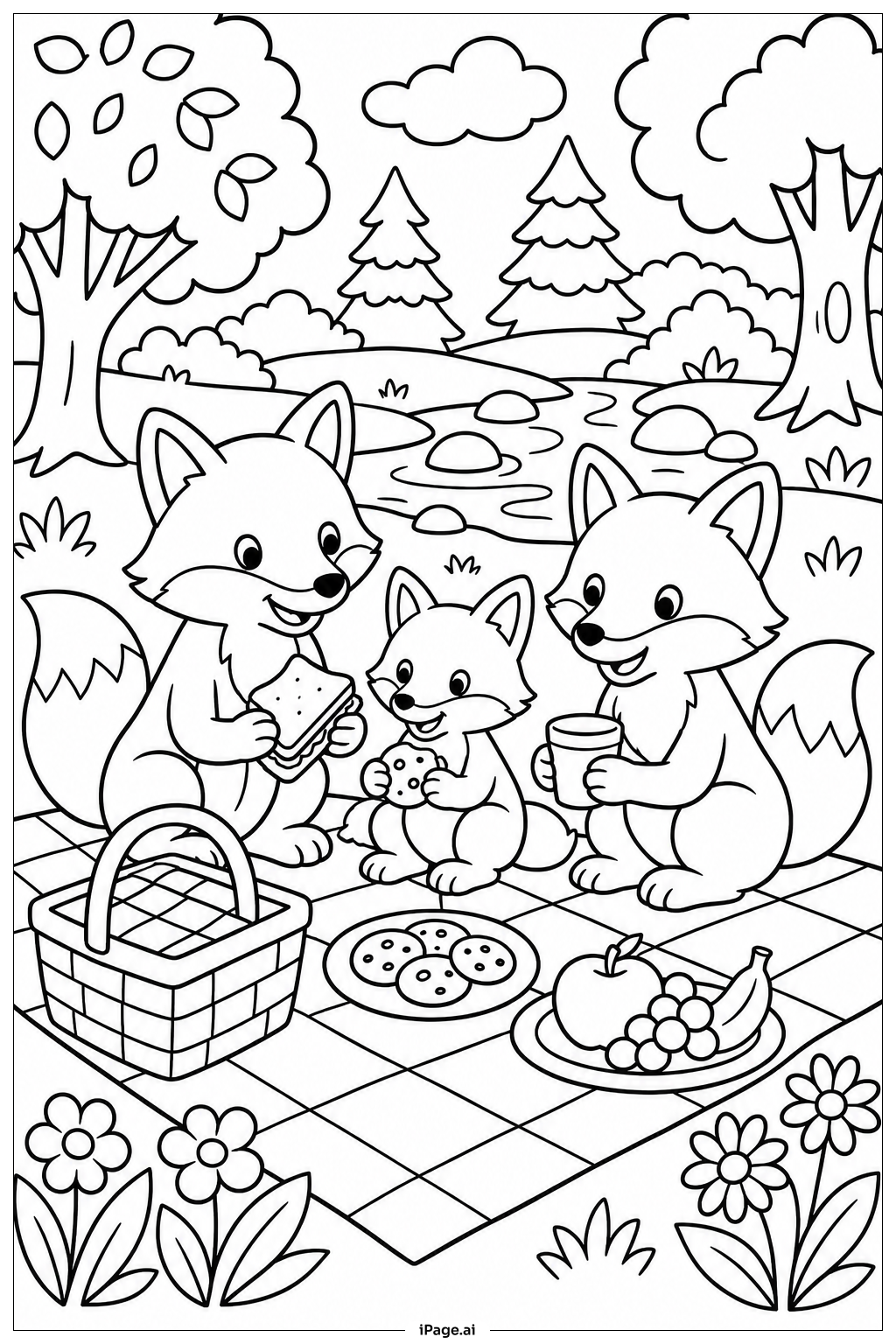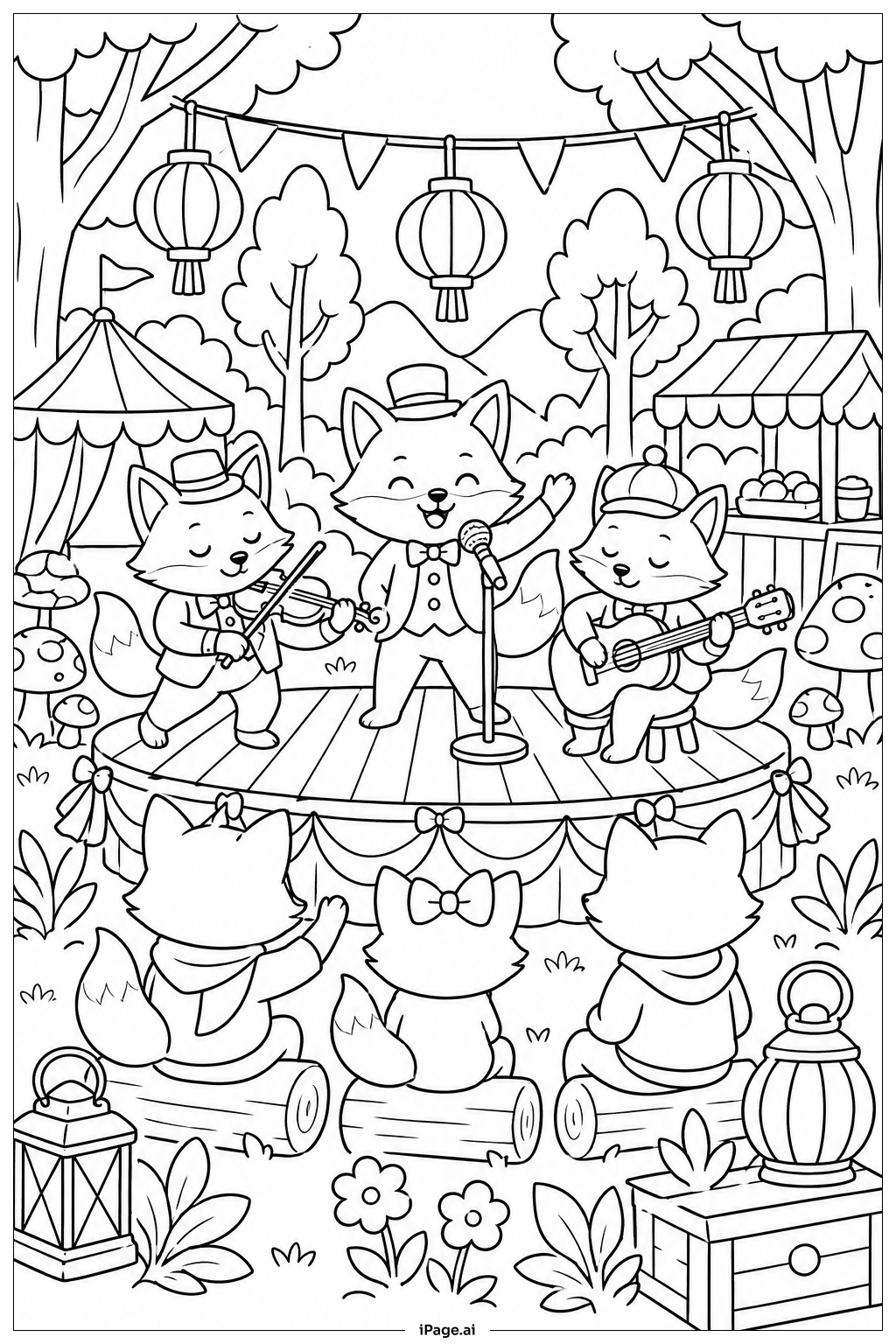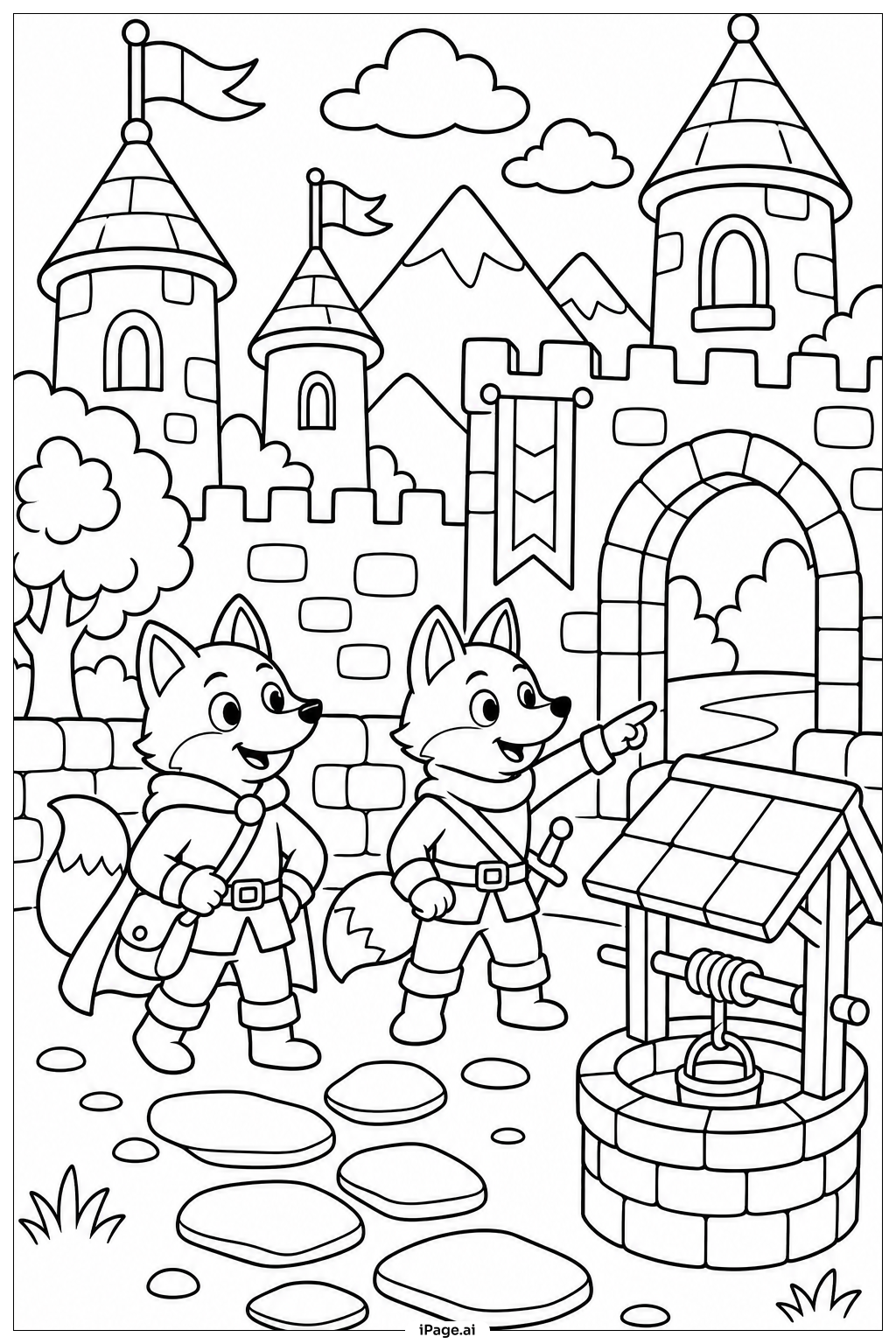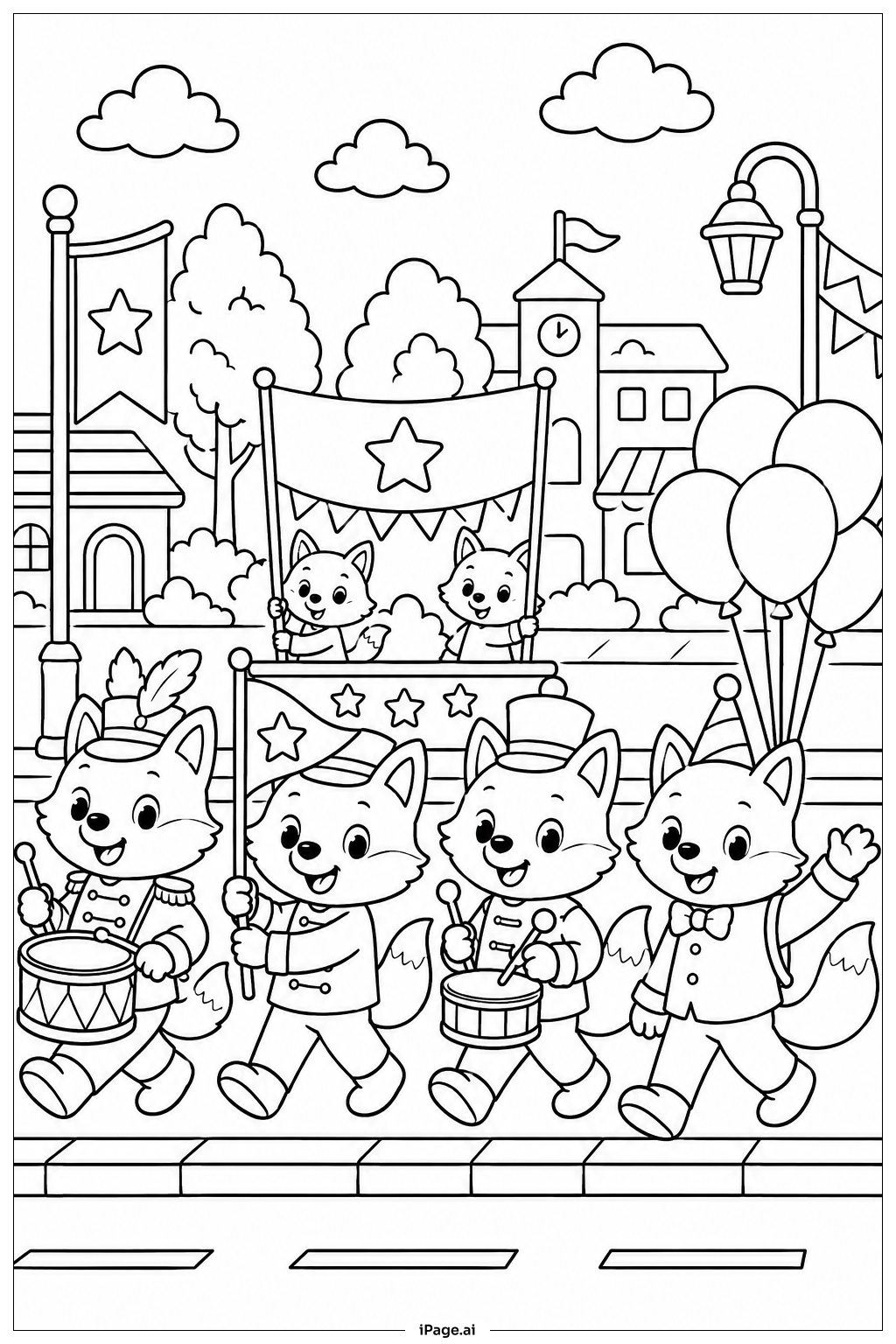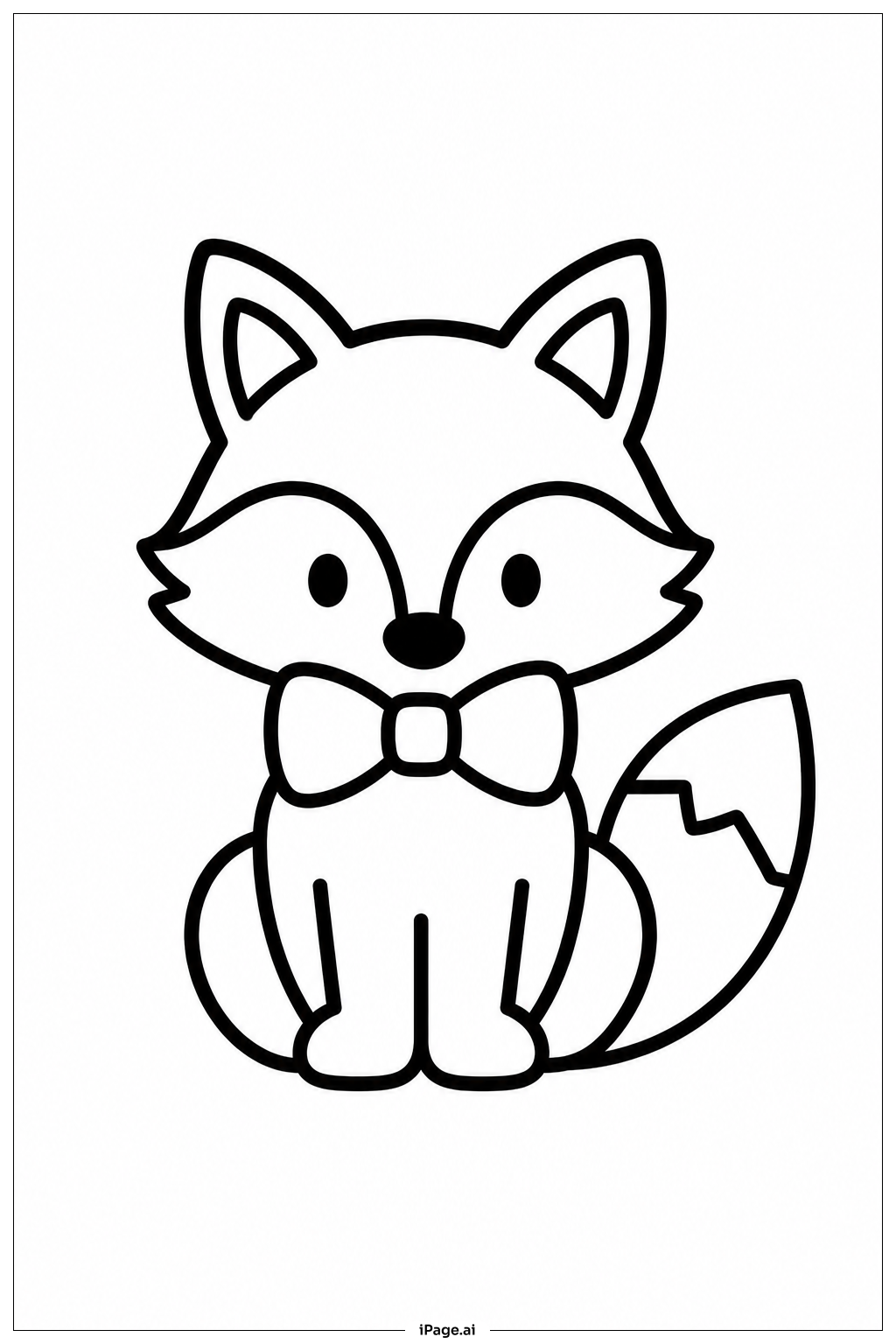
Coloring tips: How to color Fox With Bow coloring page well?
Start by choosing warm, earthy tones for the fox's body. Shades of orange, rust, and amber work beautifully for the main fur areas. Use a darker brown or reddish-brown for the tips of the ears and the back. Leave the chest, muzzle, and inner ear areas white or very light cream to show the natural markings of a fox. For the bushy tail, blend orange at the base fading to white at the tip. The bow can be any color you like — try a bright red, pink, or deep purple to make it pop against the fox's warm fur. Add a lighter shade of the same color for highlights on the bow's loops. Use black or dark brown for the eyes and nose, with a tiny white dot for a sparkling effect. Feel free to add a soft background in pale green, sky blue, or light yellow to make the fox stand out even more.
Coloring challenges: Which parts are difficult to color and need attention for Fox With Bow coloring page?
• Fur Texture Details: The fox's body is covered with fine lines that represent fur texture. Coloring within these small sections neatly can be tricky, especially for younger children. Using the tip of a colored pencil or a fine-tipped marker will help you stay inside the lines and give the fur a realistic, layered look. Try coloring in short, light strokes that follow the direction of the fur lines.
• Smooth Color Blending on the Tail: The bushy tail requires a smooth transition from a deep orange at the base to a pure white at the tip. Achieving this gradient without harsh color breaks is a challenge. Work slowly, layering colors gently and using a light touch as you move toward the white tip. Blending a medium peach or light orange in between helps create a natural fade.
• Bow Detailing: The decorative bow has loops, folds, and ribbon tails that each catch light differently. Coloring each section of the bow with a slightly different shade of the same color adds depth and realism. The inner folds of the bow should be darker, while the outer curves should be lighter and brighter.
• Small Facial Features: The fox's face includes small details like the eyes, nose, whisker dots, and inner ear markings. These tiny areas require careful, precise coloring using fine tools. Rushing through these features can cause colors to bleed into each other, making the face look muddy or unclear.
• Color Consistency Across the Image: Keeping a consistent color tone throughout the entire fox can be difficult, especially when working on different sections at different times. It helps to pick your full color palette before you begin and test your colors on a separate sheet of paper first.
Benefits of coloring books: Advantages of drawing Fox With Bow coloring page
Coloring this Fox With Bow page offers a wonderful range of benefits for children and young learners. First, it helps develop fine motor skills. Carefully coloring inside the detailed lines of the fox's fur, bow, and facial features strengthens hand muscles and improves pencil control, which is important for writing and other daily tasks. Second, it encourages creativity and self-expression. Choosing colors for the fox's fur, the bow, and the background allows children to make their own artistic decisions and feel proud of their unique results. Third, coloring promotes focus and concentration. Sitting with a coloring page and working through each section trains the mind to stay on task, which is a valuable skill both in and outside the classroom. Fourth, it provides a calming, stress-relieving activity. The gentle, repetitive motion of coloring is soothing and helps children manage emotions and reduce anxiety. Finally, completing the page builds confidence. Finishing a coloring image gives children a real sense of accomplishment, encouraging them to take on new creative challenges with enthusiasm and joy.