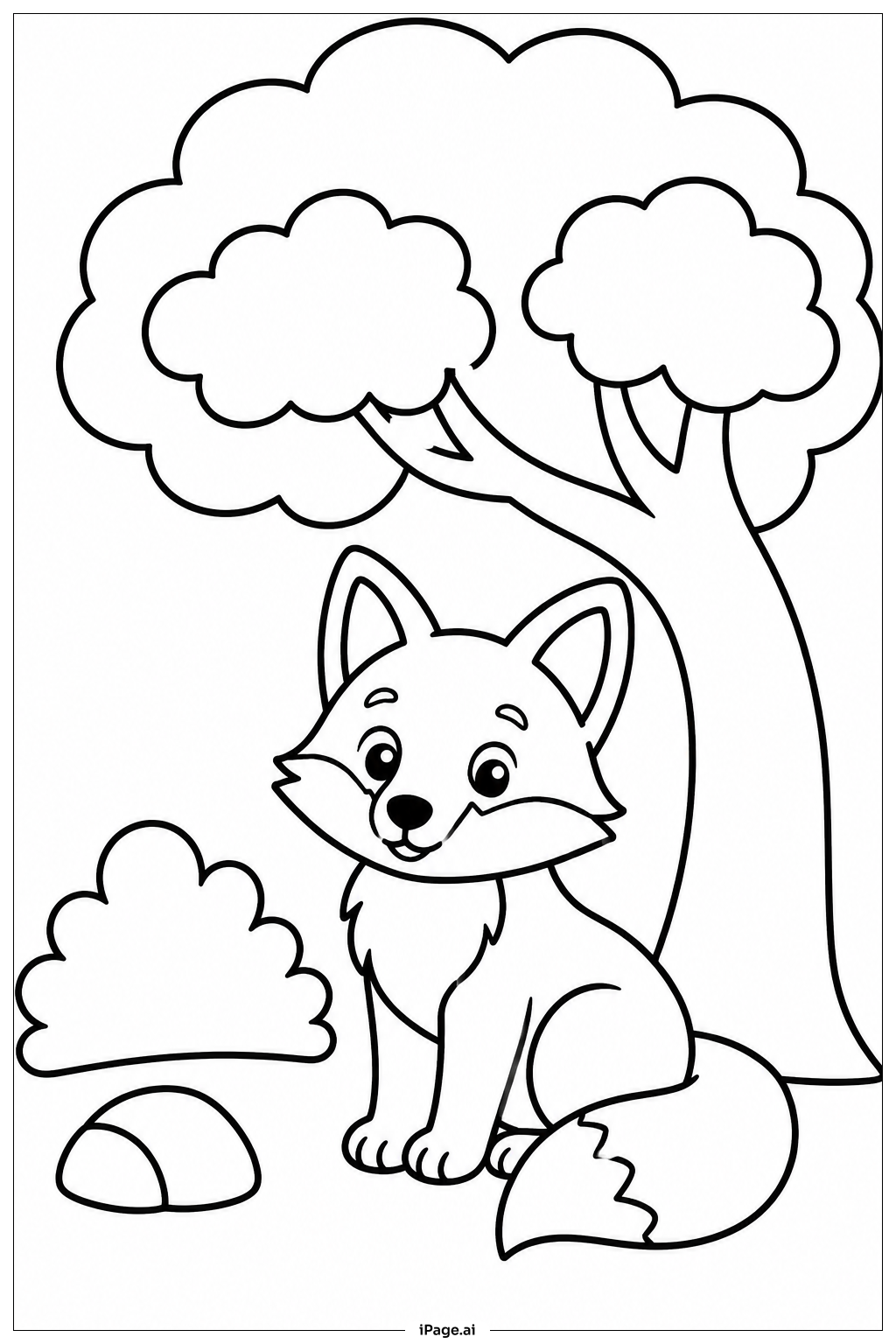
Coloring tips: How to color Fox Under Tree coloring page well?
Start with the fox's body using warm orange or rusty red tones. Use white or cream for the chest, inner ears, and tail tip. Color the nose dark brown or black, and make the eyes amber or golden for a lifelike look. For the tree trunk and roots, use shades of brown — mix dark and light brown to show texture in the bark. The leaves can be colored bright green for a lively summer feel, or try yellow, orange, and red for a cozy autumn look. Use light tan or beige for the ground, and add patches of green for small plants. Fallen leaves on the ground can match the tree's colors. Use gentle shading to give the fox and tree a soft, three-dimensional feel. Feel free to add your own touches, like a sunset sky peeking through the branches!
Coloring challenges: Which parts are difficult to color and need attention for Fox Under Tree coloring page?
• Fox Fur Texture: The fox's coat has soft, layered fur that can be tricky to color realistically. To capture the fluffy texture, use short, light strokes that follow the direction of the fur. Blend orange, red-brown, and cream carefully, especially where different fur colors meet on the chest, tail tip, and face. Rushing this area may result in flat, unnatural coloring.
• Tree Bark Details: The trunk and roots are filled with ridges, grooves, and curves that create a complex surface. Coloring these areas requires patience. Use multiple shades of brown and gray to highlight raised areas and shade deeper grooves. Leaving lighter highlights along the edges of the bark ridges will make the tree look more three-dimensional and realistic.
• Leaf Clusters and Overlapping Shapes: The branches hold many overlapping leaves, which makes it hard to decide where one leaf ends and another begins. Take your time choosing slightly different shades of green (or autumn colors) for neighboring leaves so each one stands out clearly. Using a fine-tipped tool for leaf edges will help keep the details clean and sharp.
• Ground and Background Depth: The scene includes roots, fallen leaves, and small plants spread across the ground. Coloring this area with too little variation can make it look flat. Try using at least two or three different tones for the soil and vegetation to create a natural sense of depth and distance.
• Small Facial Features: The fox's face includes small, delicate details like the eyes, nose, and mouth. These require a very steady hand and a fine-tipped coloring tool. Using the wrong color or going outside the lines in this area can change the fox's entire expression, so work slowly and carefully.
Benefits of coloring books: Advantages of drawing Fox Under Tree coloring page
Coloring this Fox Under Tree image offers a wide range of wonderful benefits for kids and beginners alike. Focusing on the fox's fur, the tree's bark, and the leafy branches helps build fine motor skills and hand-eye coordination as you practice staying within detailed lines and blending colors smoothly. Choosing colors for the fox, the tree, and the woodland ground encourages creative thinking and helps children explore color combinations in a fun, low-pressure way. The peaceful forest scene is naturally calming, making this a great activity for reducing stress and anxiety — just focusing on coloring each section can feel like a quiet, mindful break from a busy day. As children work through the different parts of the image, they also learn about nature, forest animals, and seasonal colors, quietly building their knowledge of the world around them. Completing the full image gives a satisfying sense of accomplishment that builds confidence and a positive attitude toward creative work. This image is a wonderful choice for anyone who loves animals and the outdoors!