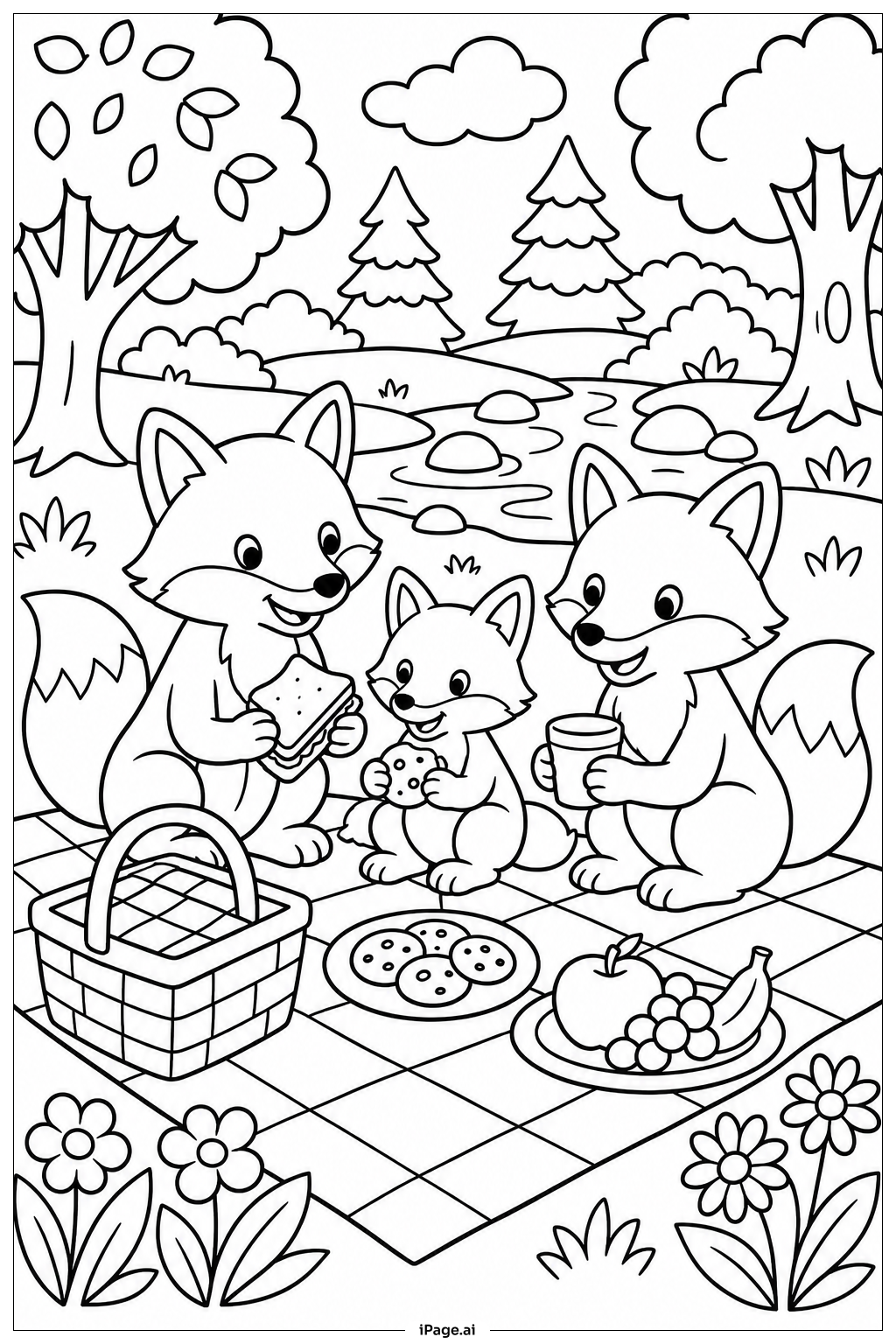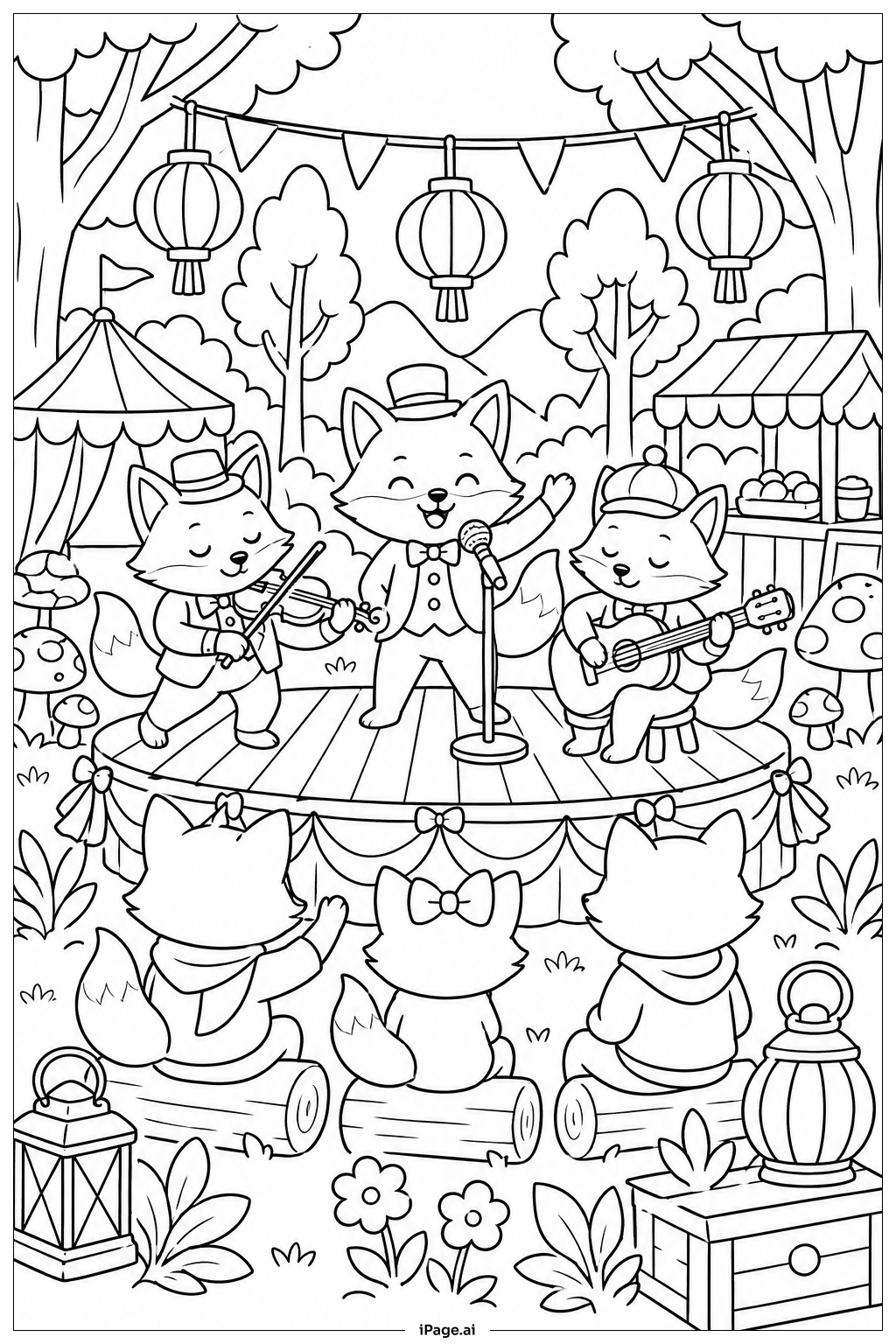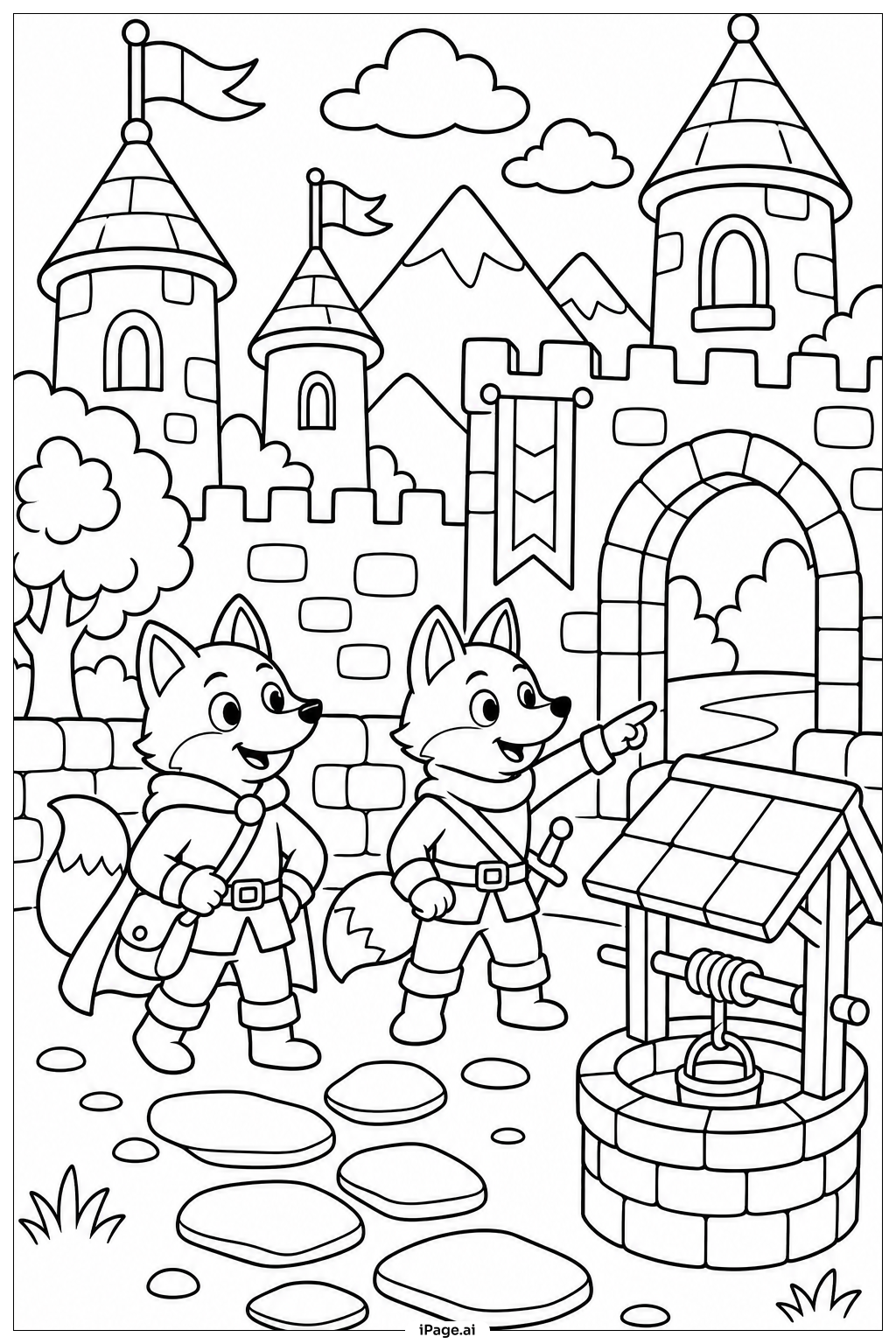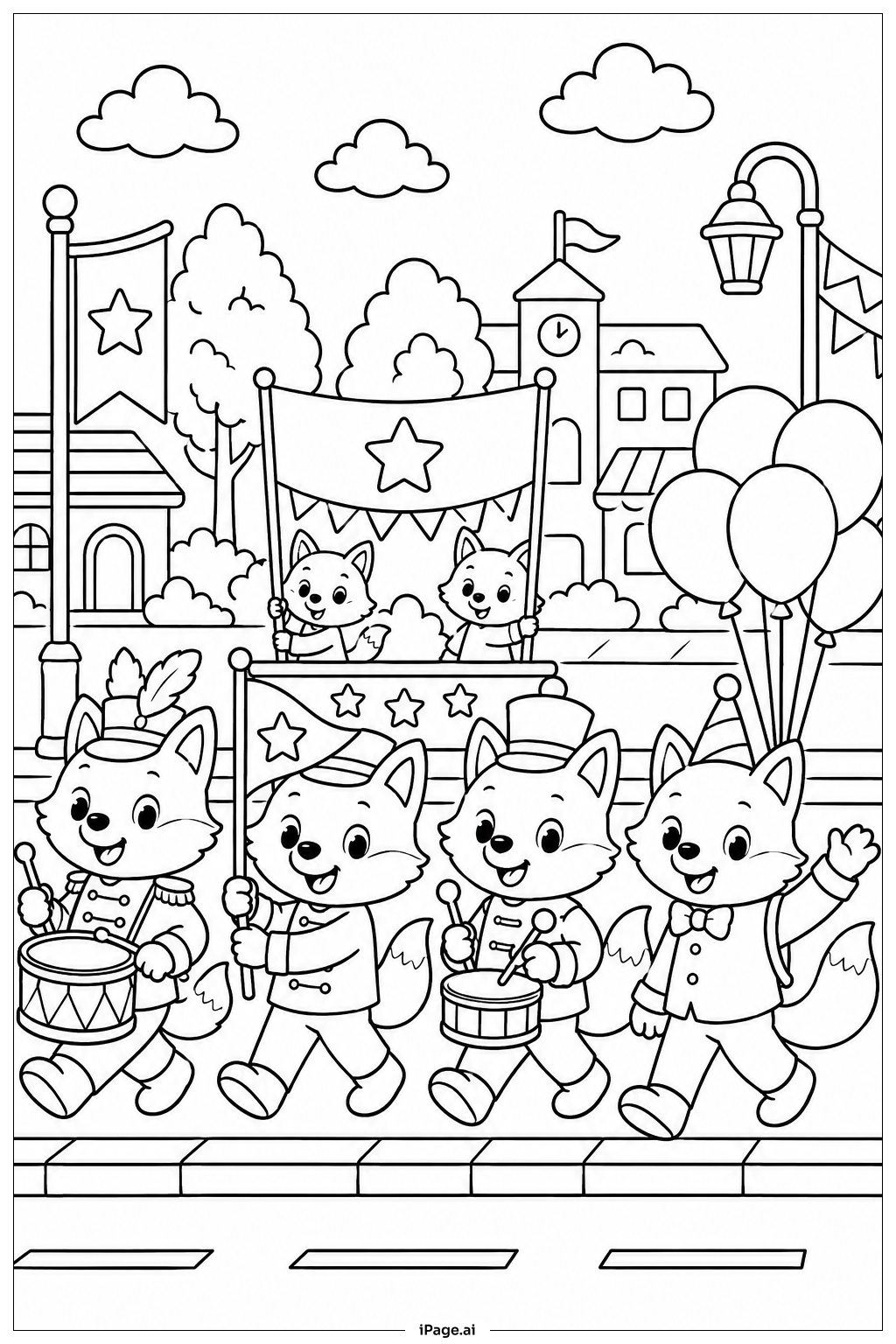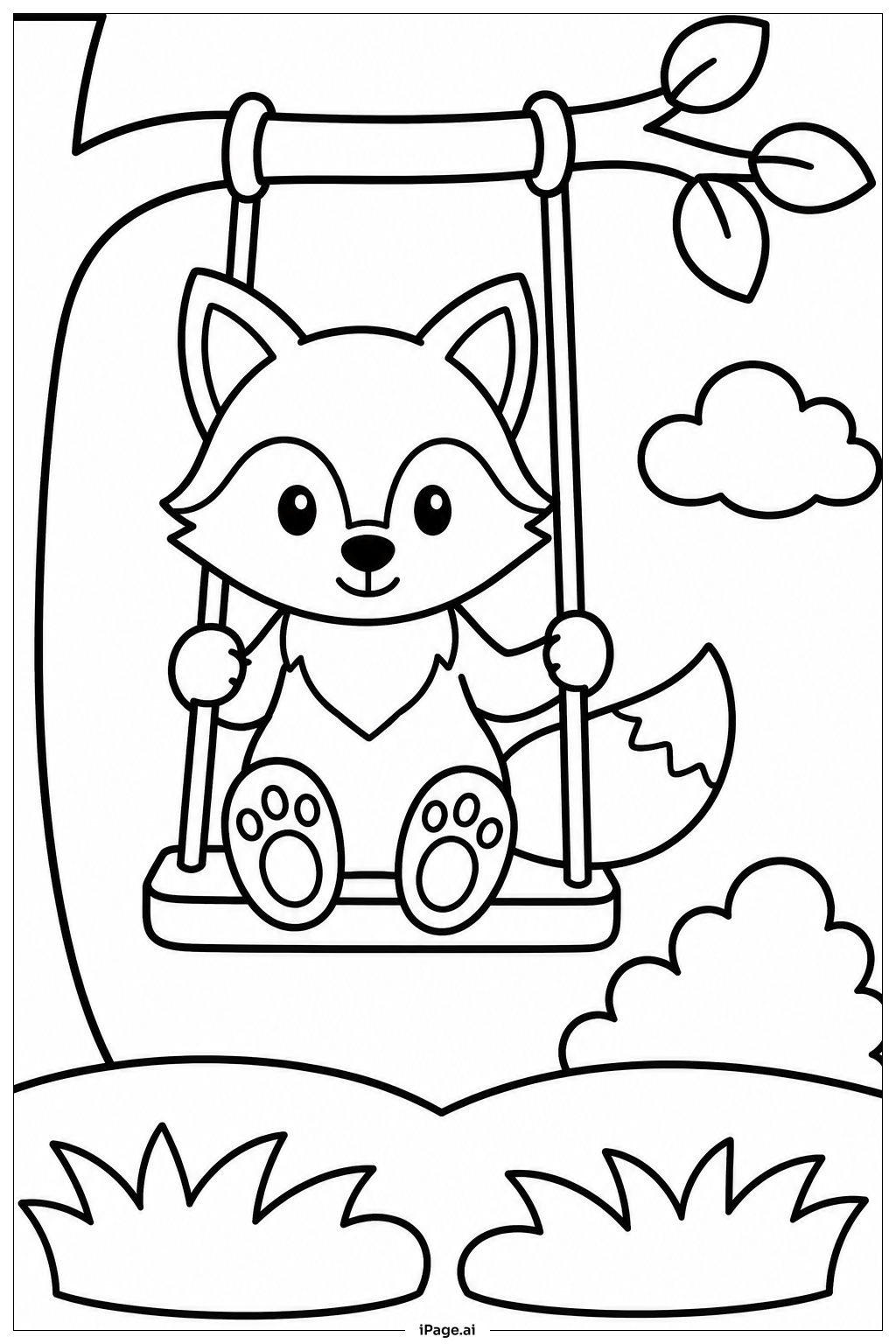
Coloring tips: How to color Fox On Swing coloring page well?
Start with the fox's body. Use warm orange or rusty red for its fur. Add white or cream to the chest, inner ears, and tail tip. Use a soft pink for the inside of the ears and the nose. Color the eyes a rich brown or amber to make them look bright and lively. For the swing ropes, try tan or light brown. The wooden seat can be a darker brown. Paint the tree branch in deep brown with hints of gray. Use many shades of green for the leaves. Add yellow, purple, or pink flowers in the grass below. A light blue sky in the background will make the whole scene feel fresh and fun. Feel free to mix colors and make this fox your own. There are no wrong choices. Be creative and enjoy every stroke.
Coloring challenges: Which parts are difficult to color and need attention for Fox On Swing coloring page?
• Fox Fur Texture: The fox's fur requires careful blending to look natural and fluffy. You need to layer at least two or three shades of orange, from light peach at the edges to deep rust at the center. Keeping the transitions smooth without muddy blending can be tricky, especially for younger colorists who are still learning how to control pressure and layering.
• Facial Details: The fox's face has small, closely packed features including the eyes, nose, cheeks, and smile. These areas require a fine-tipped tool to stay within the lines. The eyes especially need a steady hand to add highlights and depth without smearing. Rushing this section often leads to colors bleeding into each other.
• Tail and White Markings: The fluffy tail and the white patches on the chest and tail tip must be colored with extra care. Leaving the white areas blank or using a very light cream color while surrounding them with orange requires precision. Overcoloring into the white zones can flatten the contrast and reduce the visual appeal.
• Swing and Ropes: The thin rope lines on the swing are narrow and easy to color outside of. Keeping the rope a consistent tone without going over onto the fox or the background takes patience and a well-sharpened pencil or thin marker.
• Background Depth: Balancing the forest background so it does not overpower the fox in the foreground is a real challenge. Using lighter, cooler tones for distant trees and brighter colors near the fox helps create depth, but this requires an understanding of basic color theory that may be difficult for younger children.
Benefits of coloring books: Advantages of drawing Fox On Swing coloring page
Coloring this Fox On Swing image brings many wonderful benefits for children and beginners alike. First, it builds fine motor skills. Staying inside the lines and shading small areas like the fox's face and tail helps strengthen hand and finger muscles. These skills carry over into writing, drawing, and everyday tasks.
Second, it encourages creativity. Choosing colors for the fox's fur, the swing, and the forest background gives children the freedom to express themselves. There is no single right answer, so every finished page is unique and personal.
Third, it supports focus and patience. Completing a detailed image like this teaches children to slow down, pay attention to small areas, and work step by step toward a finished goal. This kind of quiet concentration is great for calming an active mind.
Fourth, it introduces basic color concepts. Children learn about warm and cool colors, light and shadow, and how layering colors creates new effects. These early lessons build a strong foundation for art and visual thinking.
Finally, finishing the page gives a real sense of accomplishment. Seeing a bright, colorful fox swinging happily through the trees is deeply satisfying and builds confidence to try more creative challenges.