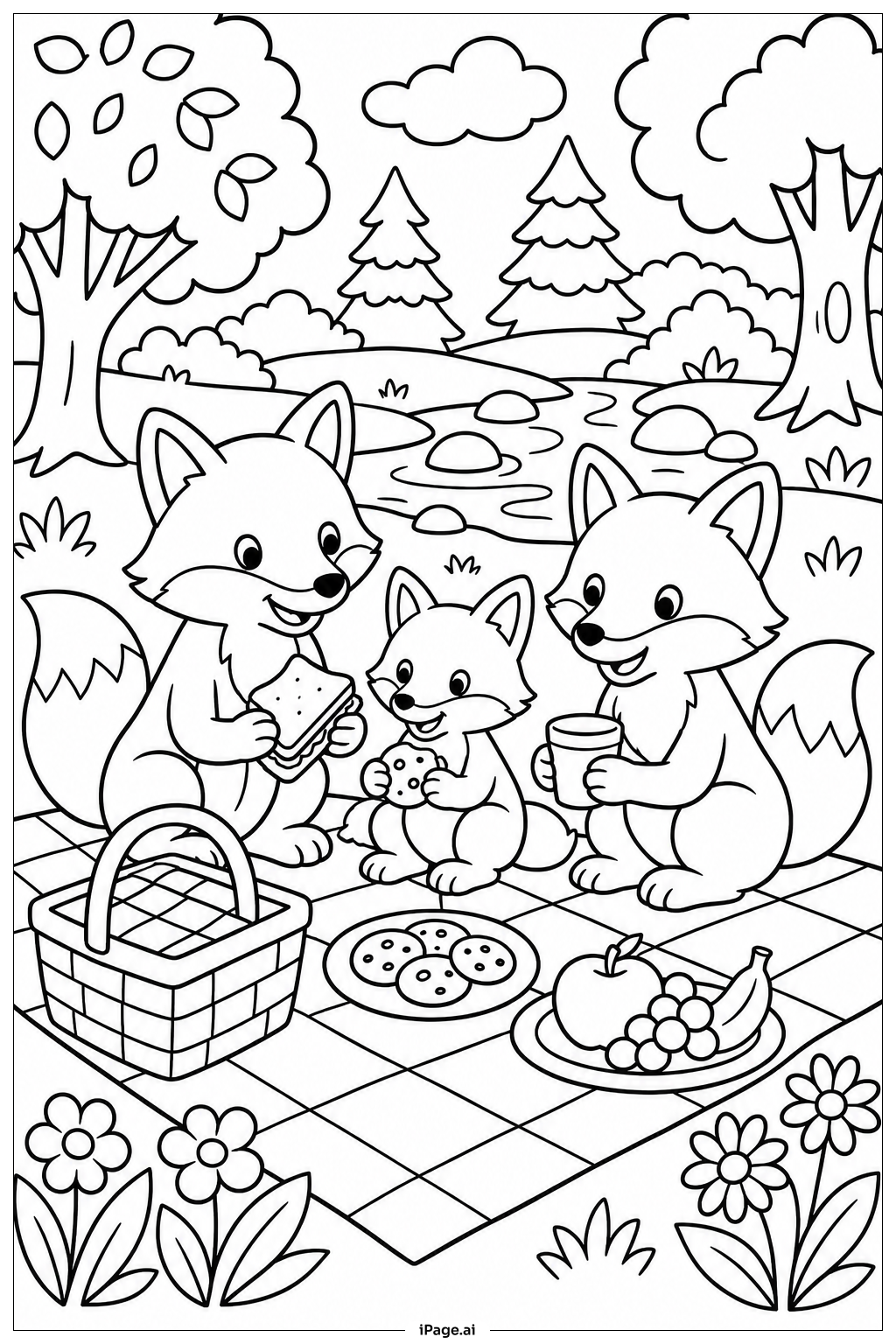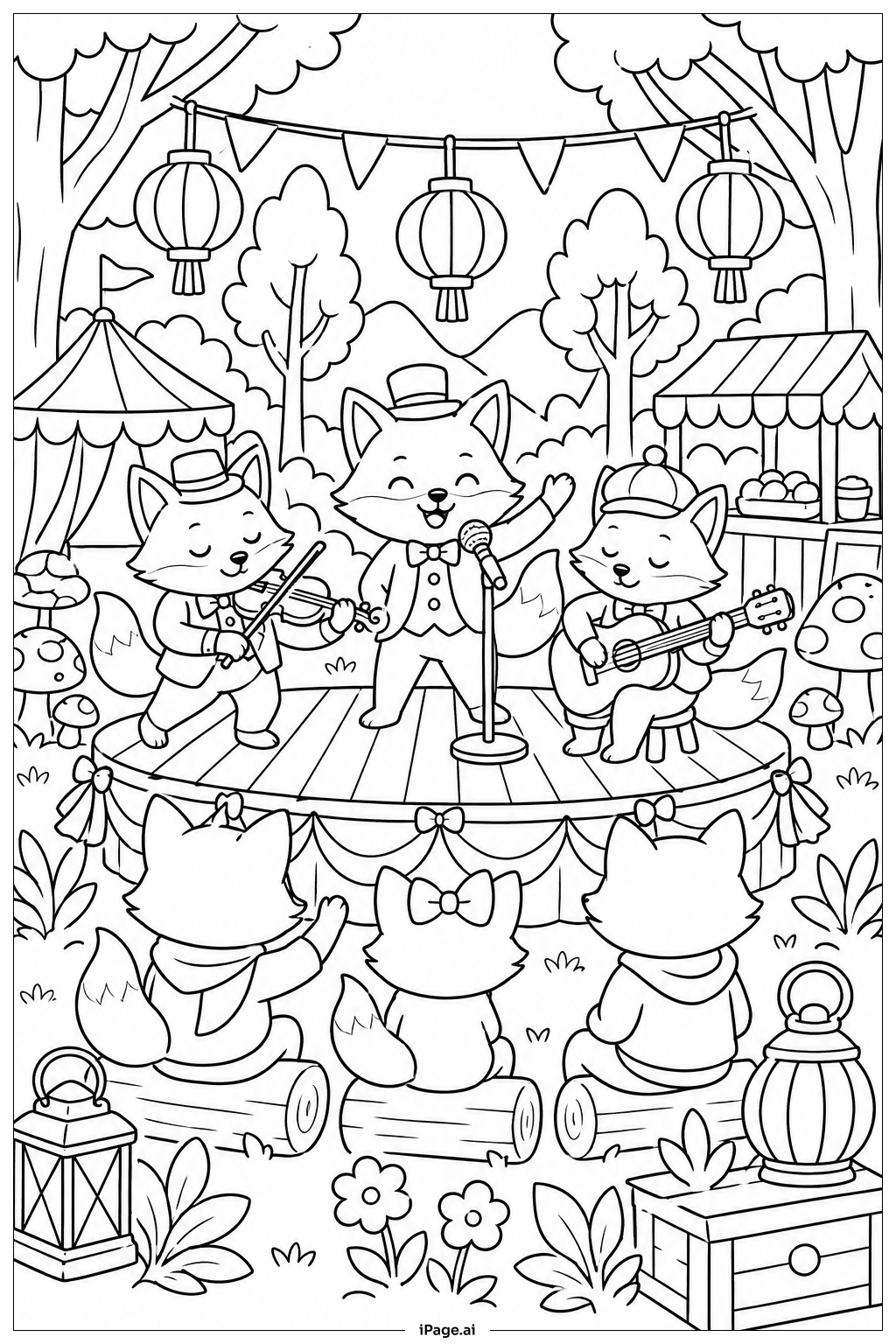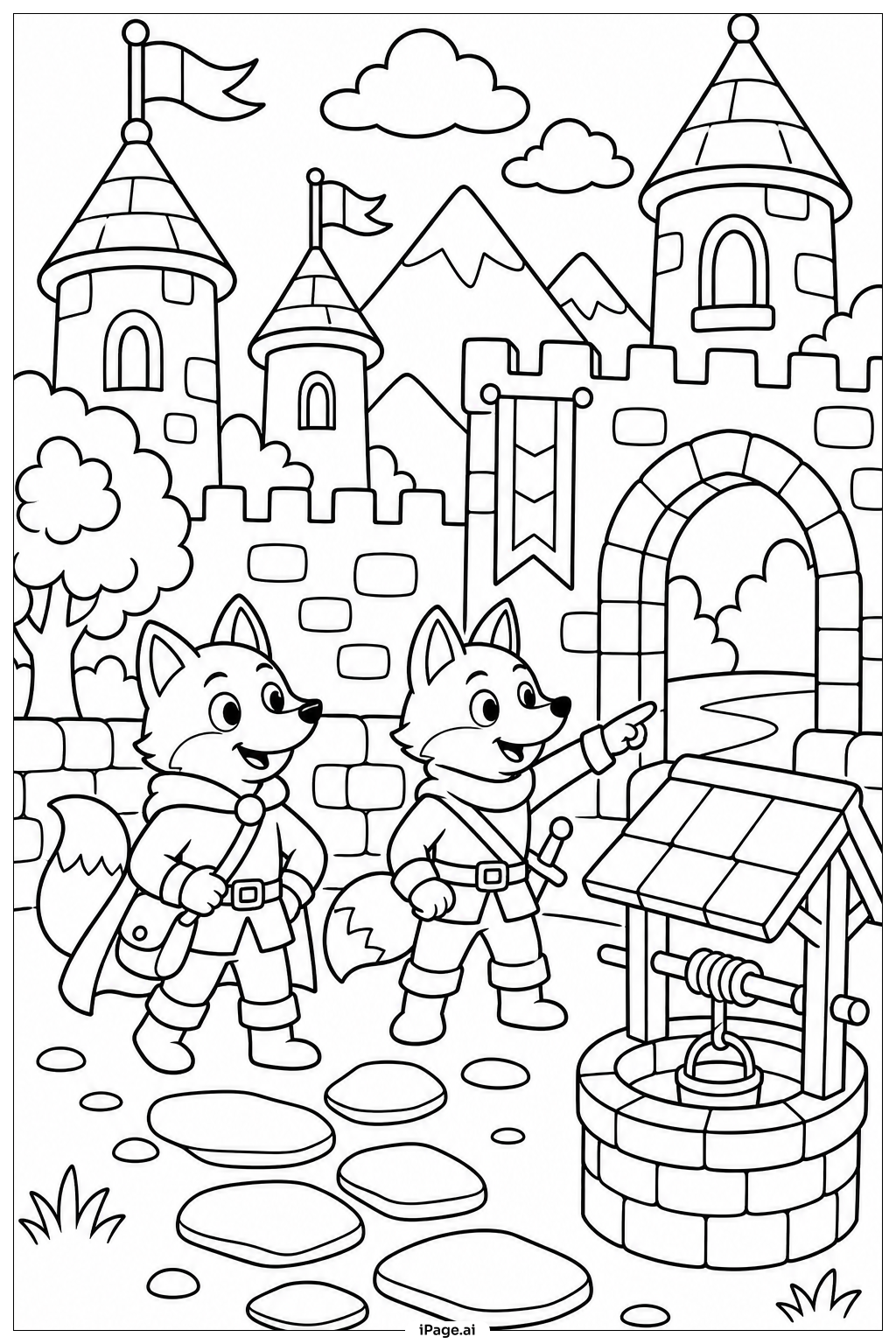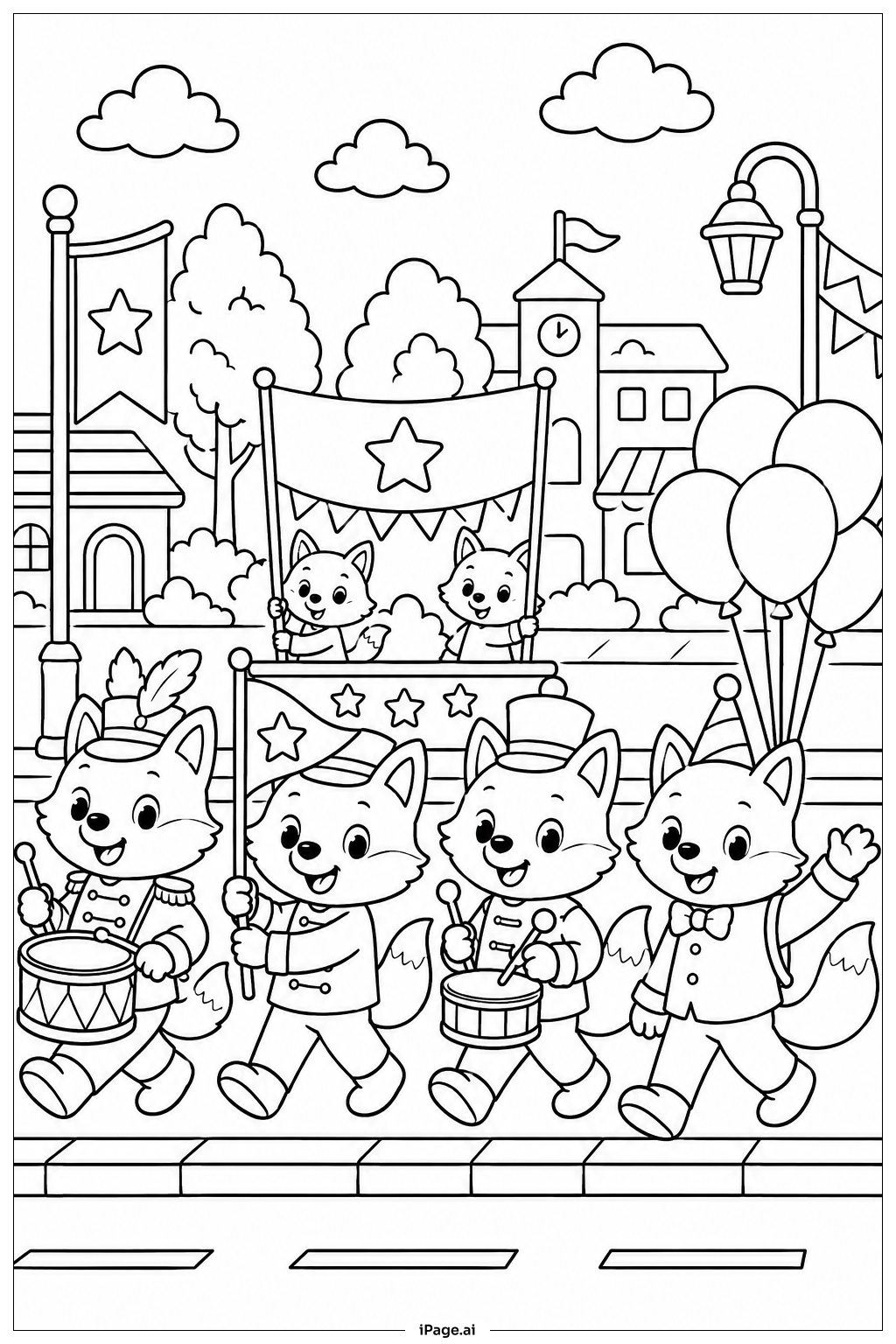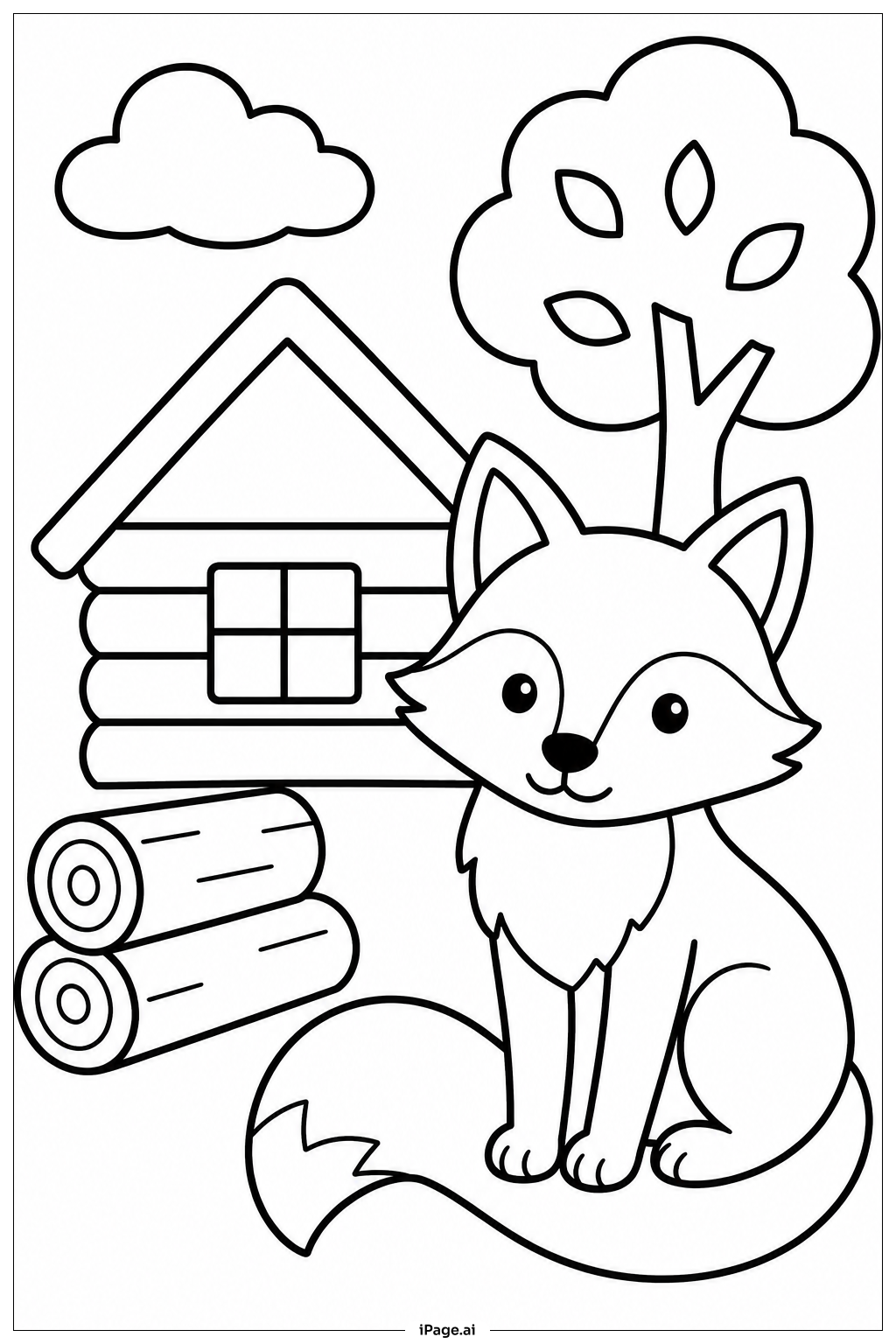
Coloring tips: How to color Fox By Cabin coloring page well?
Start with the fox. Use warm orange and rust tones for its fur. Add white or cream on the chest, belly, and inner ears. Use dark brown or black for the paws, ear tips, and nose. For the cabin, choose rich browns and tans for the wooden walls. Use gray or dark brown for the roof. Color the door and window frames in deeper shades to add contrast. The trees and ground can be done in shades of green and earthy brown. Try yellow, orange, and red for the fallen leaves to give the scene a cozy autumn feel. Add soft greens or brown for the mushrooms and plants. Use a light blue or soft purple for the sky peeking through the trees. Take your time with the fox's tail — layering orange, white, and a touch of dark brown will make it look fluffy and full of life.
Coloring challenges: Which parts are difficult to color and need attention for Fox By Cabin coloring page?
• Fox Fur Texture: The fox's coat has layered fur that requires blending multiple colors to look natural. Smoothly transitioning from deep orange on the back to lighter cream on the belly and chest takes patience and careful shading. Using small, short strokes in the direction of the fur will help create a realistic look.
• Fluffy Tail Details: The large bushy tail of the fox contains many fine lines suggesting individual strands of fur. Keeping the tip white or cream while blending into orange along the rest of the tail is tricky. Pressing too hard with one color can muddy the blending and flatten the texture.
• Cabin Wood Grain: The wooden logs or planks of the cabin may have fine lines showing the wood grain or layered construction. Coloring these evenly while keeping the wood grain lines visible requires a light hand and careful control of the coloring tool, especially in narrow spaces between logs.
• Background Trees and Foliage: The forest background features overlapping trees, branches, and leaves. Deciding which areas are in shadow and which are in light helps create depth. Using darker greens in the back and brighter greens closer to the front gives the scene a layered, three-dimensional feel that can be challenging to plan out in advance.
• Small Ground Details: Mushrooms, small plants, and fallen leaves on the ground are tiny elements that require fine control. Coloring these small shapes neatly without going outside the lines demands steady hands and thin coloring tools like colored pencils or fine-tipped markers.
Benefits of coloring books: Advantages of drawing Fox By Cabin coloring page
Coloring this Fox By Cabin scene offers a wide range of wonderful benefits for children and young artists. Working on the fox's warm fur tones helps children practice blending colors and understanding how shading creates depth and texture. This builds strong foundational art skills that carry over into many other creative activities.
The detailed forest and cabin setting encourages children to think about color choices in a natural environment. Deciding on autumn leaf colors, tree bark shades, and sky tones develops color awareness and an appreciation for the natural world around them.
Staying within the fine lines of the fox's fur, the cabin planks, and the small ground plants like mushrooms and leaves improves hand control and fine motor skills. These skills are directly connected to handwriting and other tasks that require precision.
The peaceful, cozy mood of the scene also makes this a calming activity. Focusing on a quiet woodland moment helps children slow down, concentrate, and find a relaxing creative outlet. This kind of focused quiet time supports emotional balance and patience.
Finally, completing the full image gives children a real sense of pride and accomplishment. Seeing a finished, colorful piece of art that they created entirely on their own builds confidence and motivates them to keep exploring their creativity.