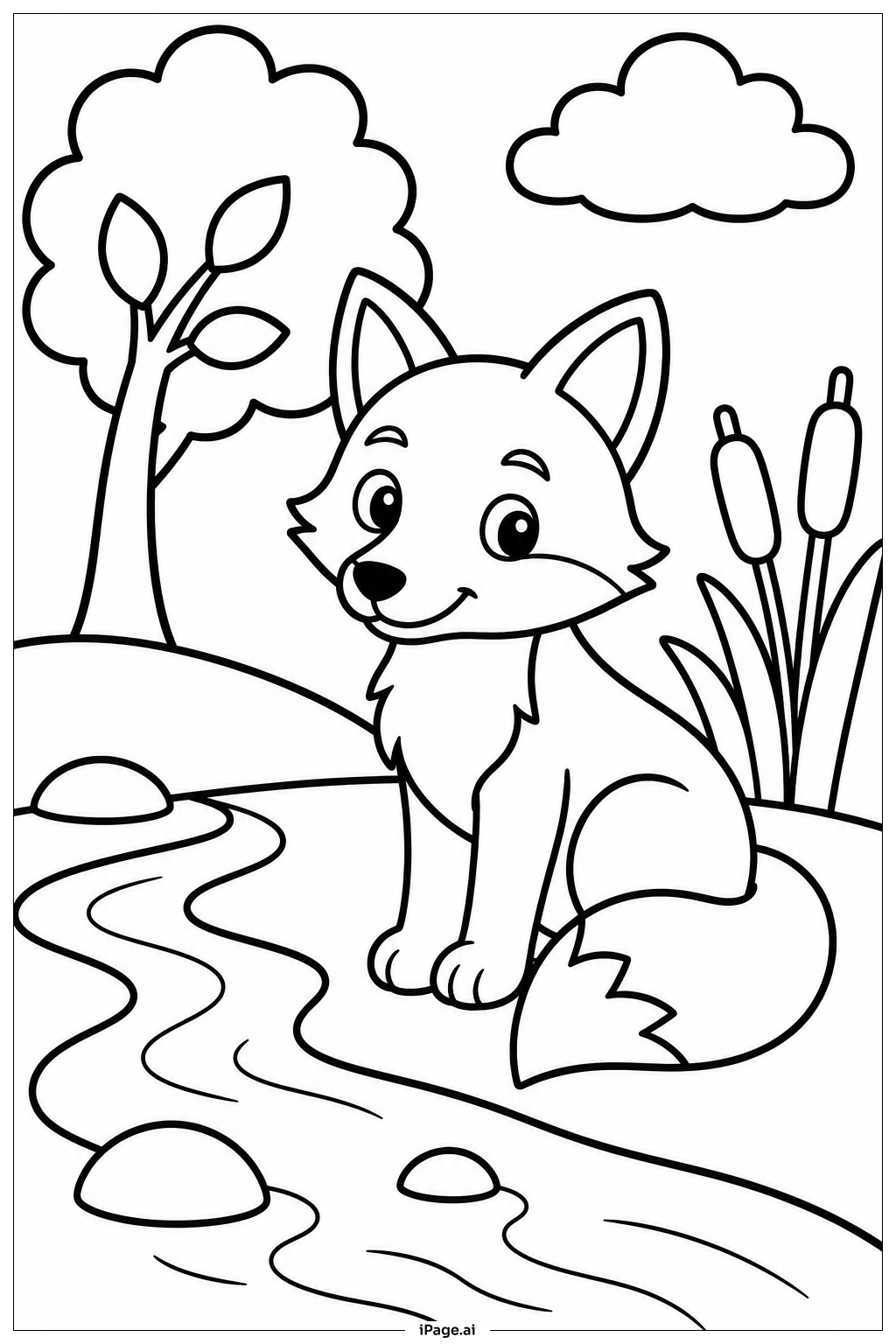
Coloring tips: How to color Fox At Stream coloring page well?
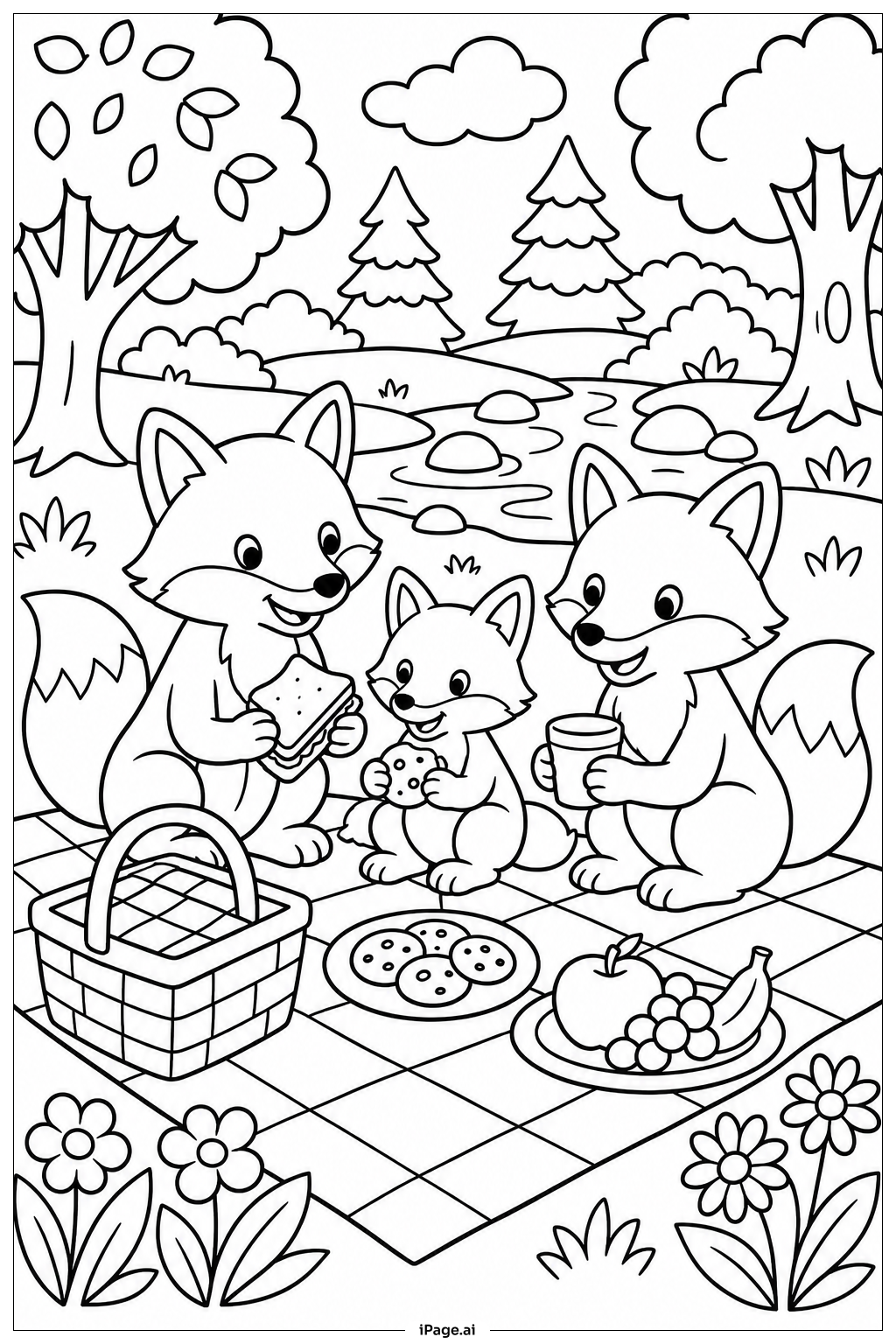
Start with the fox before moving to the background. Color the fox's body in warm shades of orange and rust, with a lighter cream or white on the chest, inner ears, and tail tip. Use dark brown or black for the paws and facial markings around the eyes and nose. For the stream, use soft blues and teals with light gray for the ripples and rocks. The pebbles along the bank can be colored in light tan, beige, and gray tones. Use many shades of green for the grasses and leaves to create a lush, layered forest look. Add yellow, white, or purple to any wildflowers for a pop of color. Brown and earthy tones work well for tree branches and the forest floor. Try blending colors smoothly on the fox's fur to make it look soft and realistic. Take your time on the water to make it look clear and gently moving.
Coloring challenges: Which parts are difficult to color and need attention for Fox At Stream coloring page?
• Fox Fur Texture: The fox's coat has many fine lines that suggest individual hairs and patches of fur. Coloring these areas smoothly while keeping the warm orange, rust, and cream tones looking natural can be tricky. Using colored pencils and blending in small circular motions will help create a realistic fur effect without making the coat look flat.
• Facial Details: The fox's face has small, precise markings around the eyes, nose, and muzzle. These areas require careful coloring with a sharp pencil tip or a fine-tipped marker. It is easy to accidentally color outside the lines in these tight spaces, so slow and steady strokes are recommended here.
• Water and Ripples: The stream contains overlapping curved lines that represent the flow and ripple patterns of moving water. Capturing a believable water effect means using multiple tones of blue, teal, and white, and knowing where to leave lighter spots to suggest reflected light. This requires patience and color layering.
• Rocks and Pebbles: The streambed and banks are filled with many rounded rocks of different sizes. Each stone may need a slightly different shade of gray, tan, or beige to look three-dimensional and natural rather than flat. Shading the underside of each rock darker than the top helps create depth.
• Layered Background Vegetation: The grasses, plants, and tree branches in the background overlap in many places. Keeping each element distinguishable while using varied greens and browns without muddying the colors together is a real challenge, especially where leaves and stems cross over each other.
Benefits of coloring books: Advantages of drawing Fox At Stream coloring page
Coloring this image of a fox at a stream offers many wonderful benefits for kids and families. The detailed nature scene encourages children to observe the natural world more closely and learn about animals and their habitats in a fun, hands-on way. Working through the many textures and elements in the image, from the fox's fur to the flowing water and rocky bank, helps build fine motor skills and hand-eye coordination. Choosing colors for each part of the scene sparks creativity and imagination, as there is no single right answer for how to color it. Children can express themselves freely while still practicing careful, focused coloring within lines. The calming nature of this woodland setting makes it a relaxing activity that helps reduce stress and encourages mindfulness. Completing a detailed image like this also builds patience and a sense of accomplishment. For older children, it presents a satisfying artistic challenge. For younger children, it is a gentle introduction to color theory and nature appreciation. Overall, this coloring page is a joyful and enriching experience for all ages.