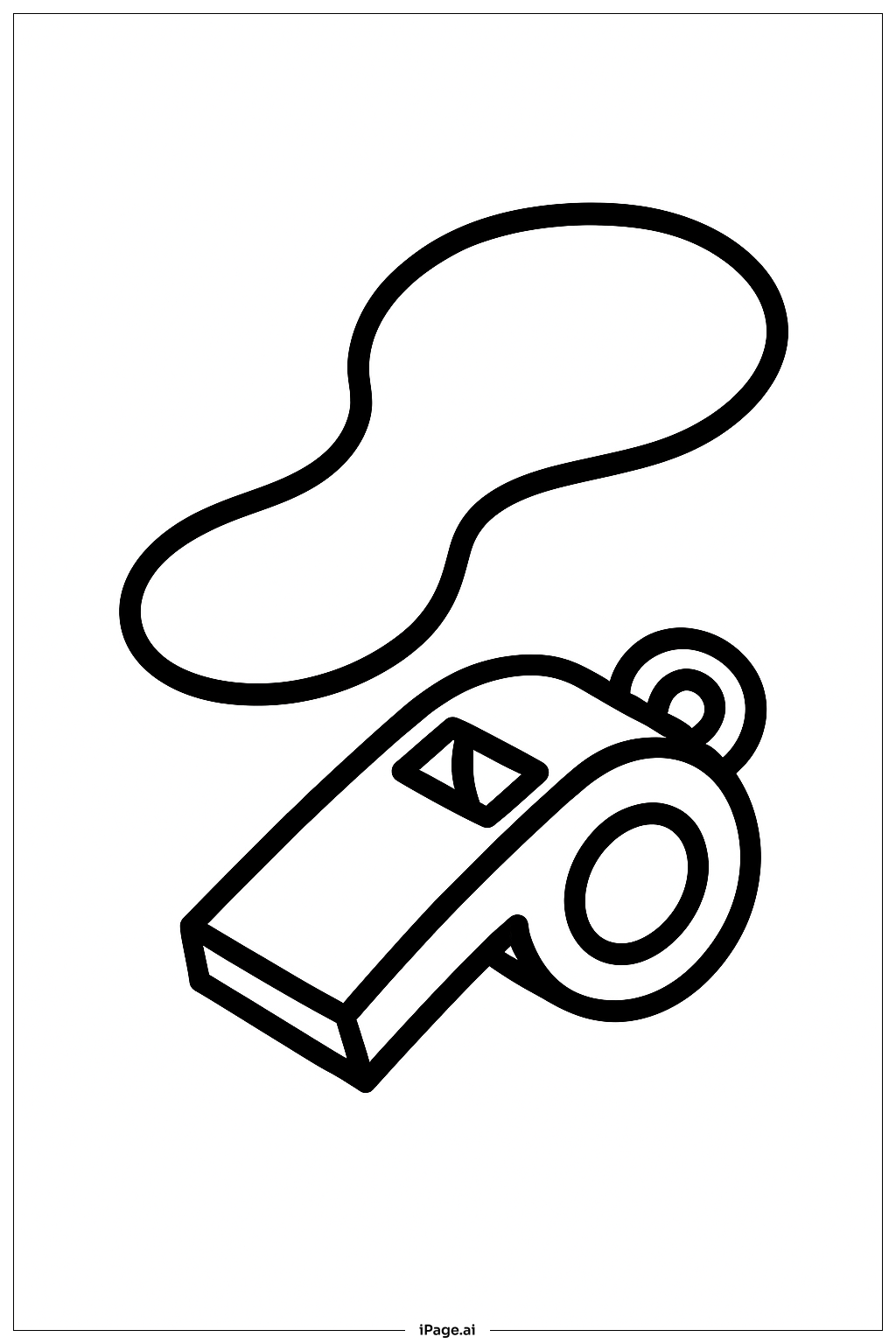
Coloring tips: How to color Whistle coloring page well?
For this whistle coloring page, consider using bright, bold colors that match real referee whistles. Traditional black is always a classic choice for the main body, creating a professional look. Silver or gray can give it a metallic shine, while bright yellow, red, or neon green makes it stand out on the field. The mouthpiece can be colored differently from the body for contrast. Try shading techniques using darker tones along the edges and lighter colors in the center to create a three-dimensional effect. The ring attachment could be metallic silver or gold. For a fun twist, use team colors or create a rainbow whistle. Younger children might enjoy using their favorite bright colors, while older kids can experiment with blending and shading to make the whistle look realistic and shiny.
Coloring challenges: Which parts are difficult to color and need attention for Whistle coloring page?
• Curved Surface Shading: The cylindrical shape of the whistle requires careful shading to show its rounded, three-dimensional form. Children need to understand how light hits curved surfaces, applying darker colors along the edges and lighter tones in the center. This gradual color transition can be challenging for younger artists who are still developing blending skills.
• Small Detail Work: The whistle contains several small elements including the ring attachment, the pea chamber window, and air slots. These tiny areas require precision and steady hand control. Children must use fine-tipped coloring tools and take care not to color outside the narrow lines, which demands patience and concentration.
• Creating Metallic Effects: Real whistles often have a shiny, reflective surface that is difficult to replicate with standard coloring materials. Achieving that metallic look requires understanding where to leave white highlights for shine and where to add darker shadows. This interplay of light and dark to simulate reflection is an advanced technique.
• Maintaining Consistent Pressure: To create smooth, even color coverage on the whistle's body without visible streaks or patches, children must maintain consistent coloring pressure throughout. This is particularly important for creating that professional, polished appearance that matches a real referee's whistle.
Benefits of coloring books: Advantages of drawing Whistle coloring page
Coloring this whistle design helps children develop fine motor skills through precise coloring within defined boundaries. The curved surfaces teach important shading concepts and spatial awareness, helping young artists understand how three-dimensional objects appear on paper. This Football-related image connects art with sports, making it especially appealing for sports enthusiasts. The activity promotes patience and concentration as children work on small details. It encourages decision-making skills when choosing color combinations and techniques. For Football fans, this coloring page builds recognition of important game equipment and the role of referees. The simple yet detailed design is suitable for a wide age range, allowing beginners to enjoy basic coloring while more advanced young artists can practice sophisticated shading and highlighting techniques. Completing this page provides a sense of accomplishment and can spark conversations about sportsmanship and fair play.