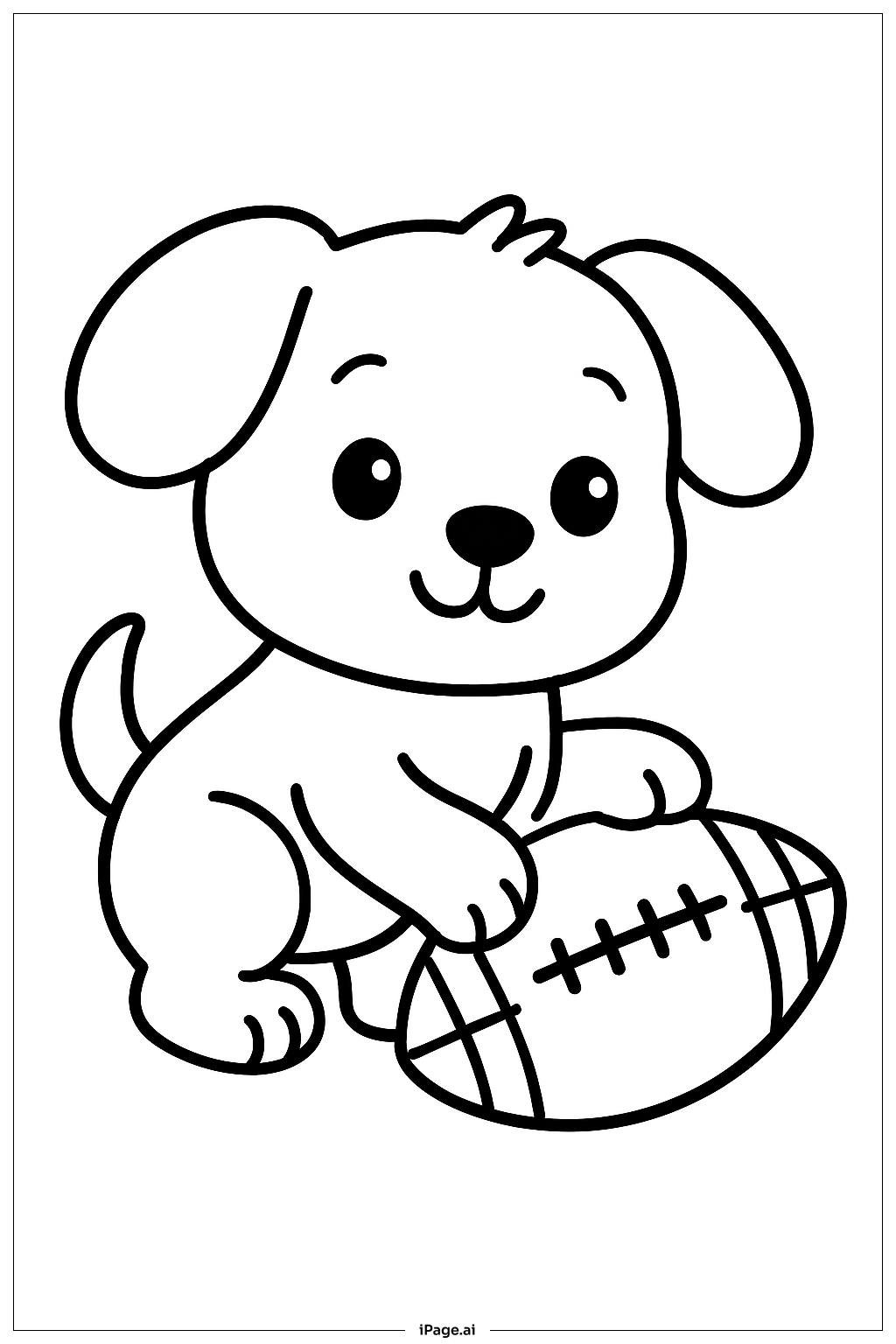
Coloring tips: How to color Football Puppy Playing coloring page well?
Start with the puppy's fur using warm brown, golden, or tan tones for a realistic look, or choose fun colors like purple or blue for a creative twist. The eyes can be colored with deep brown or bright blue to make them sparkle. Use black or dark brown for the nose and add a pink tongue if visible. For the football, alternate between black and white sections following the traditional pattern, or experiment with team colors like red and blue. The puppy's collar can be any bright color such as red, blue, or green, with a silver or gold tag. Consider adding light shading around the puppy's belly and under the legs to create depth. Use colored pencils for soft blending on the fur, or markers for bold, vibrant results. Leave small white highlights in the eyes to make them look lively and engaging.
Coloring challenges: Which parts are difficult to color and need attention for Football Puppy Playing coloring page?
• Fur Texture and Direction: Creating realistic fur texture requires careful attention to the direction of strokes. Young colorists may find it challenging to follow the natural flow of fur from the puppy's head down to its body and legs. Using short, light strokes in consistent directions helps achieve a fluffy appearance, but this requires patience and practice. Blending multiple shades of the same color family can add dimension, but beginners might struggle with smooth transitions between light and dark areas.
• Football Pattern Precision: The soccer ball features alternating pentagon and hexagon shapes that require careful color placement to maintain the traditional pattern. Staying within these small geometric sections demands steady hand control and focus. Children may find it difficult to keep black and white sections separate without colors bleeding into adjacent shapes. The curved surface of the ball also suggests shading that can be tricky to execute properly.
• Facial Feature Details: The puppy's expressive face includes small but important details like eyes, nose, mouth, and inner ear shading. Coloring the eyes requires leaving tiny white highlights to create a lifelike sparkle, which needs precision. The nose and mouth areas have subtle contours that benefit from gentle shading to avoid a flat appearance. Younger children might find these small spaces challenging to color neatly without going outside the lines.
• Proportional Shading: Adding depth through shading helps the puppy look three-dimensional rather than flat. Understanding where shadows naturally fall such as under the belly, behind the legs, and around the neck requires spatial awareness. Beginners often struggle with knowing how much pressure to apply with coloring tools to create gradual value changes rather than harsh lines.
Benefits of coloring books: Advantages of drawing Football Puppy Playing coloring page
Coloring this cheerful football puppy offers wonderful developmental benefits for children. It enhances fine motor skills as young hands practice controlling crayons or colored pencils within the lines, improving hand-eye coordination and grip strength essential for writing. The image encourages color recognition and creative decision-making as children choose palettes for the puppy's fur, the football, and accessories. Working on the detailed facial features and fur texture builds concentration and patience, teaching children to focus on tasks for extended periods. The sports theme promotes positive associations with physical activity and teamwork. Completing this appealing image provides a sense of accomplishment that boosts confidence and self-esteem. The playful subject matter makes the coloring experience joyful and stress-relieving, offering a calming activity that helps children express emotions and develop artistic preferences. This coloring page also serves as a conversation starter about pets, responsibility, and sports, enriching vocabulary and storytelling skills.