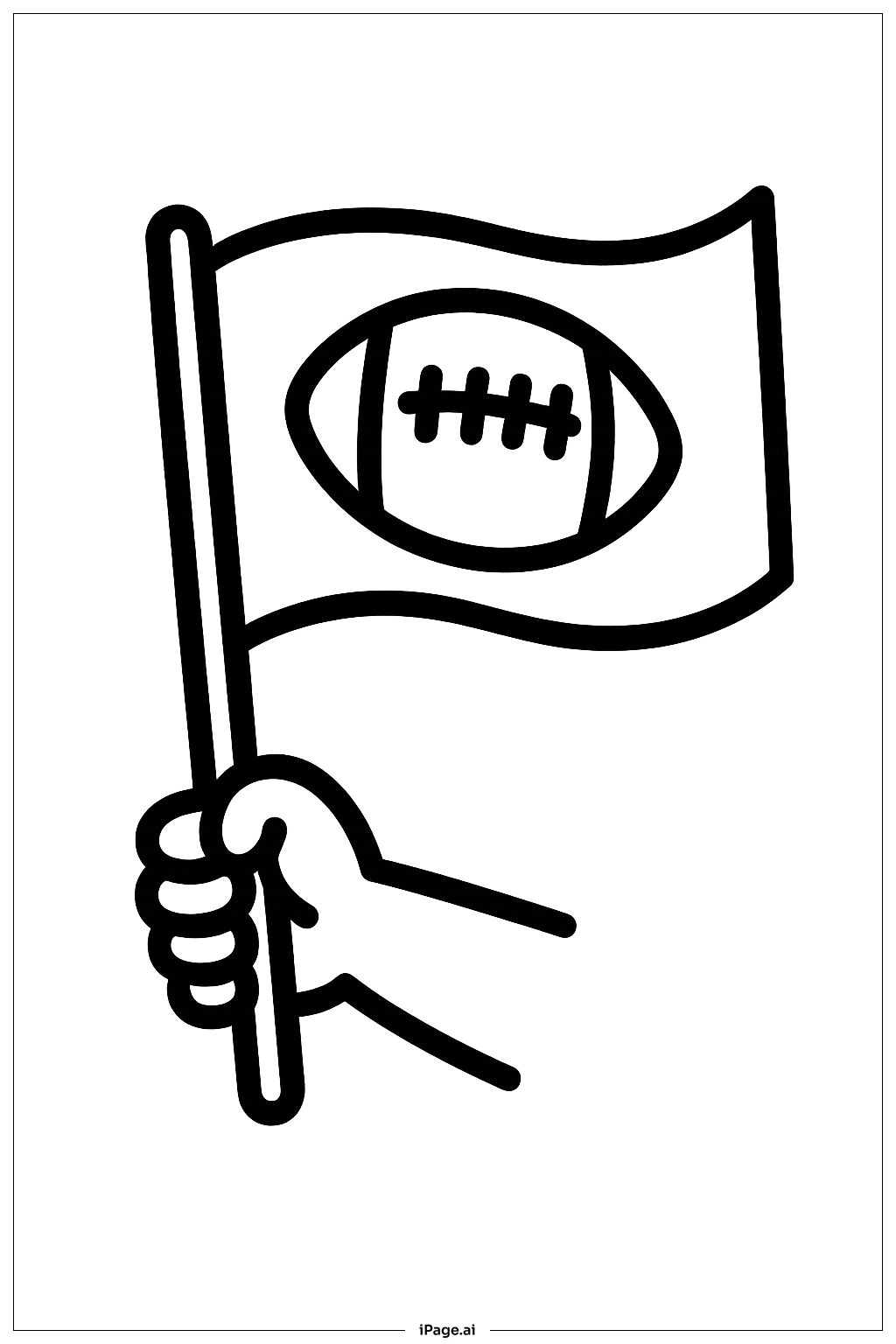
Coloring tips: How to color Flag Waving coloring page well?
For the American flag, use the traditional color scheme: red for the alternating stripes, white for the remaining stripes, and blue for the canton where the stars sit. The stars themselves should be colored white. Consider using darker shades of red and blue on the areas where the flag folds to create depth and shadow, making the waving effect more realistic. Lighter shades or leaving some areas white can highlight where light hits the fabric. The flagpole can be colored brown, gray, or silver to represent wood or metal. You might add a light blue or gray background to suggest sky, or leave it white for a clean, focused look on the flag itself.
Coloring challenges: Which parts are difficult to color and need attention for Flag Waving coloring page?
• Stripe Precision: The alternating red and white stripes require careful attention to stay within the lines, especially where the flag curves and folds. The wavy motion creates irregular stripe widths that change as the fabric ripples, making it challenging to maintain even color coverage without crossing boundaries. Younger children may need to work slowly to keep the red stripes separate from the white ones.
• Star Field Detail: The canton contains multiple stars that need to be colored white while keeping the blue background uniform. This requires precision when working around each star's points and edges. The small size of the stars can be tricky for little hands, and accidentally coloring over stars with blue or leaving gaps in the blue field can affect the overall appearance.
• Shading the Folds: To make the flag look three-dimensional and capture the waving motion, you'll want to add darker shades where the fabric dips and lighter tones where it rises. This requires understanding light and shadow, which can be challenging for beginners. Deciding where to place highlights and shadows takes practice and observation of how real fabric behaves in motion.
• Color Consistency: Maintaining the same shade of red throughout all red stripes and the same blue in the canton requires patience and consistent coloring technique. Variations in pressure or different coloring tools can create uneven tones that make the flag look patchy rather than smooth and unified.
Benefits of coloring books: Advantages of drawing Flag Waving coloring page
Coloring this flag waving image helps children learn about patriotic symbols and national identity while developing important skills. The repetitive stripe pattern supports focus and patience as they work through each section methodically. The star field offers practice with detail work and hand-eye coordination, strengthening fine motor control needed for writing and other tasks. Creating depth through shading teaches basic art concepts about light, shadow, and three-dimensional form. This coloring page also provides an opportunity to discuss history, citizenship, and what flags represent, connecting art activity with social studies learning. The satisfying result of a completed flag builds confidence and pride in their artistic abilities while celebrating national symbols.