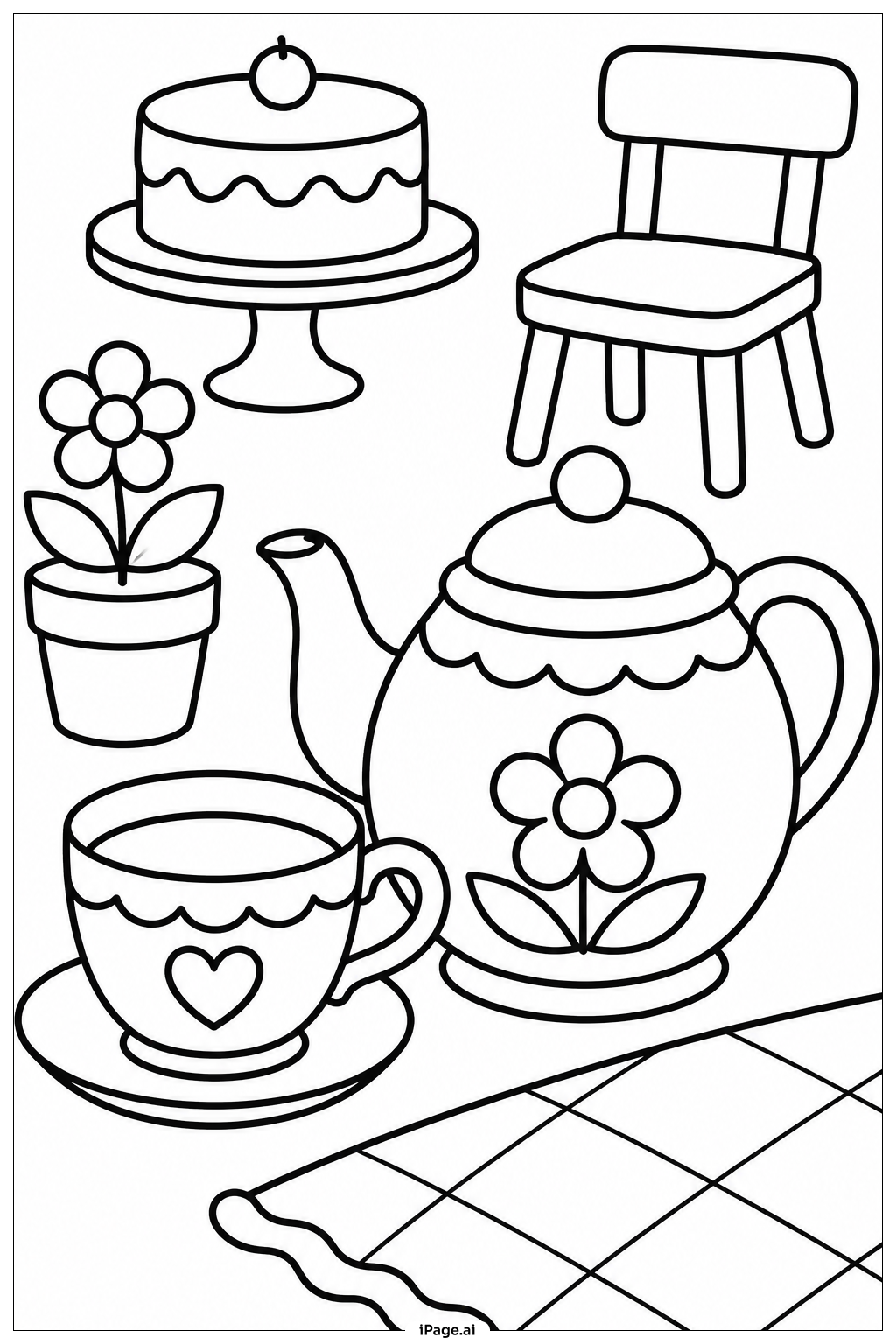
Coloring tips: How to color Tea Party Food Setup coloring page well?
Start with the lightest colors and work toward the darker ones. Use soft pastel shades like pale pink, lavender, mint green, and baby blue to give the scene a sweet, dreamy tea party feel. Color the teapot and teacups in classic white or soft cream, then add thin gold or yellow lines along the rims and handles for an elegant touch. The tiered cake looks lovely in layers of pink and white with yellow flower details. Give the scones a warm golden-brown tone and color the jam a rich red or strawberry pink. Use light green for any leaves and bright cheerful colors for the bunting flags. For the table or tablecloth, soft floral patterns in pastel tones work beautifully. Children can mix and match their favorite colors freely. There are no strict rules — just have fun and let your creativity shine! Older kids and Adults may enjoy adding subtle shading to give depth to the food and tableware.
Coloring challenges: Which parts are difficult to color and need attention for Tea Party Food Setup coloring page?
• Tiered Cake Details: The tall layered cake features decorative frosting swirls, small flowers, and multiple tiers with distinct borders. Coloring each layer a different shade while keeping clean edges between them takes careful control. Young colorists may find it tricky to stay within the curved frosting lines without smudging neighboring sections.
• Teapot and Teacup Patterns: The teapot and teacups have delicate curved shapes with thin handles and fine rim details. Applying color evenly along these curved surfaces is challenging. Using a sharp colored pencil or a fine-tip marker helps keep the patterns neat and prevents color from bleeding outside the lines.
• Small Food Items Like Sandwiches and Scones: The finger sandwiches and scones are small items packed closely together on plates. Each piece needs its own realistic tone — golden brown for scones, soft beige for bread, and green or yellow for fillings. Working in a tight space without mixing colors between items requires patience and a steady hand.
• Jam and Cream Bowls: The small bowls of jam and clotted cream are tiny but important accent pieces. Coloring them accurately — deep red for jam, off-white for cream — adds realism. The small size makes it hard to add detail without going outside the bowl's outline.
• Bunting Flags and Background: The decorative bunting flags in the background come in different shapes and sizes. Giving each flag a distinct color while keeping the strings and spacing looking tidy can be time-consuming. Balancing the background colors so they do not overpower the food in the foreground is also a creative challenge worth thinking about.
Benefits of coloring books: Advantages of drawing Tea Party Food Setup coloring page
Coloring this Tea Party Food Setup page offers a wonderful range of benefits for kids and Adults alike. For younger children, tracing the outlines of teacups, cakes, and sandwiches helps build fine motor skills and improves hand-eye coordination. Choosing colors and deciding how to fill each section encourages creative thinking and artistic confidence.
For older kids and Adults, the detailed patterns on the teapot, the layered cake, and the small food items provide a satisfying and calming coloring experience. Focusing on staying within the lines and blending colors helps reduce stress and promotes mindfulness.
This image also sparks imagination and storytelling. Children may begin imagining the tea party guests, what flavors the cake might be, or which jam goes with which scone. This kind of playful thinking supports language development and creative expression.
The food theme makes learning fun too. Recognizing and naming items like scones, finger sandwiches, and teacups builds vocabulary and cultural awareness around tea party traditions. Completing the full page gives a strong sense of accomplishment, boosting self-esteem and encouraging kids to take pride in their finished artwork. Overall, this page is a joyful and enriching activity for all ages.