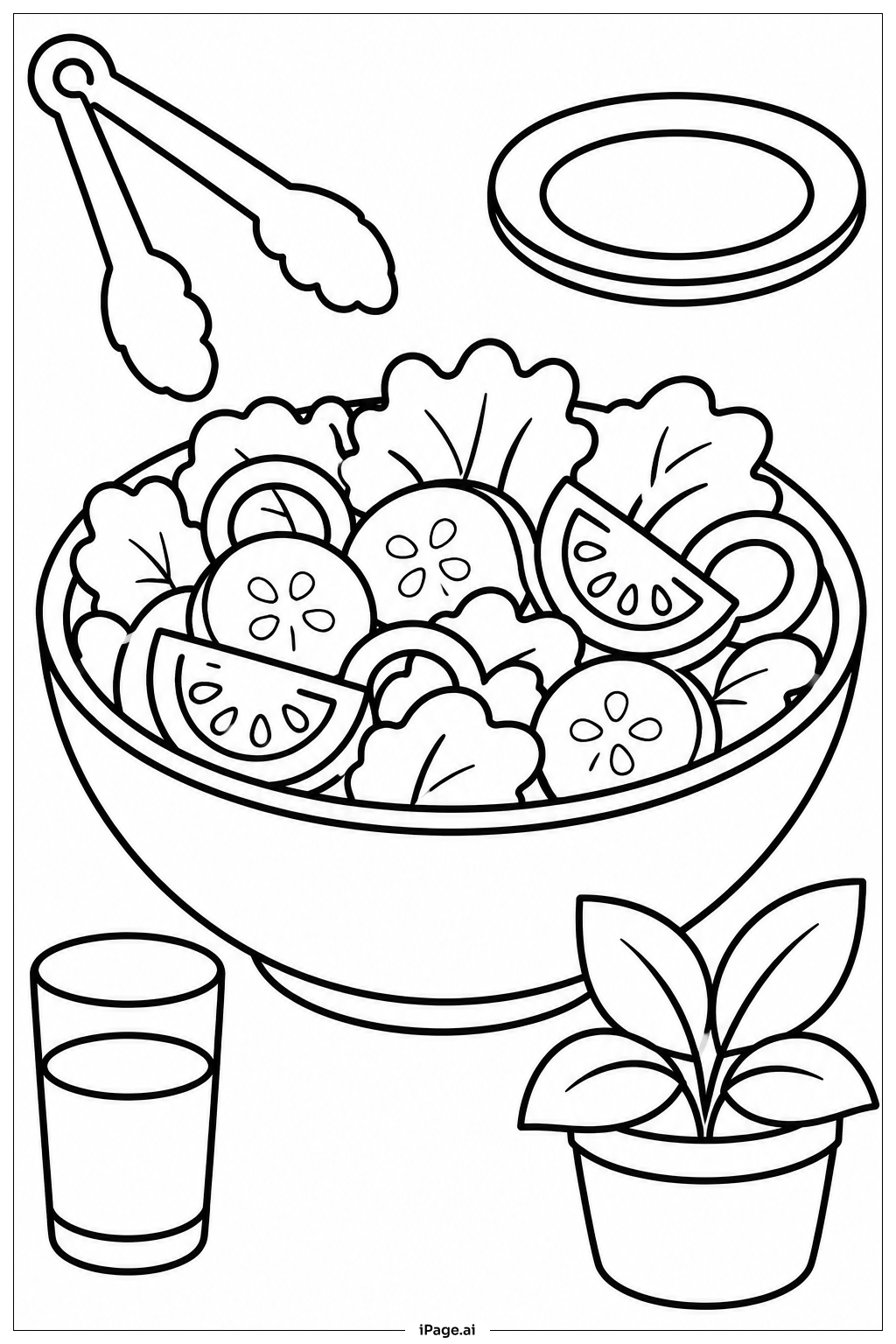
Coloring tips: How to color Salad Bowl Food Scene coloring page well?
Start with the leafy greens using different shades of green, like lime green for lettuce and darker green for spinach. Use bright red for tomatoes and cherry tomatoes. Color the cucumber slices in light green with a slightly darker green rim. Make the carrots a vivid orange to make them pop. Use black or dark purple for the olives. Give the croutons a warm golden brown. Color the bowl itself in a fun, bold color like yellow, blue, or red to make it stand out. The fork and spoon can be silver or gray. Use a soft yellow for the lemon wedges and bright green for the fresh herb sprigs. Feel free to mix shades to give each ingredient depth and a fresh, appetizing look. There are no wrong color choices — make your salad bowl as colorful and fun as you like!
Coloring challenges: Which parts are difficult to color and need attention for Salad Bowl Food Scene coloring page?
• Layered Ingredients: The salad bowl is packed with many overlapping ingredients. It can be tricky to color each one separately without colors blending together. Take your time and work from the background leaves forward to the top ingredients to keep each item looking distinct.
• Small Details and Textures: Many ingredients have fine details, such as the seeds on tomatoes, the ridges on cucumber slices, and the bumpy surface of croutons. These tiny areas require a sharp pencil or a fine-tipped marker to fill in accurately without going outside the lines.
• Consistent Shading: Giving each ingredient a sense of volume and freshness through shading can be challenging. For example, adding a lighter center and darker edges on the tomatoes helps them look round and juicy. Practicing light and dark shading on each element takes patience.
• Color Variety Without Clash: The scene includes many different ingredients, each needing its own distinct color. Choosing colors that look great next to each other without clashing requires some planning. Laying out your colors before starting can help you find a pleasing and balanced combination.
• Bowl and Background Balance: The bowl itself is a large, prominent shape. Deciding how to color it so it complements the ingredients inside, rather than overpowering them, can be a real artistic challenge. Choosing a neutral or contrasting color for the bowl helps the colorful salad ingredients remain the star of the scene.
Benefits of coloring books: Advantages of drawing Salad Bowl Food Scene coloring page
Coloring this Salad Bowl Food Scene is a fun and rewarding activity for kids and families. It helps children learn to recognize fresh, healthy foods like vegetables and herbs, making it a great way to talk about good nutrition in a playful setting. As children choose colors for each ingredient, they develop their creativity and learn about color relationships and contrasts. The many small details in the scene — from the tiny olive rounds to the leafy greens — help build focus, patience, and fine motor skills. Carefully coloring within the lines of each ingredient strengthens hand control, which supports writing and other daily tasks. Working through a complex, ingredient-filled scene also encourages problem-solving, as kids figure out how to plan their colors and work section by section. For older children and teens, the challenge of shading and blending adds an extra layer of artistic skill-building. Overall, this coloring page combines creativity, learning, and relaxation into one enjoyable activity that the whole family can share and enjoy together.