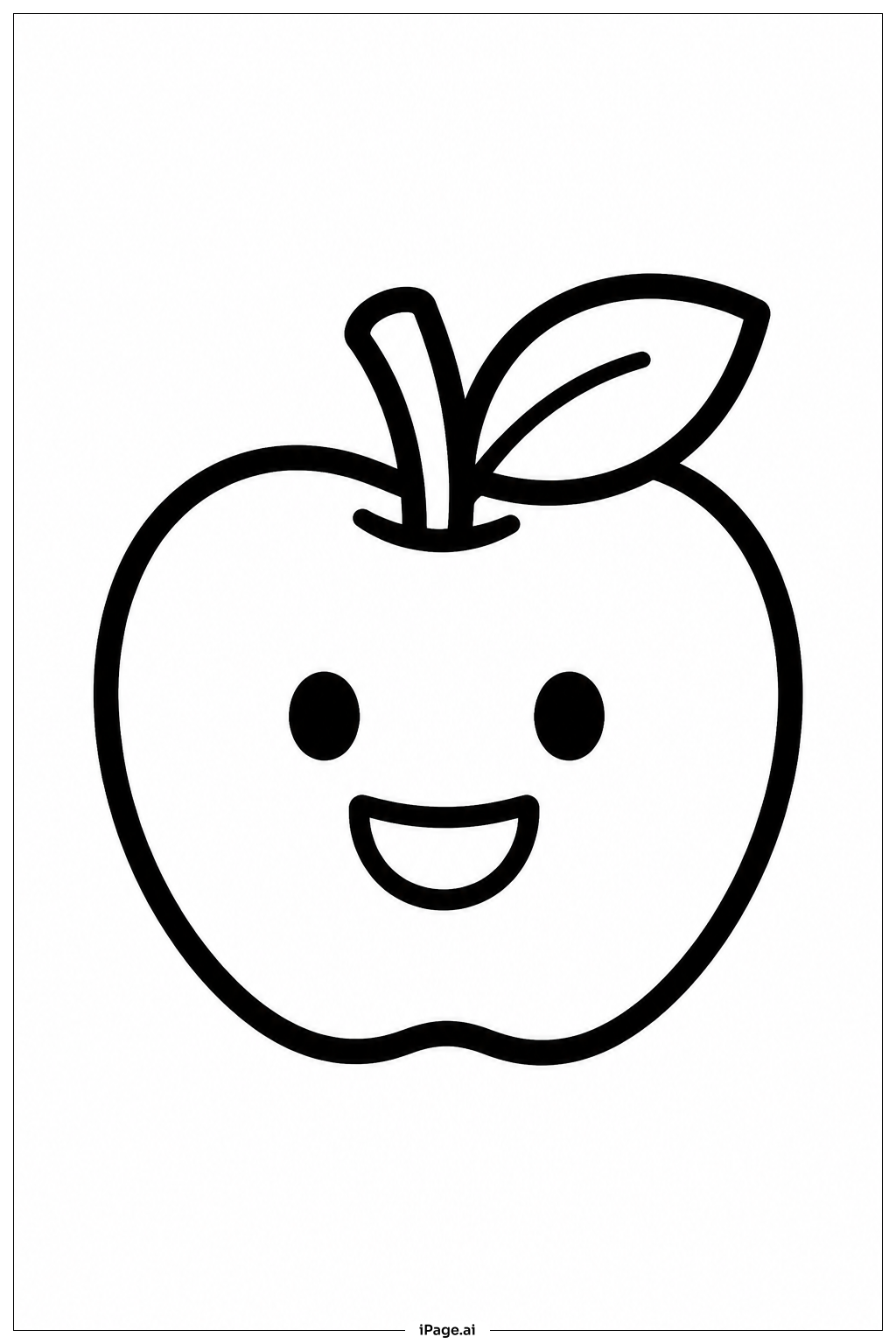
Coloring tips: How to color Happy Apple Food coloring page well?
Start with the apple's body. Use a bright red or deep crimson for a classic look. You can also try green or yellow if you want a different kind of apple. Add a slightly darker shade of red on the sides to give the apple a round, three-dimensional feel. Color the cheeks with a soft pink or light rose to show the rosy blush. For the stem, use brown or tan. The leaf looks great in bright green, and you can add a darker green along the veins for detail. Use white or light yellow for the highlights on the apple's skin to make it look shiny and fresh. Color the eyes with dark brown or black and add a tiny white dot to make them sparkle. Fill in the smile with a warm pink or red. Keep the background simple — a soft blue, pale yellow, or light orange works well to make the happy apple stand out.
Coloring challenges: Which parts are difficult to color and need attention for Happy Apple Food coloring page?
• Facial Expression Details: The apple's face includes small eyes, a curved smile, and round cheeks. These are tiny areas packed close together. Staying inside the lines without smudging one feature into another takes patience and a fine-tipped coloring tool. Young children may find this part tricky.
• Shading the Curved Apple Body: An apple is round and three-dimensional. Showing that roundness through color is a challenge. You need to use at least two shades — a lighter tone in the center where light hits, and a darker tone near the edges. Blending these smoothly without hard lines requires practice and gentle strokes.
• The Leaf Veins: The leaf at the top of the apple has thin vein lines running through it. Coloring around these fine lines without covering them up is difficult. If you want the veins to show as lighter lines against a darker green leaf, you must color carefully and leave those lines untouched or use a very light hand.
• Small Stem Area: The stem is a narrow shape between the leaf and the top of the apple. It is easy to accidentally color over the borders of the stem into the apple or the leaf. Using a sharp pencil or a fine marker helps keep this area neat.
• Choosing a Cohesive Color Palette: Picking colors that all work well together — the red apple, pink cheeks, green leaf, brown stem, and background — can feel overwhelming. Without a plan, the image may look unbalanced. Thinking about your color choices before you start helps create a finished look that feels harmonious and bright.
Benefits of coloring books: Advantages of drawing Happy Apple Food coloring page
Coloring this Happy Apple Food page brings many great benefits for kids. First, it helps improve fine motor skills. Holding a crayon or colored pencil and carefully filling in small shapes strengthens the muscles in little hands and fingers. This is great preparation for writing. Second, it builds focus and concentration. To stay inside the lines and choose the right colors, children must slow down and pay attention. This kind of mindful activity can be calming after a busy day. Third, it sparks creativity. There is no single right way to color an apple — kids can choose any colors they like and make it their own. This freedom builds confidence and encourages creative thinking. Fourth, it teaches color recognition and mixing. Experimenting with light and dark shades, or trying different combinations, helps children learn how colors work together. Fifth, the happy face on the apple makes this a fun and emotionally positive activity. Seeing a smiling character can lift a child's mood and make the coloring experience feel joyful and rewarding. It is a simple, screen-free activity that supports both learning and play.