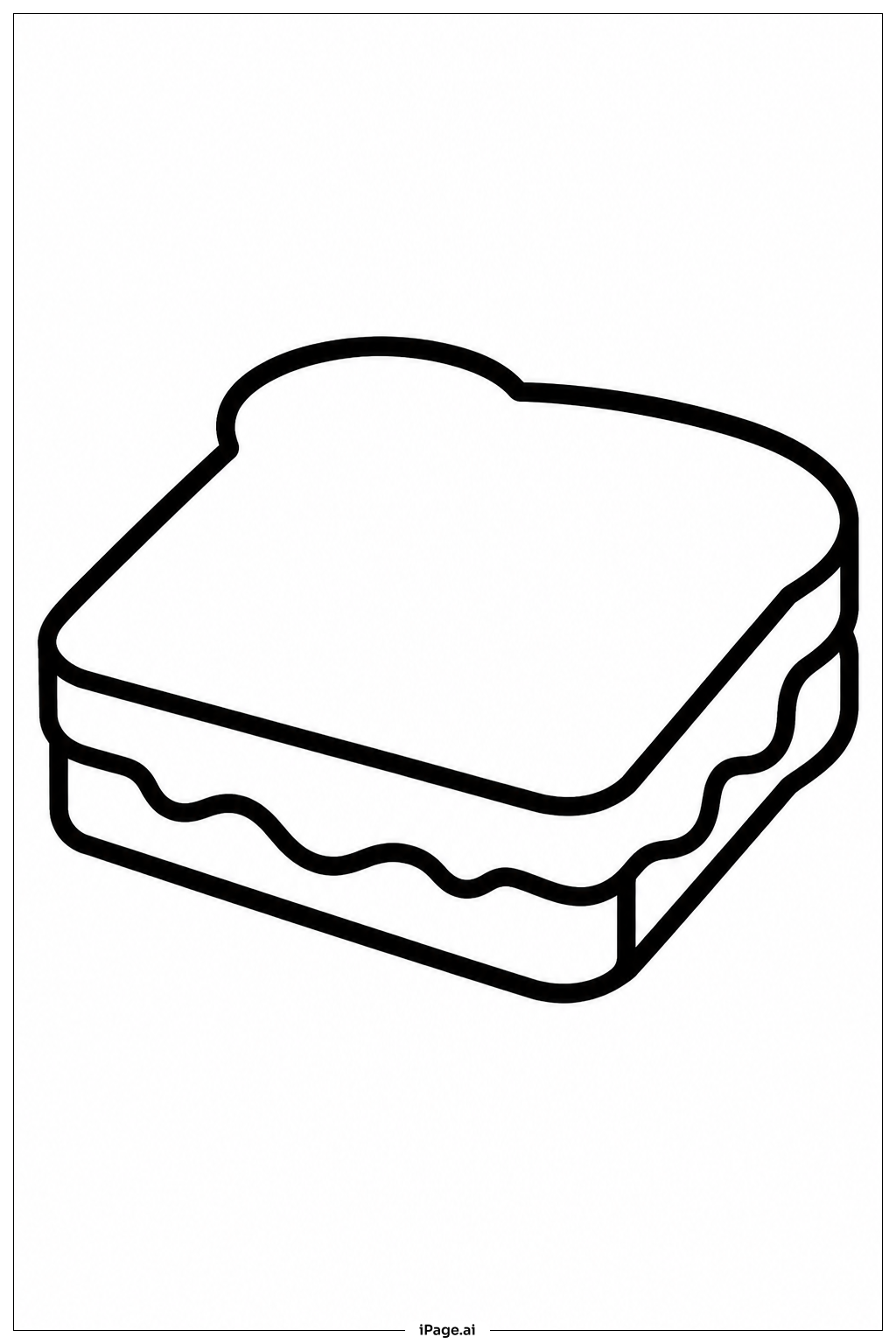
Coloring tips: How to color Grilled Cheese coloring page well?
Start with the bread slices. Use shades of golden yellow, tan, and light brown to color them. Add a slightly darker brown along the outer edges and crust to show that toasty, crispy look. For the melted cheese, use bright yellow and orange tones. Let the color get a little deeper where the cheese drips and stretches to give it a gooey, warm feel. You can add a pale cream color in the lighter center areas of the cheese to make it look soft and melted. If there is a plate or surface under the sandwich, try light gray, white, or soft blue to keep the focus on the food. Keep your strokes smooth and even on the bread surface, but feel free to use flowing, curved lines when coloring the dripping cheese. Blending two shades of yellow or brown together will make the sandwich look more realistic and delicious. Have fun with it and make it look like the yummiest grilled cheese ever!
Coloring challenges: Which parts are difficult to color and need attention for Grilled Cheese coloring page?
• Bread Texture and Shading: The toasted bread surface has a ridged, uneven texture that can be tricky to color evenly. You need to apply light and dark shades of brown in the right places to show depth. The crust along the edges should be noticeably darker than the flat face of the bread. Getting this gradient right takes patience and a steady hand, especially for younger colorists.
• Melted Cheese Details: The oozing cheese is one of the most fun parts of this image, but it is also one of the hardest to color well. The cheese has highlights, shadows, and stretchy strands that each need slightly different shades of yellow and orange. Coloring the drips and stretchy parts too uniformly can make the cheese look flat instead of gooey and dimensional.
• Smooth Blending Transitions: Moving from one shade to another smoothly, such as from golden yellow on the cheese to a deeper amber at the edges, requires careful blending. Without smooth transitions, the colors can look patchy or unfinished. This is especially challenging when using crayons or colored pencils in small or curved areas.
• Small Drip Shapes: The individual cheese drips are narrow and curved. Staying within the lines in these tight spaces without smudging or overlapping into the bread color is difficult. Using a sharpened pencil tip or a thin marker works best here, but it still requires focus and a controlled grip.
• Balancing Warm Color Tones: Since almost the entire image uses warm colors like yellow, tan, and brown, it can be hard to make different parts stand out from each other. Choosing the right mix of warm tones without making everything look the same color is a real creative challenge that encourages thoughtful color selection.
Benefits of coloring books: Advantages of drawing Grilled Cheese coloring page
Coloring this grilled cheese sandwich page is a wonderfully fun and rewarding activity for kids and beginners alike. Working through the warm, cozy tones of golden bread and melted cheese helps children practice recognizing and mixing similar colors, building a stronger understanding of color relationships and shading.
The image encourages fine motor skill development as kids carefully color within the edges of the bread crust, cheese drips, and textured bread surface. These small, precise movements strengthen hand muscles and improve pencil control, which directly supports handwriting and drawing skills.
This coloring page also sparks creativity and imagination. Kids can make their sandwich look extra cheesy and gooey or experiment with fun, unexpected colors to give it a magical twist. There are no wrong choices, and that sense of freedom builds confidence in creative decision-making.
Since grilled cheese is a familiar, comforting food, this image creates a positive emotional connection to the activity. Kids feel excited and motivated to color something they recognize and love. It can even spark fun conversations about food, cooking, and favorite meals, turning a quiet solo activity into a springboard for family bonding.
Finally, focusing on a single, detailed image encourages patience, concentration, and a sense of accomplishment when the page is finished. These are valuable habits that support learning both inside and outside the classroom.