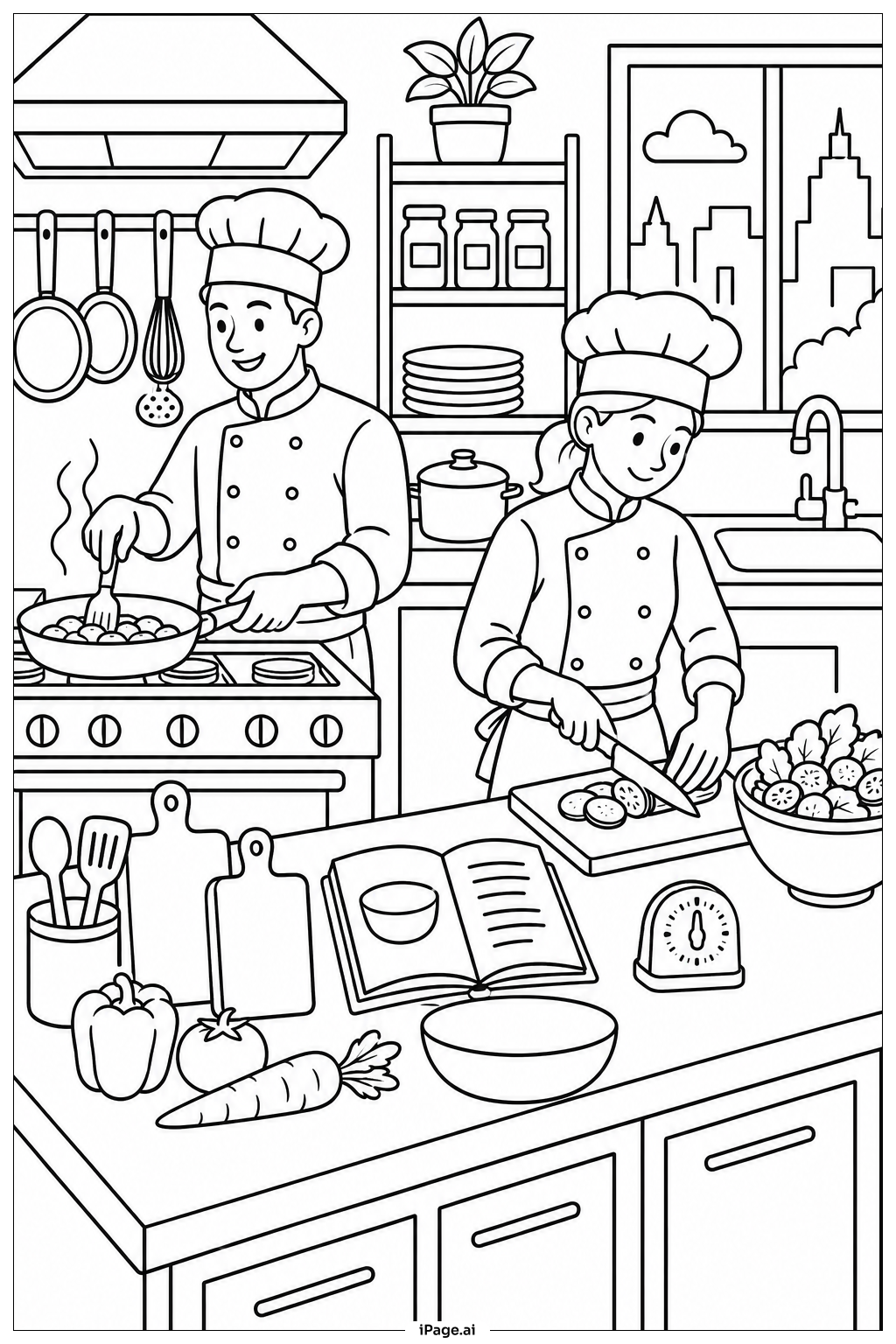
Coloring tips: How to color Gourmet Kitchen Food Prep coloring page well?
Start with the lightest colors and work toward the darker ones. Use bright orange and red for the bell peppers and carrots. Color the wooden cutting board in warm tan or light brown shades. Give the pot a shiny silver or deep charcoal look. Use soft greens for the fresh herbs and leafy vegetables. The garlic bulbs can be painted in cream or pale white. Try yellow for the olive oil bottle to make it stand out. Add light blue or gray tones to the steam rising from the pot. Keep the kitchen shelves in neutral wood tones. Use small dashes of bright color for the spice jars to make them look fun and varied. Take your time with each section. Do not rush. Coloring little areas one at a time will help keep things neat and enjoyable.
Coloring challenges: Which parts are difficult to color and need attention for Gourmet Kitchen Food Prep coloring page?
• Vegetable Details: The cutting board holds many different vegetables with small shapes and fine edges. Coloring each one accurately without overlapping colors onto the board or nearby items can be tricky. Use a thin-tipped marker or colored pencil for the small pieces like chopped herbs and minced garlic.
• Steam Effect: The swirling steam coming from the pot is made up of flowing, curved lines. Blending light gray, white, and pale blue tones together smoothly is challenging, especially for younger colorists. Try pressing lightly to layer colors gently.
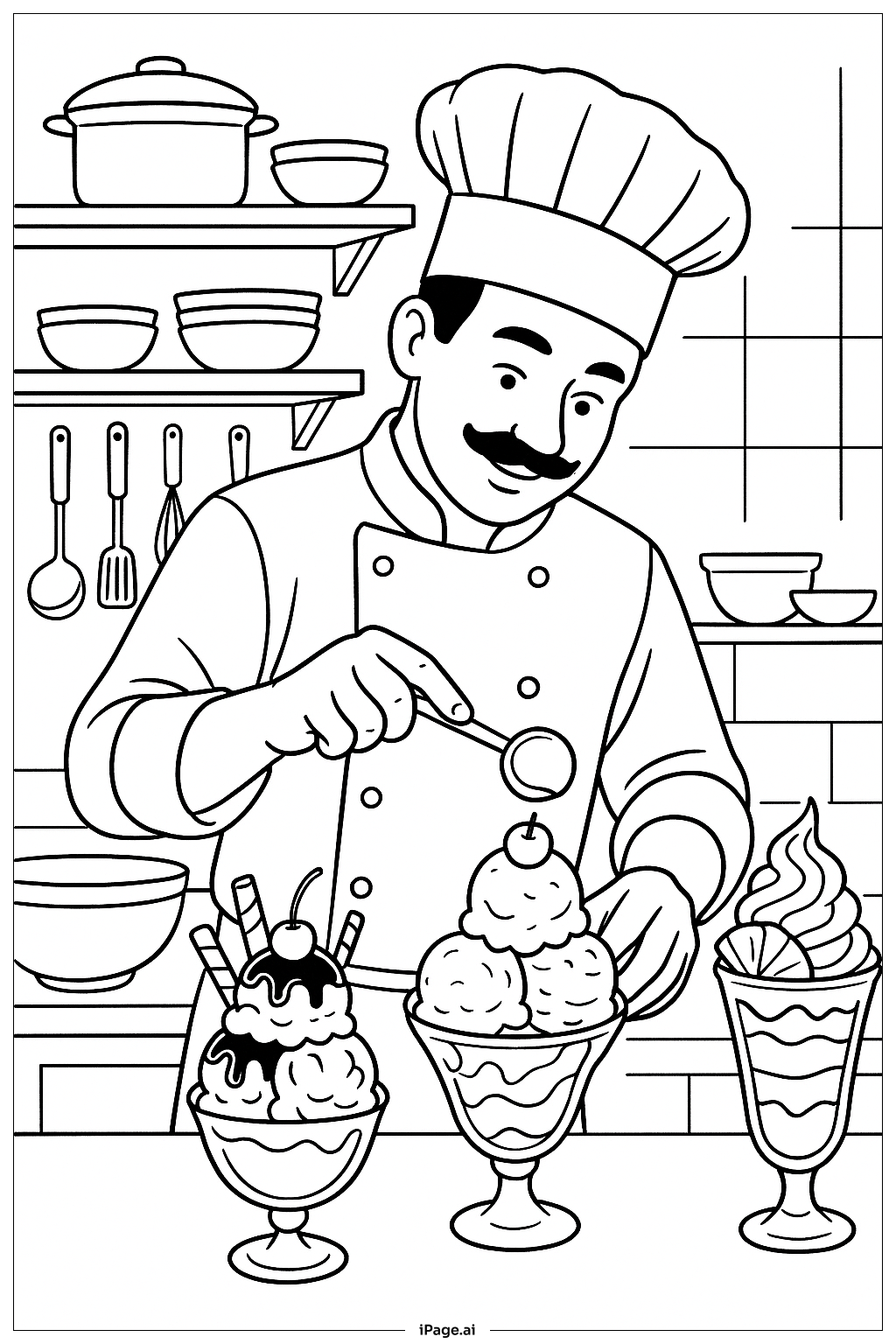
• Kitchen Tool Variety: The scene includes many tools such as knives, ladles, and spatulas, each with different textures. Metal tools need shading to look realistic. Using a darker tone on one side and leaving the other side lighter helps create a shiny effect.
• Background Shelf Details: The shelves in the background contain small spice jars, books, and hanging pots. These tiny items are packed closely together. Choosing colors that contrast with each other helps each item stand apart and avoids a muddy appearance.
• Wooden Textures: The cutting board and shelving have wood grain lines. Coloring along the grain direction with slightly varied shades of brown creates a natural and realistic wood look. This technique requires patience and steady hand control, making it a good challenge for older kids and adults.
Benefits of coloring books: Advantages of drawing Gourmet Kitchen Food Prep coloring page
Coloring this gourmet kitchen scene offers many wonderful benefits for kids and young learners. First, it builds focus and patience. The many small details in the image require careful attention, helping children practice sitting still and concentrating on a task. Second, it sparks creativity. Choosing colors for vegetables, pots, and kitchen tools lets kids make their own artistic choices and express themselves freely. Third, it teaches color recognition and real-world associations. Children learn that carrots are orange, herbs are green, and wooden boards are brown, connecting art to everyday life. Fourth, it strengthens fine motor skills. Carefully coloring inside small shapes and along curved lines improves hand control and pencil grip, which supports handwriting development. Fifth, it introduces kids to the world of cooking and kitchens in a fun and relaxed way. Seeing the tools and ingredients laid out can spark curiosity about food and where meals come from. Finally, completing the page gives children a sense of pride and accomplishment. It encourages a positive attitude toward creative work and builds confidence in their abilities.