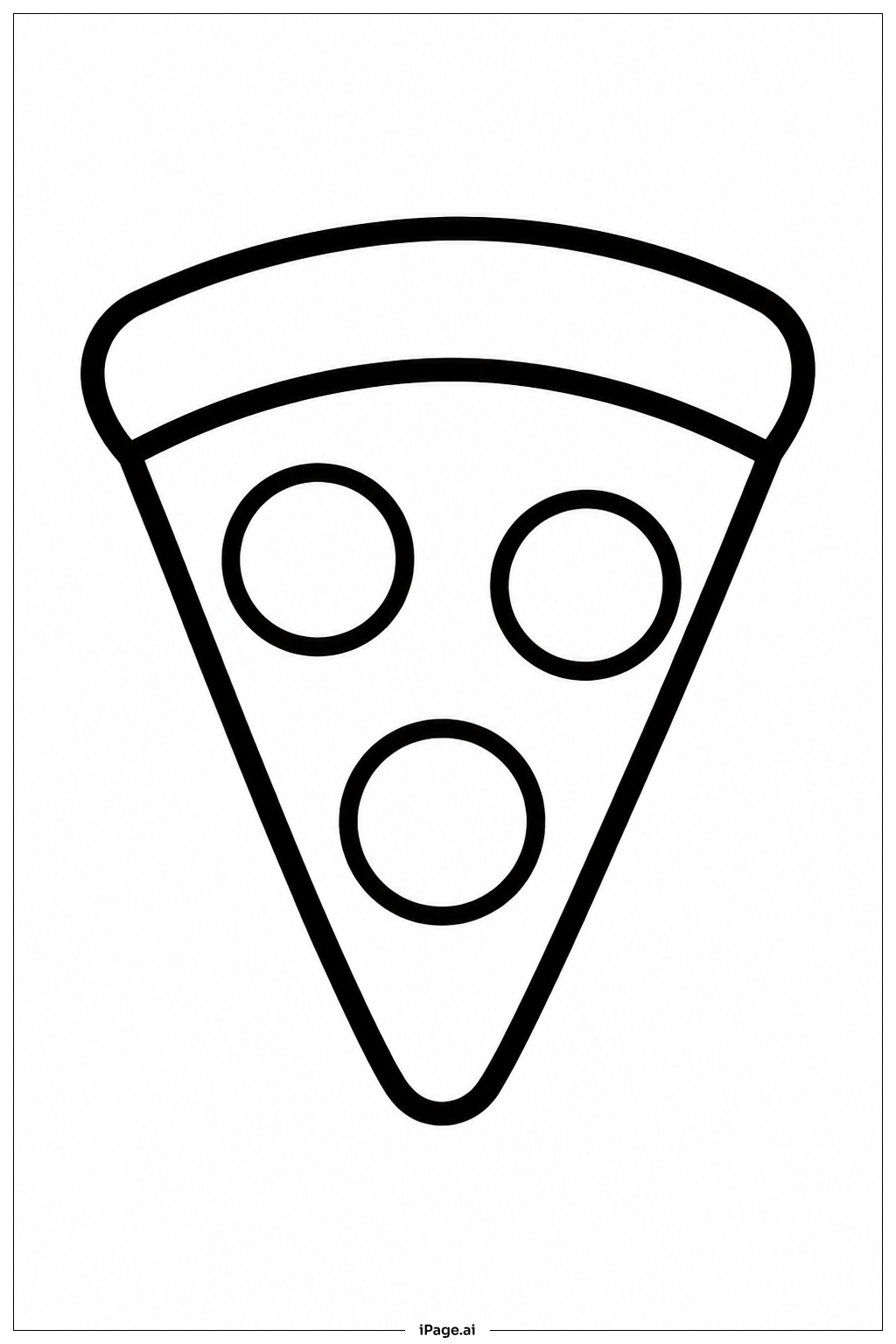
Coloring tips: How to color Giant Slice Pizza coloring page well?
Start with the crust at the top edge. Use warm shades like tan, golden yellow, or light brown to give it a freshly baked look. For the cheese layer, try a soft yellow or pale orange to mimic melted mozzarella. Color the tomato sauce peeking through in bright red or deep orange. Move on to the toppings next. Use bold red for the pepperoni, dark brown or gray for mushrooms, green for bell peppers, and black or dark purple for olives. Try adding a slightly darker shade along the edges of each topping to give them a three-dimensional feel. For the crust edge, blend a light golden brown with a slightly darker brown on the outer rim to show a toasted finish. Kids can also get creative by inventing their own toppings with any colors they like. There are no strict rules here, so have fun and make the pizza your own.
Coloring challenges: Which parts are difficult to color and need attention for Giant Slice Pizza coloring page?
• Cheese Texture: The melted cheese covers a large area and has an uneven, bubbly surface. Keeping the color consistent while still suggesting texture can be tricky. Try using a base layer of light yellow and then gently adding small streaks of darker yellow or orange to show where the cheese has browned or pooled together.
• Topping Variety: This pizza has multiple different toppings crowded together on the same surface. Each topping has its own shape, size, and color, so staying inside the outlines without accidentally mixing colors from one topping into another takes patience and a steady hand. Thinner coloring tools like colored pencils work best here.
• Layering Depth: The toppings sit on top of the cheese, which sits on top of the sauce. Showing these layers with color alone is a real challenge. Using slightly deeper shades where toppings meet the cheese, and keeping the sauce areas darker than the cheese, helps create a convincing sense of depth.
• Crust Shading: The thick, puffy crust looks best with gradient shading from a pale golden interior to a toasted brown outer edge. Blending two or three shades smoothly without harsh lines is difficult, especially for younger colorists who are still building blending skills.
• Small Detail Work: Tiny elements like seasoning dots, texture lines on the crust, and the uneven edges of each topping require fine motor control and a sharp coloring tool. Rushing through these small areas can make the final image look flat, so taking extra time on the details makes a big difference.
Benefits of coloring books: Advantages of drawing Giant Slice Pizza coloring page
Coloring this giant pizza slice is a fun and rewarding activity for kids of all ages. Working through the many toppings and textures helps children practice focus and attention to detail. Each topping presents a small, manageable coloring zone, which builds patience and the ability to work carefully within boundaries.
Choosing colors for the cheese, sauce, crust, and toppings encourages creative thinking and decision-making. Kids learn that there is no single right answer, which boosts confidence and self-expression. When they invent their own topping colors or try unexpected combinations, they are exercising imagination in a low-pressure environment.
The variety of shapes on this pizza, from round pepperoni to irregular mushroom caps, helps younger children recognize and distinguish between different forms. This supports early visual learning and shape recognition skills.
For older kids and teens, practicing shading and layering on this image builds foundational art skills that carry over into drawing, painting, and other creative projects. The challenge of blending crust colors or showing depth in the cheese layer introduces basic concepts of light and shadow in an approachable way.
Above all, this image is just plain enjoyable. Food-themed coloring pages connect art with everyday life, making the activity feel familiar and fun for everyone who picks up a colored pencil or marker.