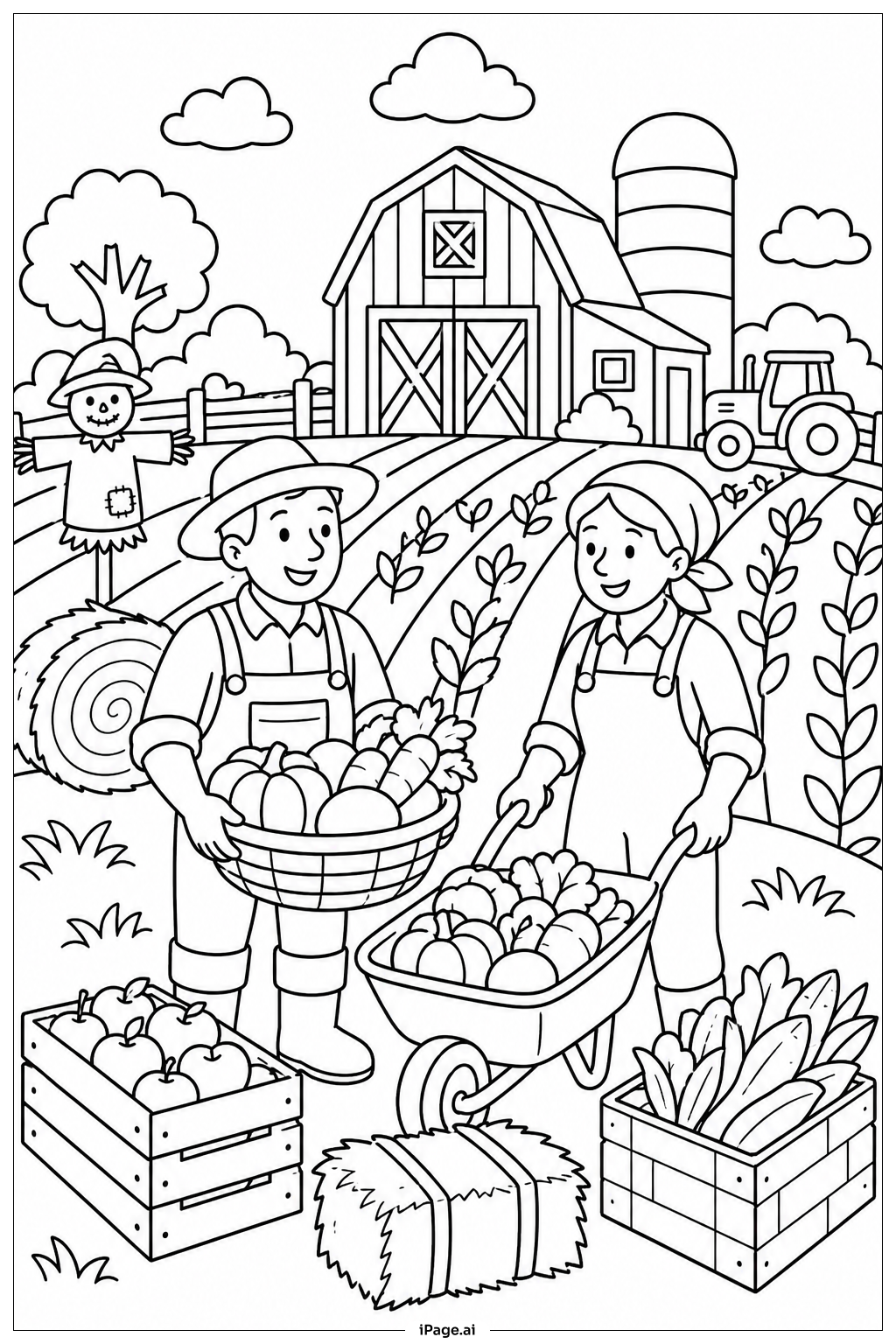
Coloring tips: How to color Farm Harvest Food Field coloring page well?
Start with the sky using a soft light blue. Add white or cream for the fluffy clouds. Use bright yellow and golden tones for the corn stalks and sunshine. Color the pumpkins in deep orange, and the tomatoes in bold red. Give the cabbages and other leafy vegetables various shades of green — light green for tender leaves and darker green for fuller ones. The farmer's clothing can be colored with earthy tones like brown, tan, and denim blue. Use warm wood browns for the crates and baskets. Paint the barn red with a white or gray roof. The rolling hills in the background look great in soft green or golden yellow to show late-season harvest fields. Feel free to mix colors to make the produce look fresh and realistic. Have fun making every fruit and vegetable its own unique, vibrant color!
Coloring challenges: Which parts are difficult to color and need attention for Farm Harvest Food Field coloring page?
• Complex Produce Variety: The image features many different fruits and vegetables all in one scene. Each item — pumpkins, corn, tomatoes, cabbages, and more — has its own shape, texture, and natural color. Keeping track of which color belongs to which crop can be tricky, especially where items overlap or sit close together. Take your time and work on one type of produce at a time.
• Layered Background Details: The scene includes a barn, rolling hills, a sky with clouds, and open fields all in the background. These layers sit behind the main harvest items and require careful color choices so they do not overpower the foreground. Using lighter and softer shades for the background helps create a sense of depth and distance.
• Scarecrow Clothing Textures: The scarecrow in the middle of the field has patchy, layered clothing that can be challenging to color. Its stitched fabric, straw details, and worn hat each call for different tones and textures. Using a mix of browns, tans, and muted colors helps make the scarecrow look natural and fun.
• Small Leaf and Stem Details: Many of the vegetables and fruits have small stems, leaves, and vines attached to them. These tiny details require a fine-tipped coloring tool and a steady hand. Coloring them carefully in various shades of green adds realism and brings the harvest scene to life.
• Wooden Crates and Baskets: The harvest baskets and wooden crates contain fine lines that represent wood grain and woven textures. Filling these in neatly without going outside the lines takes patience and precision, especially in tightly packed areas of the image.
Benefits of coloring books: Advantages of drawing Farm Harvest Food Field coloring page
Coloring this farm harvest scene offers wonderful benefits for children and young artists. First, it builds color recognition skills by introducing a wide variety of natural colors found in fruits, vegetables, and outdoor landscapes. Kids learn to associate colors with real-world objects, strengthening their understanding of nature. Second, the many small details in this image — from tiny stems to textured crates — help develop fine motor skills and hand-eye coordination, which are important for writing and everyday tasks. Third, focusing on a detailed scene encourages patience and concentration, helping children practice staying on task. Fourth, the creative freedom to choose colors fosters imagination and self-expression, giving kids a healthy outlet to explore their artistic instincts. Fifth, the farm harvest theme sparks curiosity about where food comes from, planting early seeds of environmental and agricultural awareness. Completing the full scene also gives children a sense of pride and accomplishment. Whether coloring alone or with family, this page makes for a joyful and educational activity for all ages.