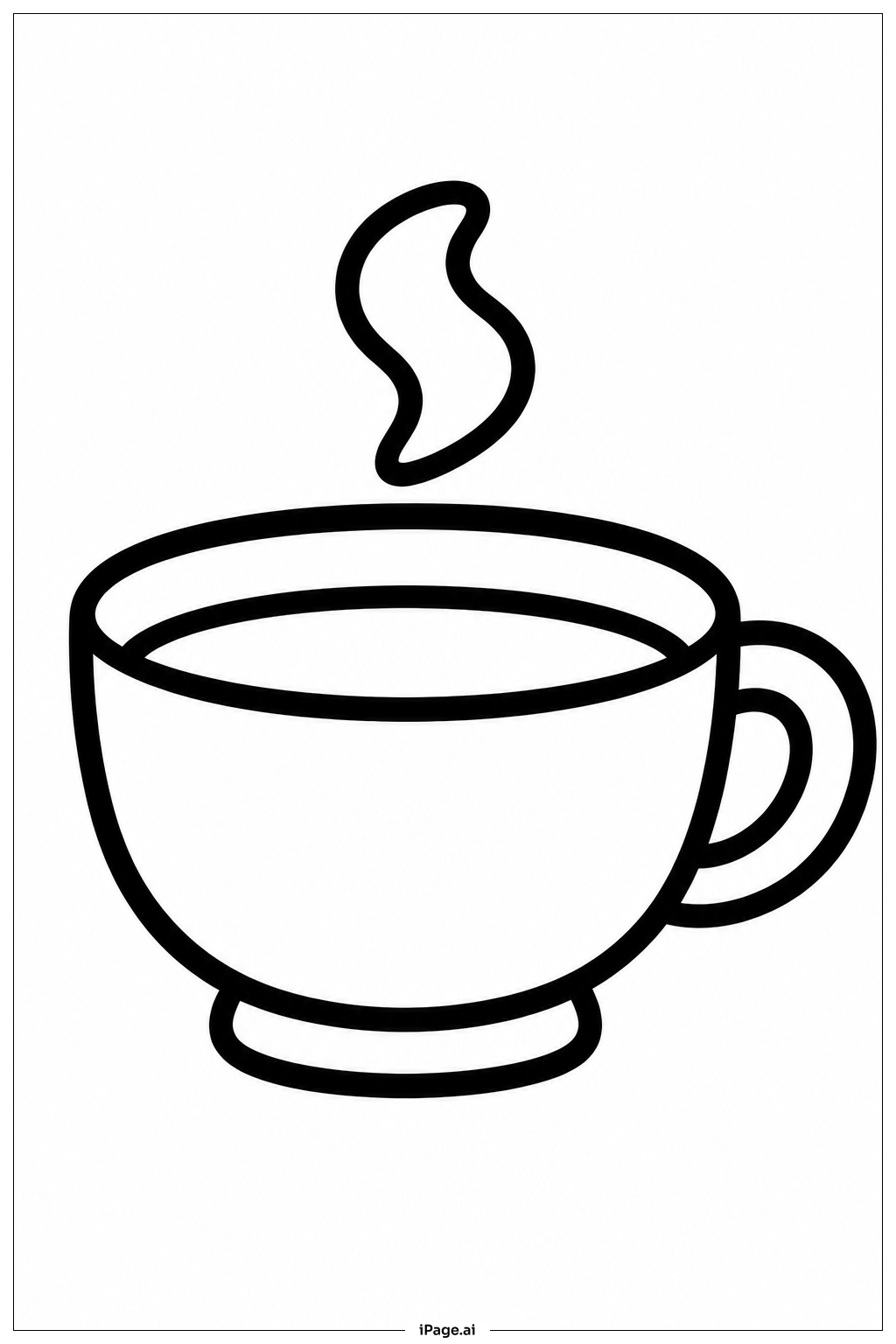
Coloring tips: How to color Cup of Soup coloring page well?
Start with the cup itself. You can make it any color you like — try a warm red, sunny yellow, or soft blue. Use a slightly darker shade on one side of the cup to show depth and shadow. For the broth inside, orange or golden yellow works great for a chicken or vegetable soup. Color the noodles in a light cream or pale yellow. The vegetables can be bright and fun — orange for carrots, green for peas, and white for onion pieces. The steam rising from the cup looks great in light grey or pale lavender. If there is a saucer, keep it simple with a white or soft beige tone. Try to use warm colors overall to match the cozy feeling of a hot soup. Add small shading details near the handle and inside the rim to make the cup look three-dimensional. Have fun mixing colors and making this cup of soup look as delicious as possible.
Coloring challenges: Which parts are difficult to color and need attention for Cup of Soup coloring page?
• Steam Swirls: The wispy steam lines rising from the cup are thin and curvy. Staying inside these narrow shapes without going outside the lines can be tricky, especially for younger colorists. Use a thin-tipped colored pencil or marker for the best results.
• Broth Surface Details: The top of the soup has small floating ingredients like noodles, vegetables, and bubbles. Each piece is tiny and sits close together, making it hard to color each one separately without the colors bleeding into each other. Take your time and use a fine-tipped tool for these areas.
• Cup Shading and Roundness: A round cup looks three-dimensional only when shading is done well. Showing the curved surface of the cup means using at least two shades of the same color — one lighter and one darker. This can be a challenge for beginners who are just learning about light and shadow.
• Handle Precision: The handle of the cup is a small, looped shape. Coloring inside this tight curve without going outside the outline takes steady hands and a sharp coloring tool. It helps to outline the handle lightly first before filling it in.
• Color Harmony: With so many different elements — the cup, broth, steam, noodles, and vegetables — choosing colors that look good together can be a challenge. Picking colors that clash may make the image feel messy. Sticking to a warm color palette helps keep everything looking balanced and appetizing.
Benefits of coloring books: Advantages of drawing Cup of Soup coloring page
Coloring this cup of soup image brings a range of wonderful benefits for kids and beginners alike. First, it helps build fine motor skills. Carefully coloring small details like noodles, vegetables, and steam swirls trains the hand muscles and improves pencil control, which also supports handwriting development. Second, it encourages creativity. There is no single right way to color a soup cup — kids can choose any colors they love and make the image their own. This freedom builds confidence and imagination. Third, it teaches basic color theory in a fun, low-pressure way. Choosing which colors work well together for the broth, cup, and vegetables is a simple introduction to color harmony and contrast. Fourth, coloring is a calming activity. Focusing on staying inside the lines and picking colors helps quiet a busy mind, reducing stress and improving concentration. This makes it a great activity after school or before bedtime. Finally, completing the page gives a real sense of accomplishment. Finishing a piece of art, no matter how simple, boosts self-esteem and encourages kids to keep creating. It is a small win that feels big.