Coloring tips: How to color Carrot Veggie Food coloring page well?
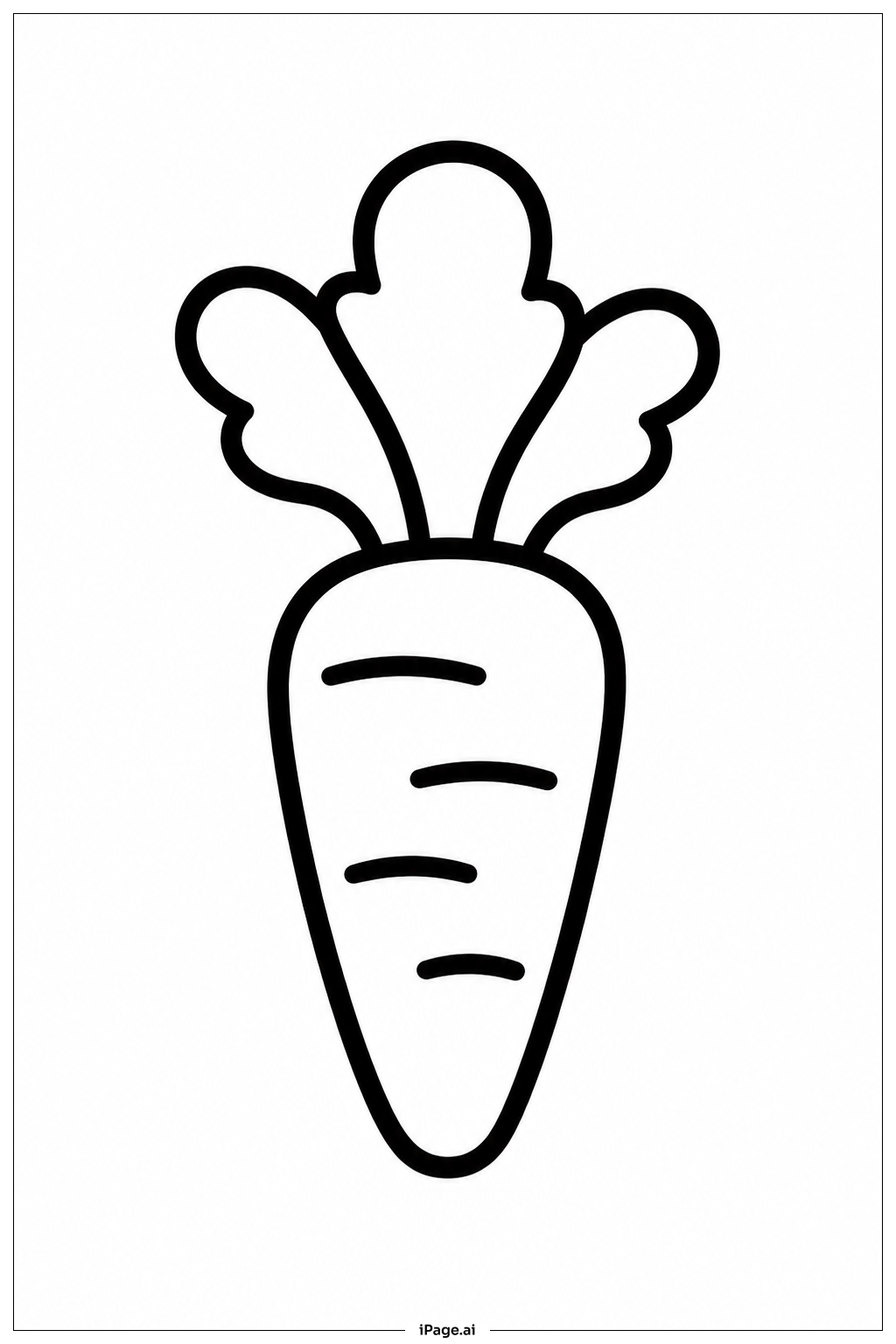
Start with the carrot body and use a bright orange color to fill it in. You can add a slightly darker orange along the edges to give it a rounded, three-dimensional look. For the leaves at the top, use different shades of green — bright green for the main areas and a darker green along the veins and edges. This will make the leaves look full and lively. The horizontal lines on the carrot body can be colored with a deeper orange or brown to show texture and depth. If you want to add a background, light yellow or sky blue works great and helps the orange carrot stand out. Try using colored pencils for smooth blending, or markers for bold, bright results. There is no wrong way to color — have fun and make it your own!
Coloring challenges: Which parts are difficult to color and need attention for Carrot Veggie Food coloring page?
• Blending the Orange Tones: The carrot body looks best when two or three shades of orange are blended smoothly together. Getting a natural gradient from light to dark can be tricky, especially for younger colorists who are still learning how to layer colors without creating harsh lines. Take your time and use light pressure first, then build up the color slowly.
• Coloring the Leaf Veins: The feathery leaves at the top have thin, detailed vein lines running through them. Staying inside these tiny spaces without going over the lines takes a steady hand and a sharp, fine-tipped tool. Young colorists may find it easier to color the whole leaf one shade of green first, then go back and darken the veins afterward.
• Keeping the Lines Clean: The thick outlines are helpful, but where the leaves meet the top of the carrot body, the shapes are close together. It can be easy to accidentally color over the wrong section. Slowing down near these boundary areas and using a smaller tool will help keep things neat.
• Adding Depth to a Simple Shape: Because the carrot is a large, open shape, it can look flat if filled with just one color. The challenge is knowing where to add shadow and highlight to make it look round and real. Using a slightly darker shade on the sides and a lighter tone in the middle helps create that natural, three-dimensional feel.
Benefits of coloring books: Advantages of drawing Carrot Veggie Food coloring page
Coloring this carrot image is a wonderful activity for kids of all ages. It helps build fine motor skills as children practice staying inside the lines and controlling their coloring tools. Working through the different sections — the textured body and the detailed leaves — trains the hand and eye to work together, which supports handwriting development too.
This image also sparks a love of healthy eating. As children color the bright orange carrot, they naturally think about vegetables and nutrition, making it a great conversation starter for parents and teachers.
Choosing which shades of orange and green to use encourages creative thinking and color awareness. Kids learn how colors can be mixed and layered to create depth and bring a simple drawing to life.
Coloring is also a calming, screen-free activity. It helps children focus, slow down, and practice patience — especially when working through the small details in the leaves. For kids who find it hard to sit still, the step-by-step process of filling in a picture provides a clear, satisfying goal.
When the page is finished, children feel a real sense of pride and accomplishment. That confidence carries over into other learning activities too, making coloring a simple but powerful tool for growth.