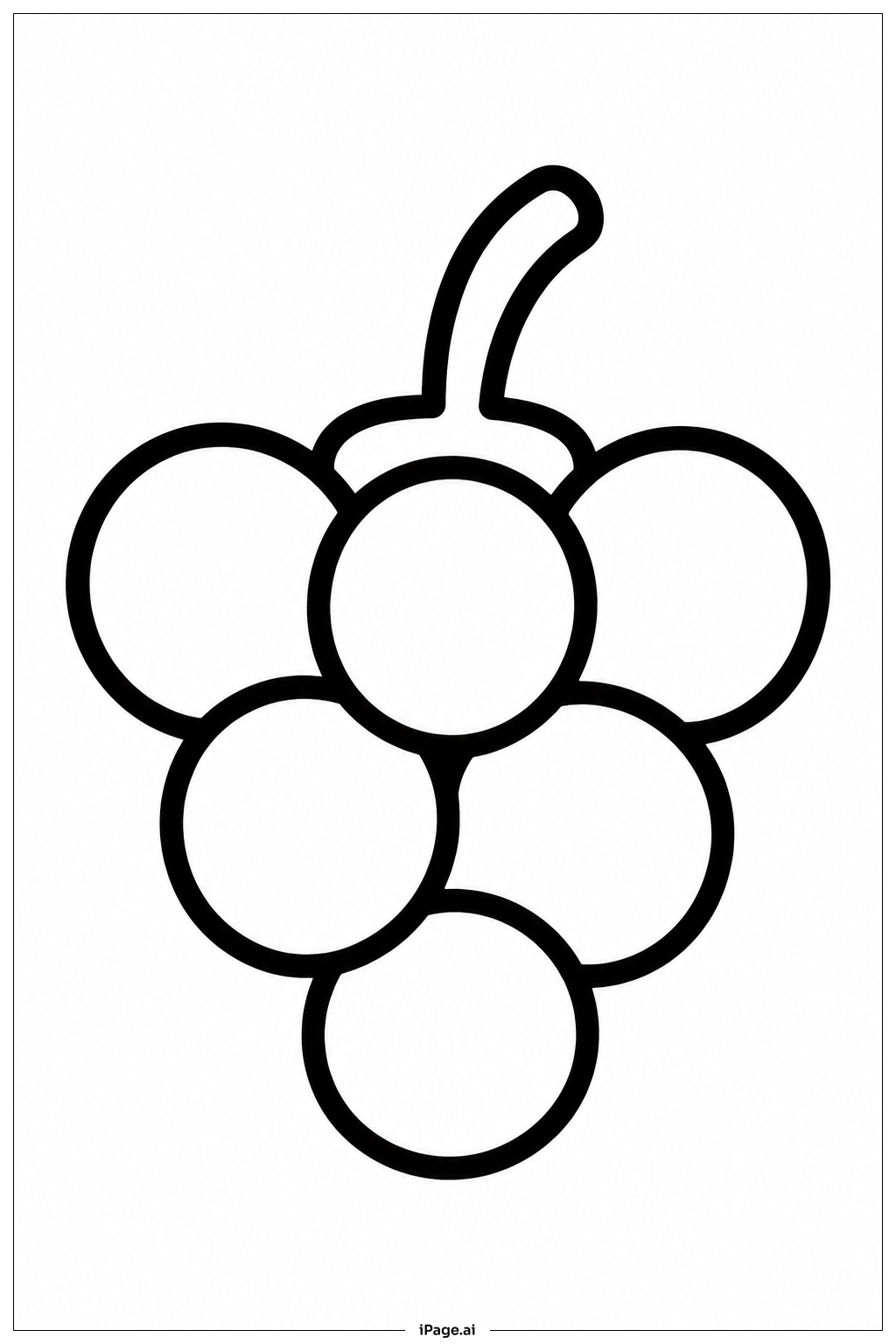
Coloring tips: How to color Bunch of Grapes coloring page well?
Start with the grapes themselves. Purple and violet shades are classic choices, but you can also try red, green, or even a mix of both for a fun twist. Use a slightly darker shade on one side of each grape to create a rounded, three-dimensional look. Leave the small highlight dot uncolored or use white to make the grapes look shiny and juicy. For the vine and stem, use brown or tan. The leaves look great in different shades of green — try a lighter green on one side and a darker green on the other to add depth. The curling tendrils can be colored green or brown. If you want to make the image pop, use a light yellow or soft blue background. Take your time with each grape — it is a great chance to practice staying inside the lines and building up color slowly.
Coloring challenges: Which parts are difficult to color and need attention for Bunch of Grapes coloring page?
• Coloring Individual Grapes: The bunch contains many small, overlapping circular grapes packed closely together. Coloring each one separately without accidentally going over the outlines of neighboring grapes takes patience and a steady hand. A fine-tipped colored pencil or thin marker works best for this area.
• Creating Depth and Dimension: Grapes have a naturally round and shiny surface. Showing that roundness through shading can be tricky, especially for younger colorists. You need to apply a lighter color in the center and a darker shade toward the edges to make each grape look three-dimensional rather than flat.
• Handling the Highlight Dots: Each grape has a small circular highlight that represents reflected light. Keeping this area clean and uncolored while filling in the rest of the grape requires careful control. If you color over it by mistake, using a white gel pen or white colored pencil can help bring it back.
• Coloring the Leaves with Variation: The broad leaves have visible veins running through them. Coloring around the veins while using two or more shades of green to show light and shadow adds realism but demands attention to detail. Rushing through this area can result in a flat, uniform look.
• Working on the Curling Tendrils: The thin, spiraling tendrils are among the narrowest parts of the image. Filling them in with color without smudging or going outside the lines is one of the more demanding tasks, particularly for children using thicker coloring tools. A sharp pencil tip is strongly recommended here.
Benefits of coloring books: Advantages of drawing Bunch of Grapes coloring page
Coloring this bunch of grapes page offers a wide range of benefits for children and young learners. The image is made up of many repeating shapes — round grapes, broad leaves, and curling tendrils — which makes it excellent for building fine motor skills and hand control. Carefully coloring each small grape one by one trains the hand and eye to work together with precision.
The image also encourages creative thinking. Choosing colors for the grapes, leaves, and background gives kids the freedom to express themselves and experiment with color combinations. There is no single right answer, which builds confidence and imagination.
Working through a detailed image like this also helps develop patience and focus. Children learn to slow down, pay attention to small areas, and complete a task step by step — all skills that carry over into school and daily life.
For older children, the challenge of adding shading and highlights introduces early concepts of light, shadow, and three-dimensional drawing. This can spark an interest in art and illustration.
Finally, coloring is a calming and enjoyable activity. It reduces stress, provides a sense of accomplishment when finished, and makes learning about fruits and nature fun and engaging.