Coloring tips: How to color Bento Box Food Layout coloring page well?
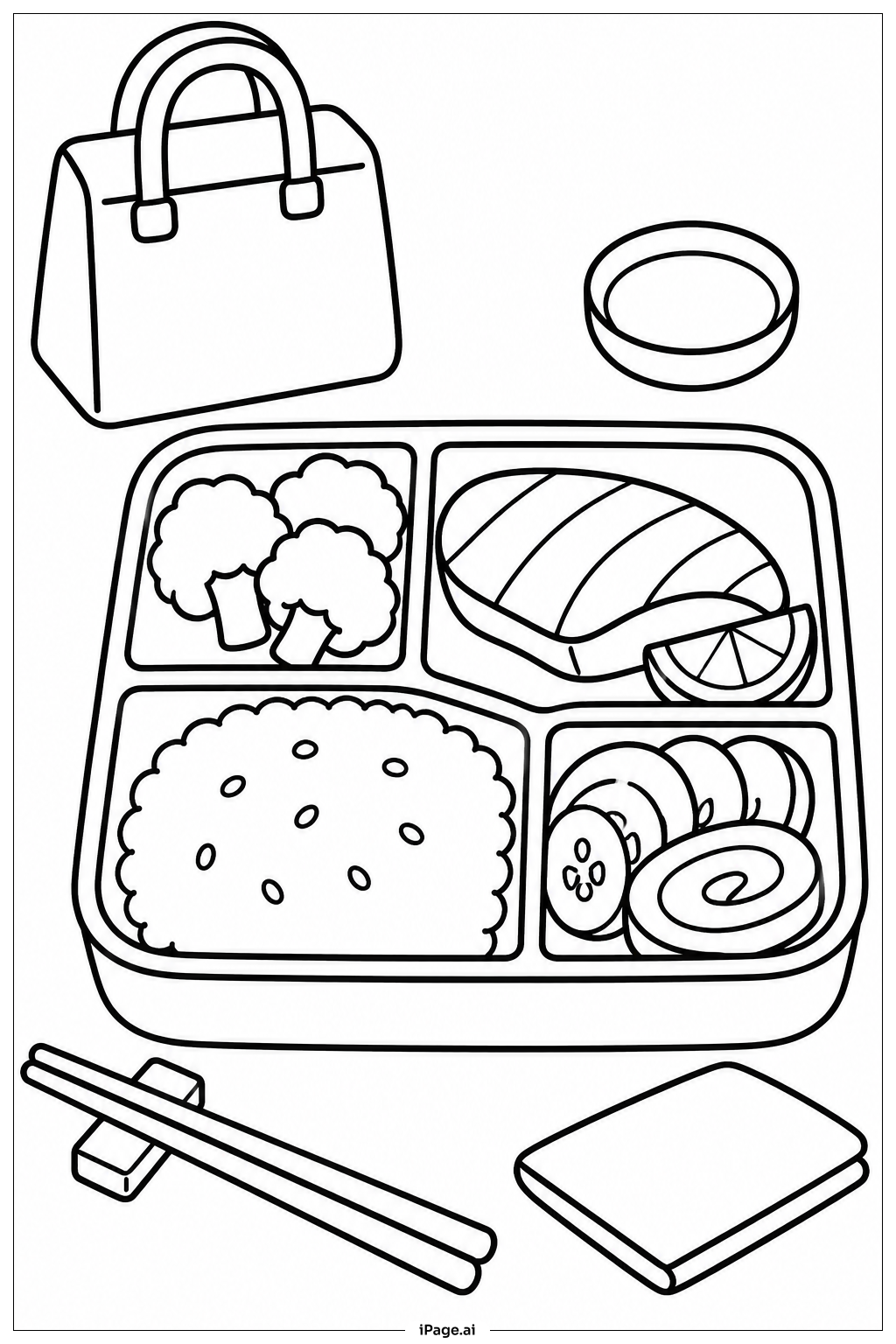
Start with the bento box frame itself. Use a warm brown or dark gray for the box border and dividers to make the compartments stand out clearly. For the rice and onigiri, use a clean white or very light cream. Color the sushi rolls with shades of orange, pink, and green to show off different toppings like salmon, tuna, and cucumber. Give the vegetables bright, cheerful colors — deep green for broccoli, vivid orange for carrots. Use a sunny yellow for the egg yolk and light yellow for the tamagoyaki. For fruit, try bold red for strawberries and a warm orange for citrus slices. Adding small highlights with a white colored pencil or leaving tiny spots uncolored can make the food look shiny and fresh. Take your time with each section. Each compartment is its own mini artwork. Have fun mixing and matching colors to make your bento box look as delicious and colorful as a real one!
Coloring challenges: Which parts are difficult to color and need attention for Bento Box Food Layout coloring page?
• Small Compartment Details: The bento box is divided into many small sections, and each one contains its own food item with fine outlines and tiny details. Staying inside the borders of each compartment without accidentally coloring into neighboring sections requires steady hands and careful attention, especially for younger colorists.
• Varied Food Textures: Different foods in the box have unique textures that are tricky to represent with color. Rice should look soft and grainy, vegetables need to appear crisp and fresh, and the egg yolk should look smooth and glossy. Capturing these different surface qualities using only colored pencils or markers takes practice and creative technique.
• Color Coordination Across Sections: Because so many different foods are placed side by side, choosing colors that look good together without clashing is a real challenge. Each section must look distinct, yet the whole box should feel like a unified and appetizing meal. Balancing bright and muted tones takes thoughtful color planning.
• Tiny Food Garnishes and Toppings: Some food items include small garnishes like sesame seeds on sushi, ridges on rolled omelets, or leaf shapes on vegetables. These tiny elements are easy to overlook but make a big difference in how realistic the final result looks. Coloring them neatly calls for a fine-tipped tool and a lot of patience.
• Realistic Shading and Depth: The bento box has raised edges and layered food items, which means adding shading can greatly improve the sense of depth and realism. Knowing where to place shadows — along the box walls and beneath food items — is a more advanced skill that can be challenging but very rewarding when done well.
Benefits of coloring books: Advantages of drawing Bento Box Food Layout coloring page
Coloring this bento box food layout page offers a wonderful mix of fun and learning for kids and adults alike. Because the image is packed with many different food items, it encourages colorists to observe and think about the colors found in real foods, building awareness of healthy eating in a playful, creative way.
For children, working through each small compartment helps develop fine motor skills and hand-eye coordination. Carefully coloring within the neat dividers of the bento box trains focus and patience — valuable skills that carry over into writing, drawing, and everyday tasks.
The variety of shapes and textures in the image sparks creativity. Kids are inspired to make choices about color combinations and experiment with shading, which builds confidence in their artistic decision-making.
For older colorists and adults, the detailed layout provides a satisfying and calming activity. Focusing on one small section at a time encourages mindfulness, helping to reduce stress and quiet a busy mind.
The bento box theme also makes this page a great educational tool. It can open conversations about Japanese culture, food diversity, and balanced nutrition. Parents and teachers can use it as a starting point for fun lessons about world foods.
Overall, this coloring page is a joyful, enriching activity that blends art, culture, and learning all in one tidy, delicious little box.