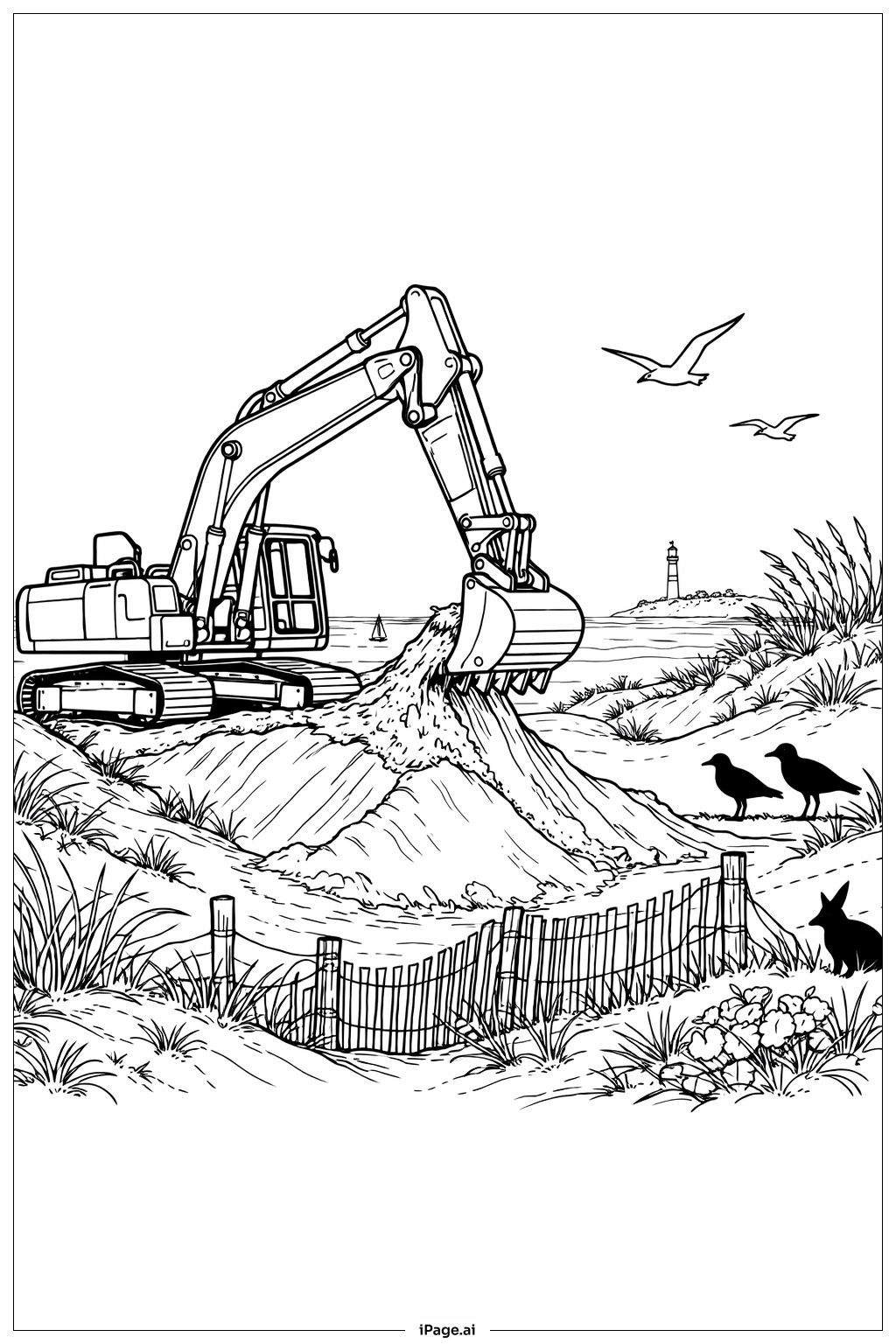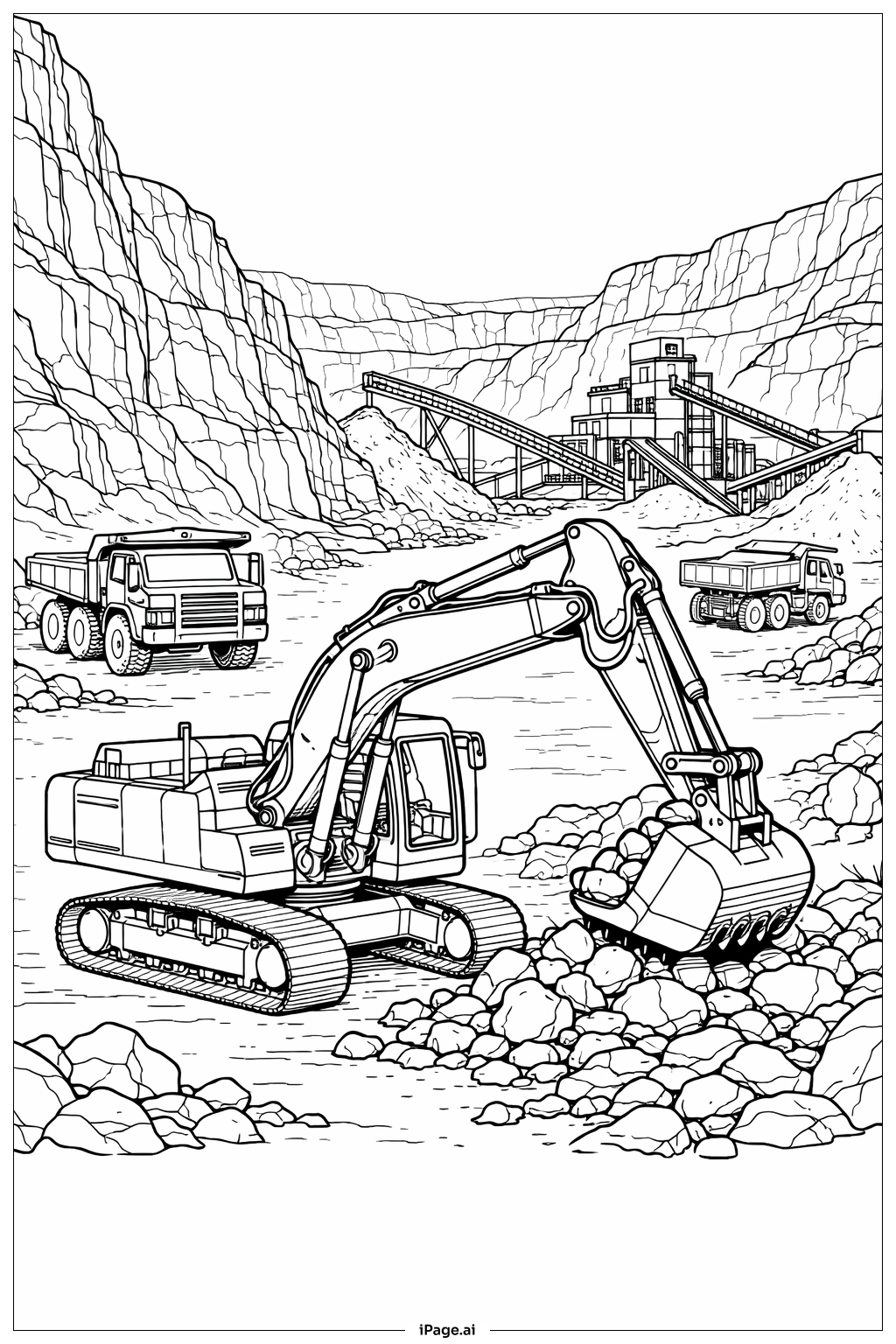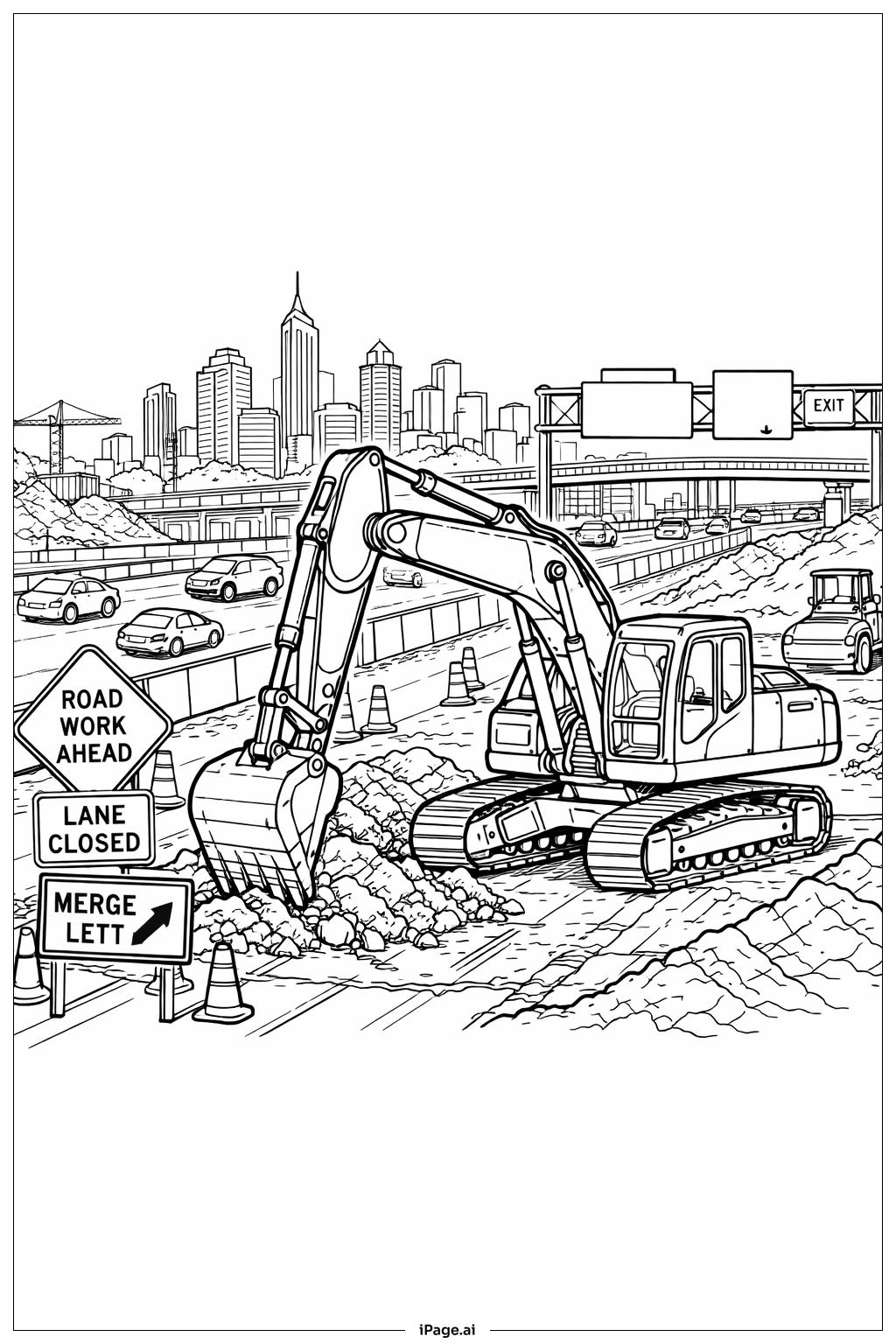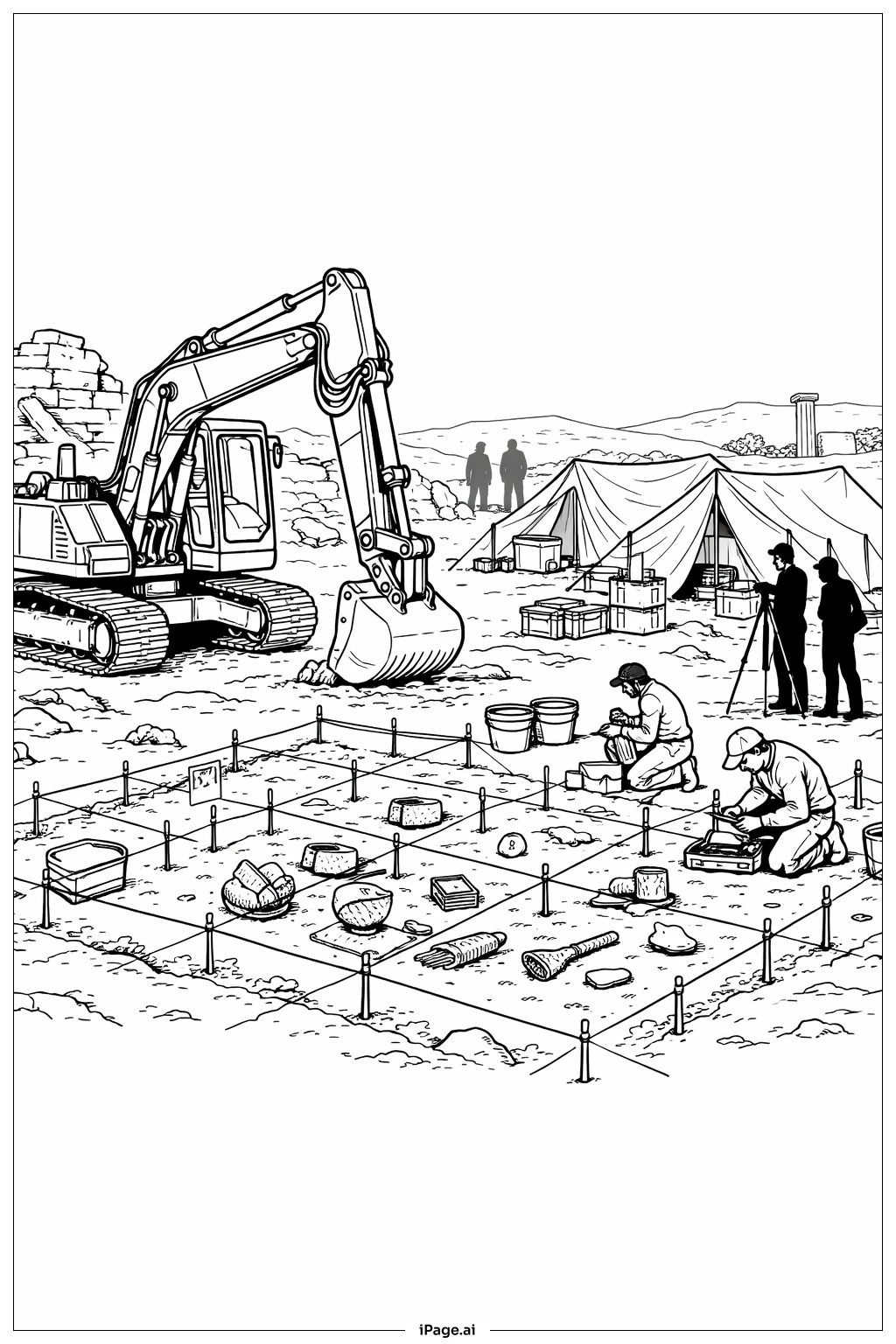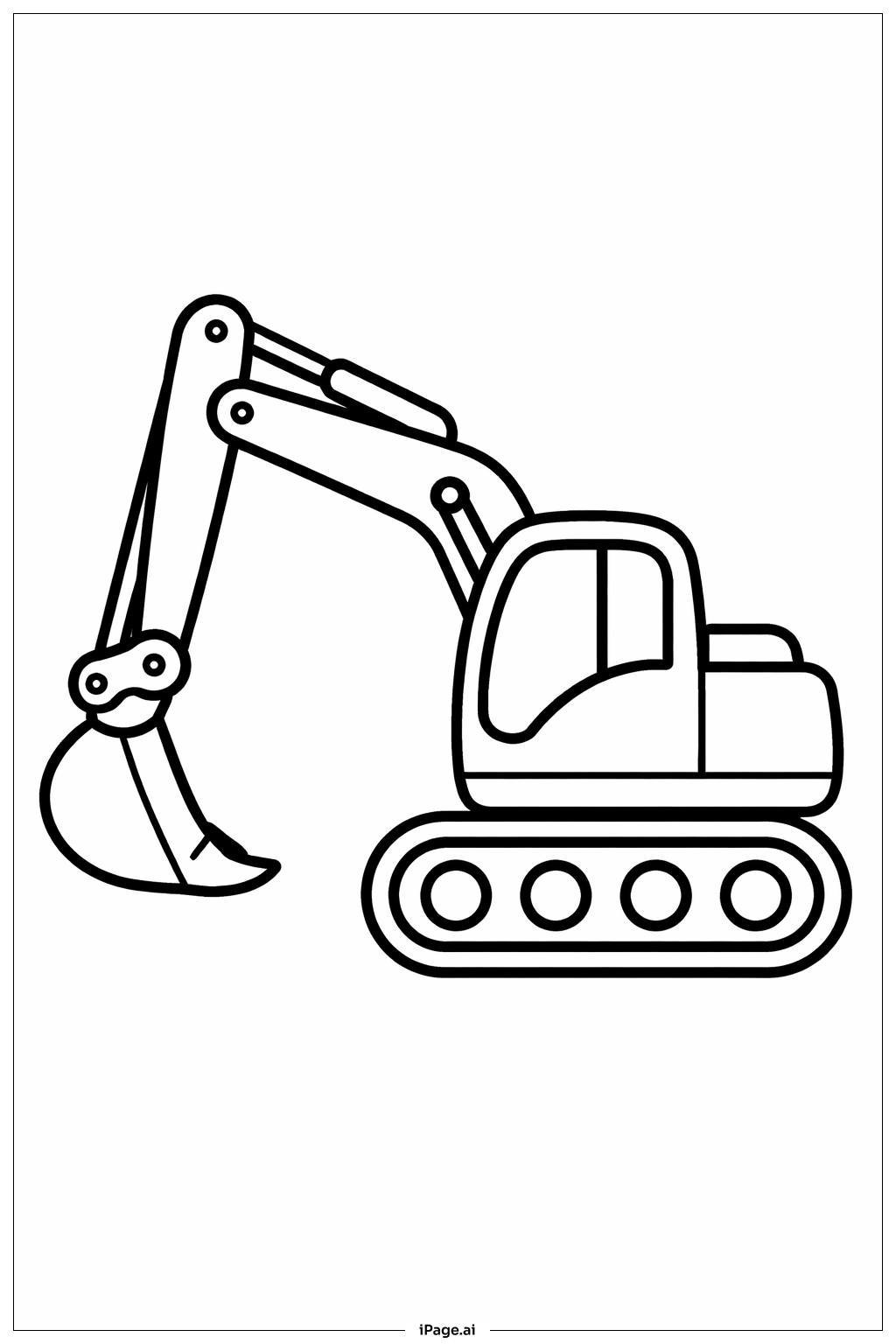
Coloring tips: How to color Excavator In Simple Side View coloring page well?
Start with the largest areas first. Color the main body and cab in bright yellow or orange — these are the most common colors for construction equipment and make the excavator look bold and realistic. Use a darker shade of the same color for shadows along the edges of the cab and boom arm to add depth. Paint the tracks dark gray or black, and use a slightly lighter gray for the individual track links to show detail. The bucket can be yellow like the body, but add brown or muddy tones to the teeth and inner scoop to make it look like it has been digging. Use silver or light gray for the hydraulic cylinders and metal rods. The cabin windows look great in light blue or pale green to suggest glass. Add a touch of dark gray or black to bolts, joints, and panel lines for a finished, mechanical look. Feel free to experiment with your own color choices — construction vehicles can be painted in many colors, so there are no wrong answers!
Coloring challenges: Which parts are difficult to color and need attention for Excavator In Simple Side View coloring page?
• Hydraulic Cylinder Details: The boom and dipper arms each have thin hydraulic cylinders running alongside them. These narrow, elongated shapes require a steady hand and a fine-tipped coloring tool to fill in neatly without bleeding into the surrounding parts. Keeping the cylinder color distinct from the arm color is key to making the machine look realistic.
• Track Link Segments: The undercarriage features a row of individual track links that form the crawler base. Each small segment needs consistent coloring to look uniform. Switching between dark gray for the overall track and a slightly lighter tone for each link requires patience and careful control, especially for younger colorists.
• Cab Windows and Frame: The cabin area includes window frames and glass panels that sit close together. Coloring the glass with a light, transparent-looking shade while keeping the surrounding frame a solid, darker color demands precision. Going outside the lines here can make the cab look messy.
• Boom and Dipper Arm Shading: The long arm sections span a large area and benefit greatly from shading to look three-dimensional. Applying a gradual shift from a lighter tone on top to a darker tone underneath is a technique that can be tricky for beginners but makes the excavator look much more impressive.
• Small Mechanical Features: Details like bolts, joint pins, the exhaust pipe, and panel lines are small and tightly spaced. These tiny elements reward careful coloring with a sharp pencil or fine marker, but they can easily get lost or look smudged if too much color is applied at once.
Benefits of coloring books: Advantages of drawing Excavator In Simple Side View coloring page
Coloring this excavator page offers a fun mix of creativity and learning. For Boys and Girls who love construction vehicles, filling in the parts of a real machine makes the activity feel exciting and meaningful. It helps young colorists learn the names and shapes of different machine components, building early technical awareness in a playful way.
For all ages, working through the clean, bold outlines of the excavator strengthens fine motor skills and hand-eye coordination. Staying within the lines of narrow parts like the hydraulic cylinders and track segments trains steady, controlled movement that supports handwriting and other detailed tasks.
The image also encourages color planning and decision-making. Choosing which shades to use for the body, tracks, and bucket helps develop creative thinking and confidence. Mixing tones to create shading and depth introduces basic art concepts in an approachable, low-pressure setting.
For Adults, this simple side-view design offers a satisfying, focused coloring session without being overwhelming. It is a great way to relax and practice mindfulness while producing a clean, finished piece. Whether used in a classroom, at home, or as a quiet activity break, this Printable excavator page delivers real developmental and emotional value for colorists of every age.