Coloring tips: How to color Easter Cupcake Big coloring page well?
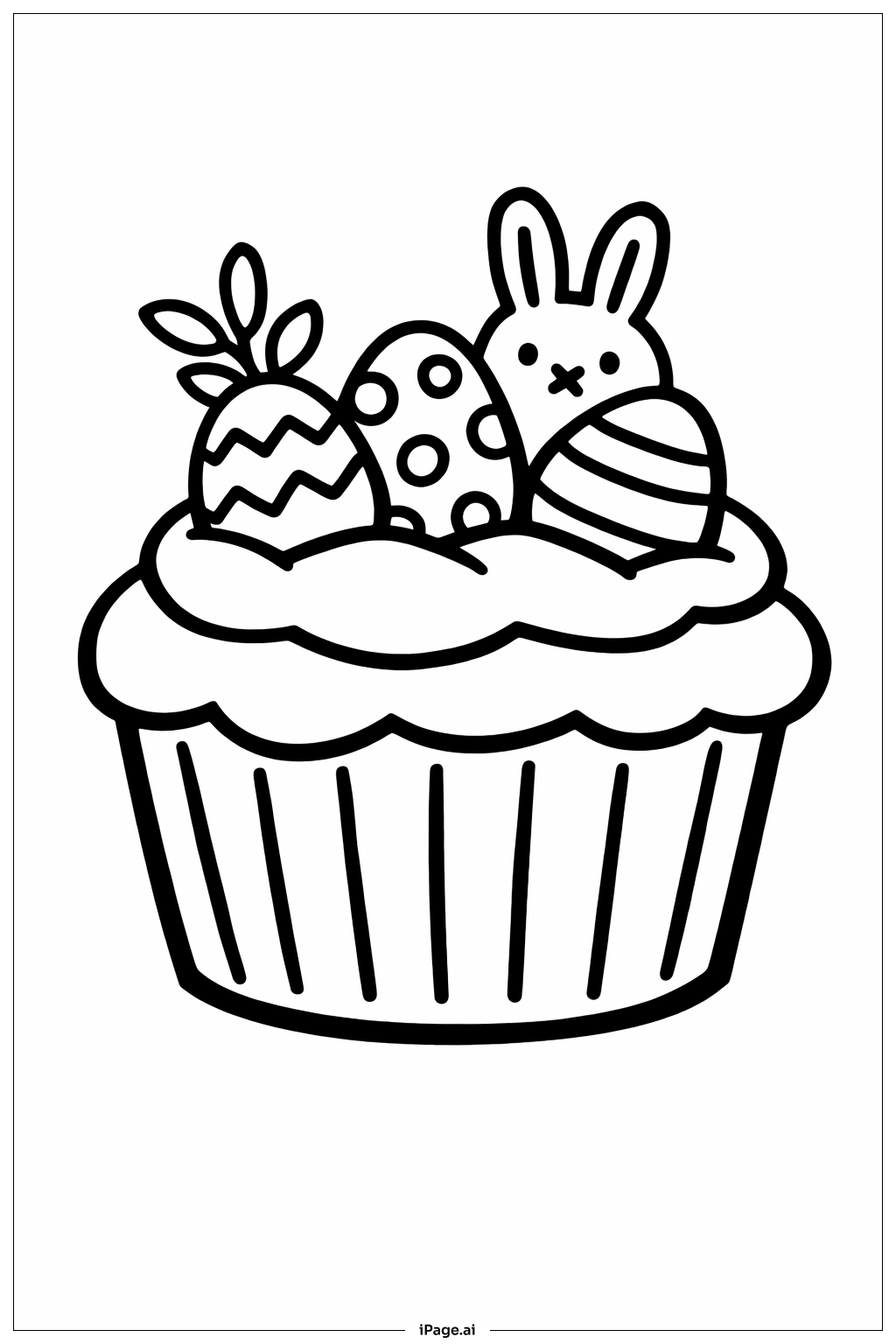
Start with the Easter egg on top using bright, cheerful spring colors like pink, purple, yellow, or light blue. Try alternating colors for the different pattern sections on the egg to make the designs pop. For the frosting, pastel shades work beautifully—think soft mint green, lavender, baby pink, or cream. Add subtle shading by pressing harder with your coloring tool along the swirl edges to create dimension. The cupcake wrapper can be a complementary color like pale yellow, peach, or white with hints of color in the ridges. Use a darker shade in the grooves to add depth. The small decorative eggs around the base offer a perfect opportunity to experiment with a rainbow of Easter colors. Don't forget to add shadows beneath the cupcake with light gray or soft purple to make it appear grounded on the page.
Coloring challenges: Which parts are difficult to color and need attention for Easter Cupcake Big coloring page?
• Frosting Swirl Details: The flowing frosting features curved lines and overlapping peaks that require careful attention to stay within the lines. Young children may find the tight spaces where frosting curves meet challenging, especially when trying to create smooth gradients or shading effects. Using the tip of a colored pencil or fine marker helps navigate these delicate areas.
• Easter Egg Patterns: The decorative egg on top contains multiple intricate patterns including stripes, dots, waves, and geometric shapes within a small area. Coloring each section with different colors while maintaining clean boundaries between patterns demands patience and precision. Switching between colors frequently can be tricky for younger artists, and small dots require steady hand control.
• Cupcake Wrapper Ridges: The fluted wrapper has repeating vertical ridges that create a three-dimensional effect. Coloring each ridge consistently while adding lighter and darker tones to show depth is challenging. Children must decide whether to color each ridge differently or use shading techniques to make the wrapper look realistic and rounded.
• Small Decorative Elements: The tiny eggs and sprinkles scattered around the base are small targets that require fine motor control. Staying within these miniature shapes without coloring outside the lines tests precision skills, especially for younger children still developing their hand-eye coordination.
Benefits of coloring books: Advantages of drawing Easter Cupcake Big coloring page
Coloring this Easter cupcake helps children develop important fine motor skills through the detailed patterns and curved lines. The intricate egg designs strengthen hand-eye coordination and concentration as kids carefully fill small spaces with color. This image encourages creative decision-making as children choose their own color combinations and decide whether to use realistic or imaginative palettes. The festive Easter theme makes coloring exciting and connects art to seasonal celebrations, building cultural awareness. Working on the frosting swirls teaches patience and attention to detail. The varied elements—from large areas like the frosting to tiny decorative eggs—provide a balanced challenge suitable for different skill levels. Completing this cheerful cupcake delivers a sense of accomplishment and pride. The repetitive patterns in the wrapper and egg offer a calming, meditative quality that helps reduce stress while keeping young minds engaged and focused on a joyful creative task.