Coloring tips: How to color Easter Chick Family coloring page well?
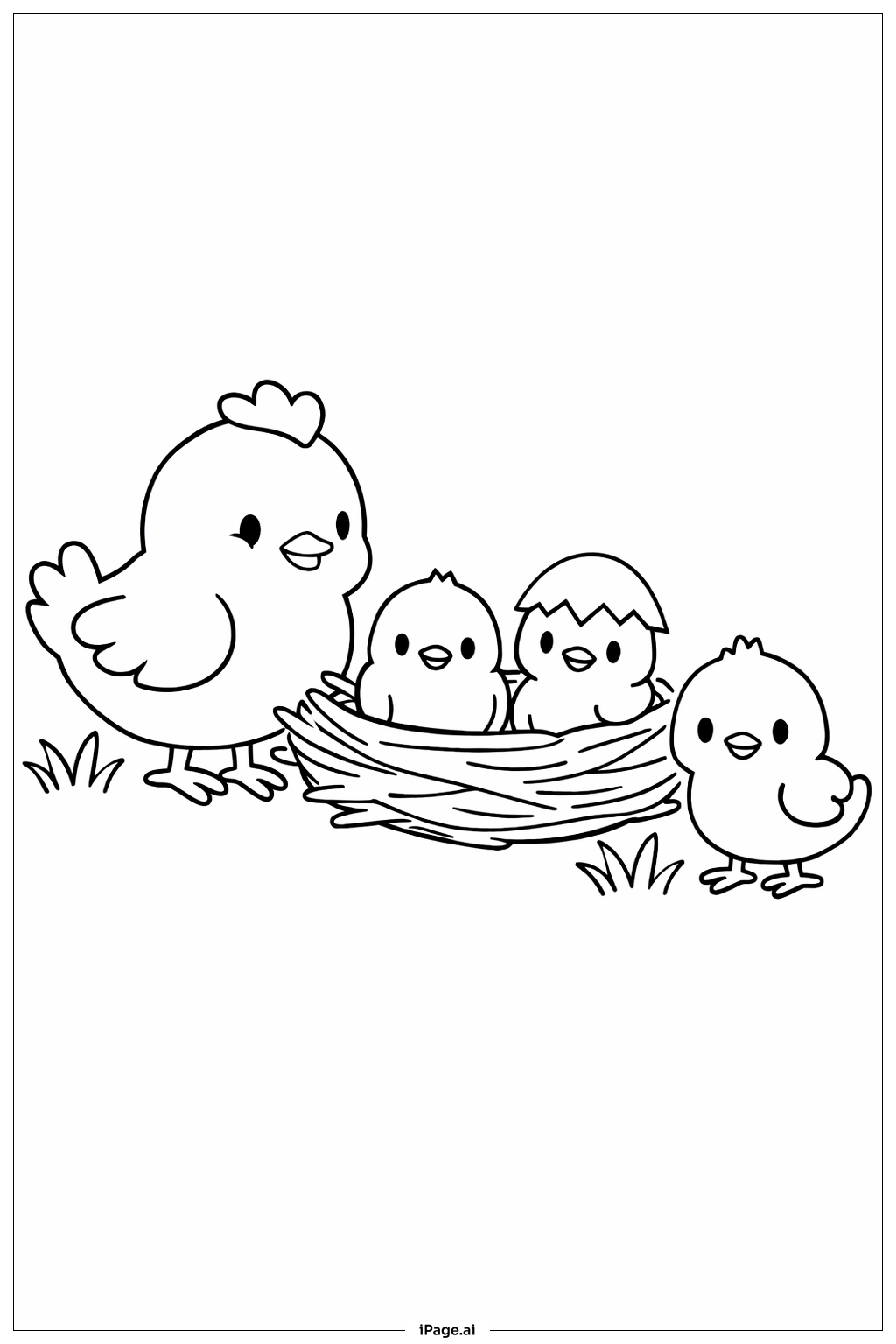
Start with the chicks by using bright, warm yellows for their fluffy bodies. You can add a touch of orange or golden yellow to show depth and shadow on the feathers. Use orange for their beaks and feet to make them pop. For the Easter eggs, go wild with fun patterns — try stripes, polka dots, or zigzag lines in pink, purple, blue, and green. The grass can be colored in light and dark greens to give it a lush, spring-like feel. Add soft pinks and whites to the flowers, and use pale blues and lavenders for any butterflies in the scene. If you want the parent chick to stand out from the babies, try using a slightly deeper or warmer shade of yellow. Don't forget to color the background sky in a soft, light blue to capture that perfect Easter morning feeling. Have fun mixing colors and making this chick family uniquely yours!
Coloring challenges: Which parts are difficult to color and need attention for Easter Chick Family coloring page?
• Feather Texture Details: The fluffy feathers on each chick are made up of many small, overlapping lines and curves. Staying within these tiny shapes while blending light and shadow takes patience and a fine-tipped coloring tool. Rushing through this area can make the chicks look flat instead of soft and three-dimensional.
• Size Variation Among Chicks: The parent chick and baby chicks are drawn at different scales, which means you need to adjust your coloring pressure and tool size accordingly. Using the same stroke size on small chicks as on the large parent chick can result in colors going outside the lines or losing fine details.
• Easter Egg Patterns: The decorated Easter eggs contain intricate small patterns like dots, stripes, and swirls. These tiny sections require careful color placement so that neighboring colors do not bleed into each other. Choosing colors that contrast well with each other will help each pattern stand out clearly.
• Spring Foliage and Flowers: The grass blades, tulips, and daisies surrounding the chicks involve many small overlapping shapes. Coloring each element a slightly different shade of the same color family — such as light green and dark green for the grass — helps separate the layers and adds visual depth to the scene.
• Maintaining a Cohesive Color Palette: With so many elements in the scene — chicks, eggs, flowers, grass, and butterflies — it can be challenging to keep the overall color scheme balanced and harmonious. Planning your colors before you begin, and repeating certain colors across different parts of the image, will help the finished picture feel unified and cheerful.
Benefits of coloring books: Advantages of drawing Easter Chick Family coloring page
Coloring the Easter Chick Family page offers a wonderful range of benefits for children and families alike. First, it helps young colorists develop fine motor skills as they carefully fill in the small feather details, tiny egg patterns, and delicate flower shapes. Guiding a crayon or colored pencil within these lines strengthens hand control and prepares children for writing.
Second, choosing colors for the chicks, eggs, and spring flowers encourages creative thinking. Kids get to make their own color decisions, building confidence and self-expression in a low-pressure, fun environment.
Third, the Easter theme makes this page a great conversation starter about spring traditions, new beginnings, and family togetherness. Coloring together as a family can spark storytelling and imaginative play around the chick family characters.
Fourth, focusing on a detailed image like this one promotes concentration and patience — skills that are valuable both in and out of the classroom. Completing the page gives children a real sense of accomplishment.
Finally, this page is simply joyful. The cheerful chicks, colorful eggs, and blooming flowers create a positive, uplifting mood that makes the coloring experience relaxing and rewarding for all ages. It is a perfect Easter activity for Boys and Girls to enjoy together.