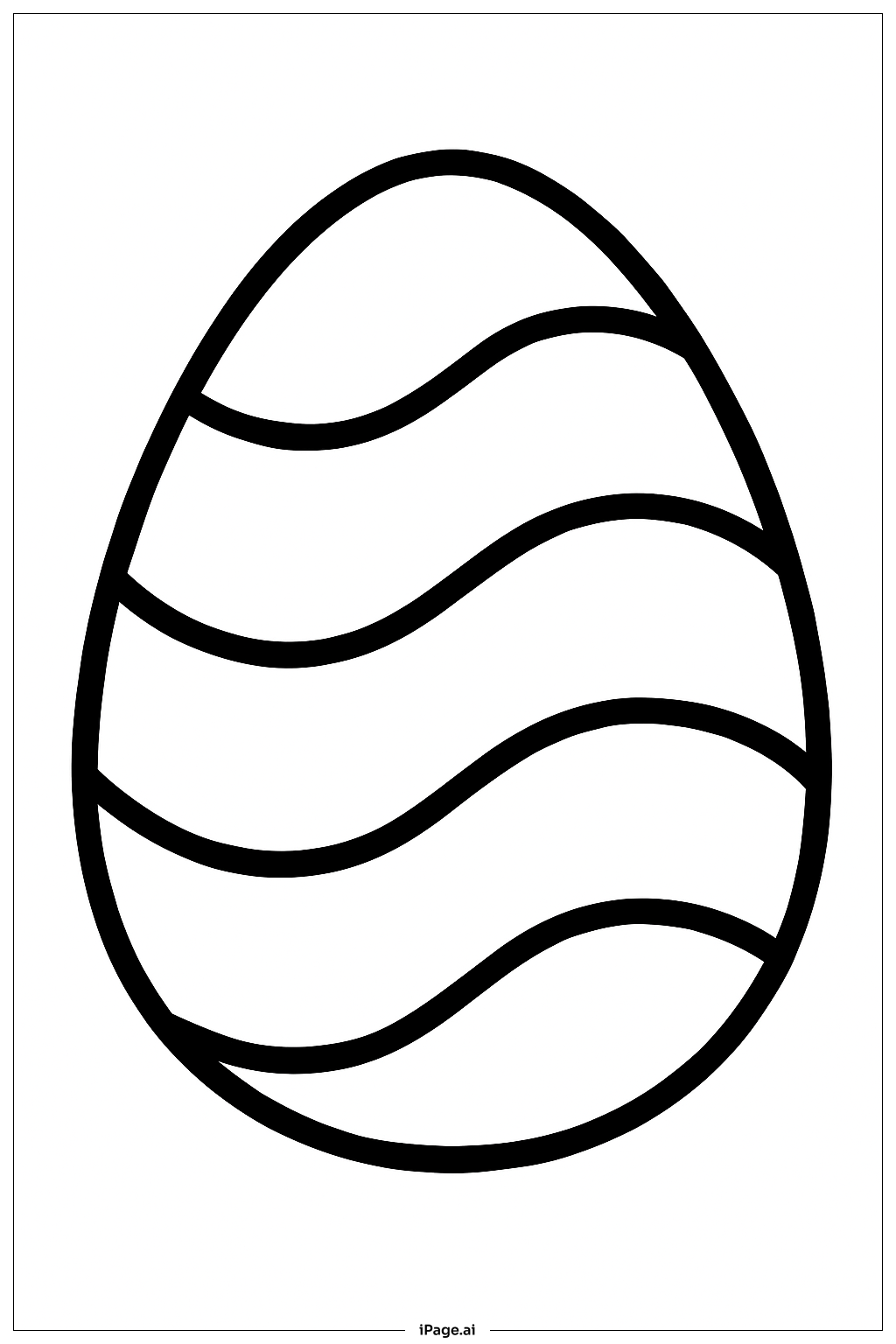
Coloring tips: How to color Wavy Lines Easter Egg coloring page well?
Start by choosing a fun color palette. You can use soft pastel shades like light pink, lavender, baby blue, and mint green for a classic Easter look. Or go bold with bright yellows, oranges, and purples for a more festive feel.
Color each wavy band a different shade to make the egg pop. Try alternating warm and cool colors side by side for a nice contrast. For example, place yellow next to blue, or pink next to green.
Use colored pencils for smooth, even coverage along the narrow wave sections. Crayons or markers work great for filling in the wider bands quickly.
Add a gradient effect inside each wave by pressing harder on one side and lighter on the other. This gives the egg a shiny, three-dimensional look.
Feel free to add small dots, stars, or tiny flowers inside the wider bands to make your egg extra special and unique.
Coloring challenges: Which parts are difficult to color and need attention for Wavy Lines Easter Egg coloring page?
• Staying Within the Wavy Lines: The curved, flowing nature of the wavy lines makes it tricky to color neatly inside each section. The lines bend and dip in different directions, so your hand needs to follow the curve carefully. Using a fine-tipped tool near the edges helps keep things tidy.
• Consistent Color Coverage: Filling in the narrow wave bands evenly without leaving white patches or uneven streaks can be challenging. Thin sections require patience and steady pressure, especially when using colored pencils or crayons. Short, light strokes layered gradually work best here.
• Choosing a Harmonious Color Scheme: With many separate wave sections to color, deciding which colors to place next to each other takes thought. Picking colors that clash can make the egg look messy, while well-chosen combinations make it look vibrant and balanced. Planning your palette before you start will save a lot of headaches.
• Transitioning Between Sections: Where two wave bands meet, keeping the colors from bleeding into each other requires a careful hand. Whether using markers or watercolors, the risk of colors mixing at the borders is real. Letting one section dry fully before moving to the next is a smart approach.
• Creating Visual Variety Without Overcomplicating: Because all the shapes are similar wavy bands, it can be easy to make the whole egg look repetitive. The challenge is to use enough color variation and small decorative touches to keep each section interesting while still making the egg look like a unified, cohesive design.
Benefits of coloring books: Advantages of drawing Wavy Lines Easter Egg coloring page
Coloring this Wavy Lines Easter Egg is a wonderful activity for kids and adults alike. Here are some great reasons to pick up your colors and get started.
It builds focus and patience. Following the curves of each wavy line carefully helps train your hand and mind to slow down and concentrate, which is a great skill for everyday life.
It sparks creativity. Choosing which colors go in each wave section encourages you to think like an artist. Every person's egg will look different, and that is the fun part.
It improves fine motor skills. Staying inside the curved lines and filling sections neatly strengthens the small muscles in your hands and fingers. This is especially helpful for younger children developing their coordination.
It is relaxing and stress-relieving. The gentle, rhythmic flow of wavy lines has a calming effect. Coloring along those curves feels soothing and meditative, making it a great way to unwind after a busy day.
It celebrates the spirit of Easter. Creating a colorful Easter egg connects you to the joy and festivity of the season. It is also a fun way to make personalized Easter decorations or greeting card art to share with family and friends.