Coloring tips: How to color Smiling Easter Egg coloring page well?
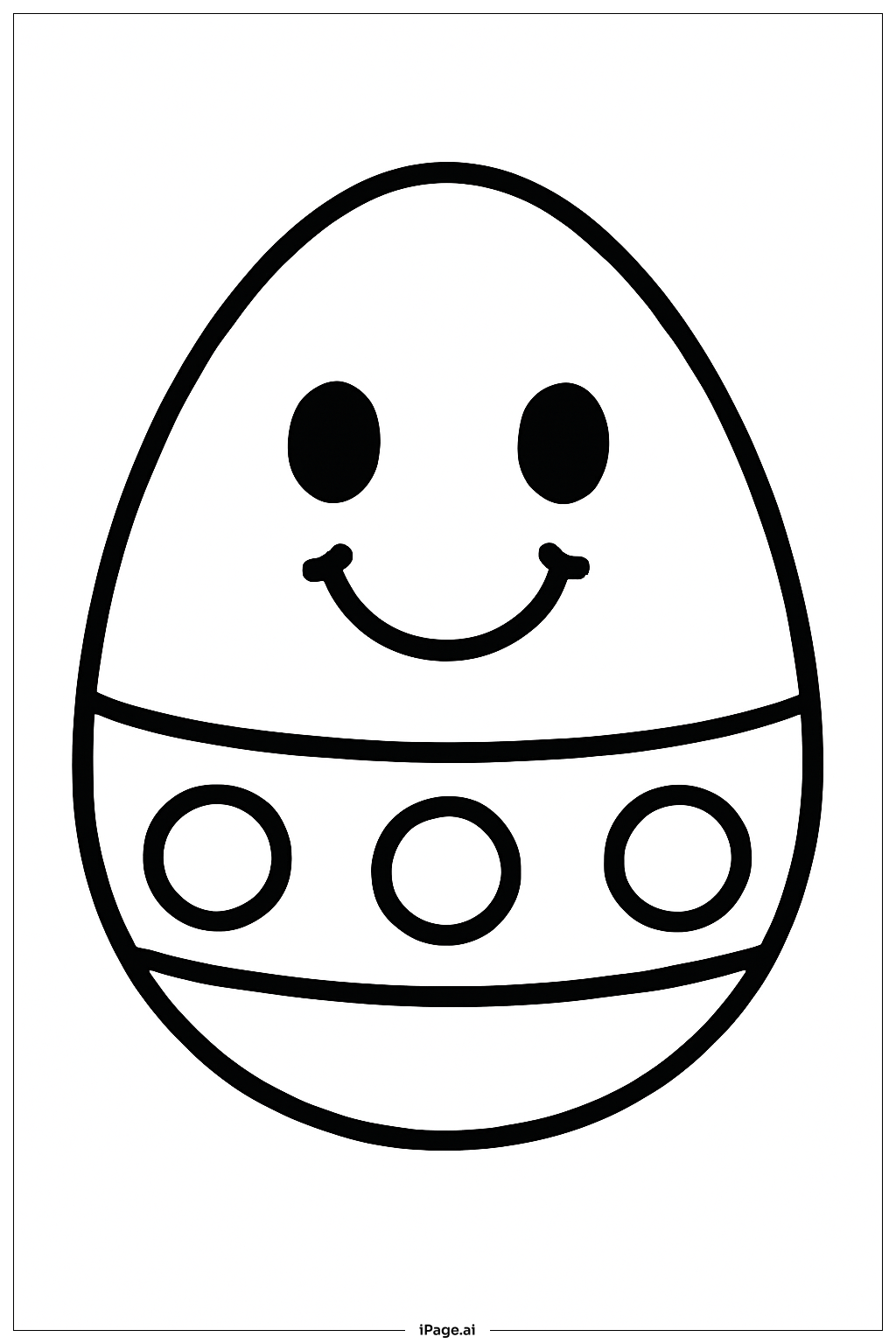
To color this smiling Easter egg, use bright and cheerful colors to bring it to life. You can choose yellow, orange, or pink for the main part of the egg to make it look warm and inviting. Color the eyes black or dark blue, and use red or pink for the smile to make it stand out. For the band and circles, try using different bright colors such as blue, green, or purple to create a fun and colorful pattern. You can also add shading or patterns inside the circles to make the design more interesting. Feel free to use markers, crayons, or colored pencils for best results. Remember to color carefully inside the lines to make the egg look neat and beautiful.
Coloring challenges: Which parts are difficult to color and need attention for Smiling Easter Egg coloring page?
1. Staying inside the thick lines of the egg can be a challenge, especially in the small circles on the band. It requires good control and patience.
2. Choosing colors that look good together may be hard for some children, especially when deciding how to color the band and circles differently from the rest of the egg.
3. Coloring the smile and eyes neatly requires attention to detail because they are small and important to the egg's happy expression.
4. Adding shading or patterns to the circles might be difficult for younger children as it requires more skill and creativity.
5. Keeping the colors bright and not mixing them accidentally is important to keep the egg looking cheerful and clean.
Benefits of coloring books: Advantages of drawing Smiling Easter Egg coloring page
Coloring this smiling Easter egg helps children practice hand-eye coordination by carefully filling the spaces. It encourages creativity as kids decide which colors to use and how to decorate the circles. Coloring also improves focus and patience since staying inside the lines takes careful effort. The happy face of the egg can boost mood and make coloring a fun and positive experience. Overall, this activity supports fine motor skills and artistic expression, making it beneficial for children aged 4 to 16.