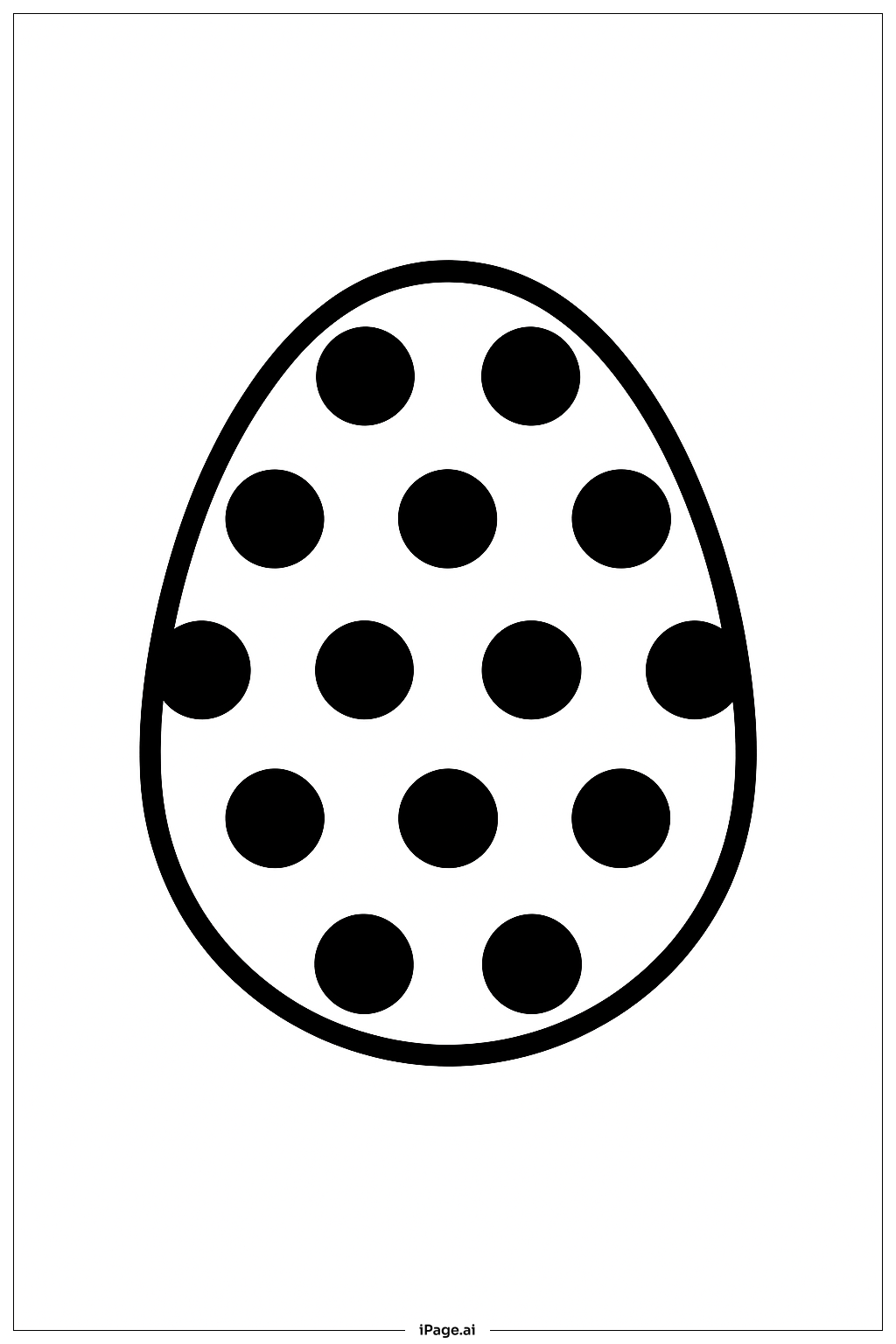
Coloring tips: How to color Polka Dot Easter Egg coloring page well?
Start with the Easter egg itself by choosing bright, cheerful colors like pink, purple, yellow, or blue for the base. Make the polka dots stand out by using a contrasting color - if your egg is pink, try white or yellow dots. For the surrounding flowers, use vibrant spring colors like red, orange, or magenta for the petals, with yellow or orange centers. Color the leaves and grass in various shades of green to create depth - try light green, dark green, or even lime green. Don't forget to add color to any decorative ribbons or bows using complementary colors. You can make your design realistic or go wild with rainbow colors for a more playful look.
Coloring challenges: Which parts are difficult to color and need attention for Polka Dot Easter Egg coloring page?
• Polka Dot Precision: The most challenging aspect is coloring the numerous polka dots scattered across the egg. Each circular dot needs to stay within its boundaries, requiring steady hand control and patience. Younger children may find it tricky to color these small circular shapes neatly without going outside the lines or accidentally blending colors between the dots and the egg background.
• Color Coordination: Deciding on a harmonious color scheme presents a creative challenge. With the egg, dots, flowers, leaves, and background elements all requiring different colors, it can be difficult to choose combinations that work well together. Balancing warm and cool tones while ensuring the polka dots remain visible against the egg base requires thoughtful planning before starting.
• Fine Detail Work: The small flowers and decorative elements surrounding the egg contain intricate details like tiny petals, stems, and leaf veins. These narrow spaces are difficult to fill with colored pencils or crayons without accidentally crossing lines. The detailed areas demand careful attention and a light touch to avoid smudging or tearing the paper.
• Consistent Shading: Creating depth and dimension through shading techniques adds complexity. Applying darker tones on one side of the egg and lighter tones on the other to create a three-dimensional effect requires understanding of light sources and gradual color transitions, which can be challenging for beginners.
Benefits of coloring books: Advantages of drawing Polka Dot Easter Egg coloring page
Coloring this polka dot Easter egg helps develop fine motor skills through the precise movements needed for the small dots and detailed flowers. Children practice hand-eye coordination as they carefully stay within the lines of each circular dot. The repetitive nature of coloring multiple polka dots builds patience and concentration while providing a calming, meditative activity. This design encourages color recognition and experimentation as kids decide which colors complement each other best. The Easter theme connects children to seasonal traditions and cultural celebrations, sparking conversations about springtime and holidays. Completing this cheerful image provides a sense of accomplishment and boosts confidence in artistic abilities.