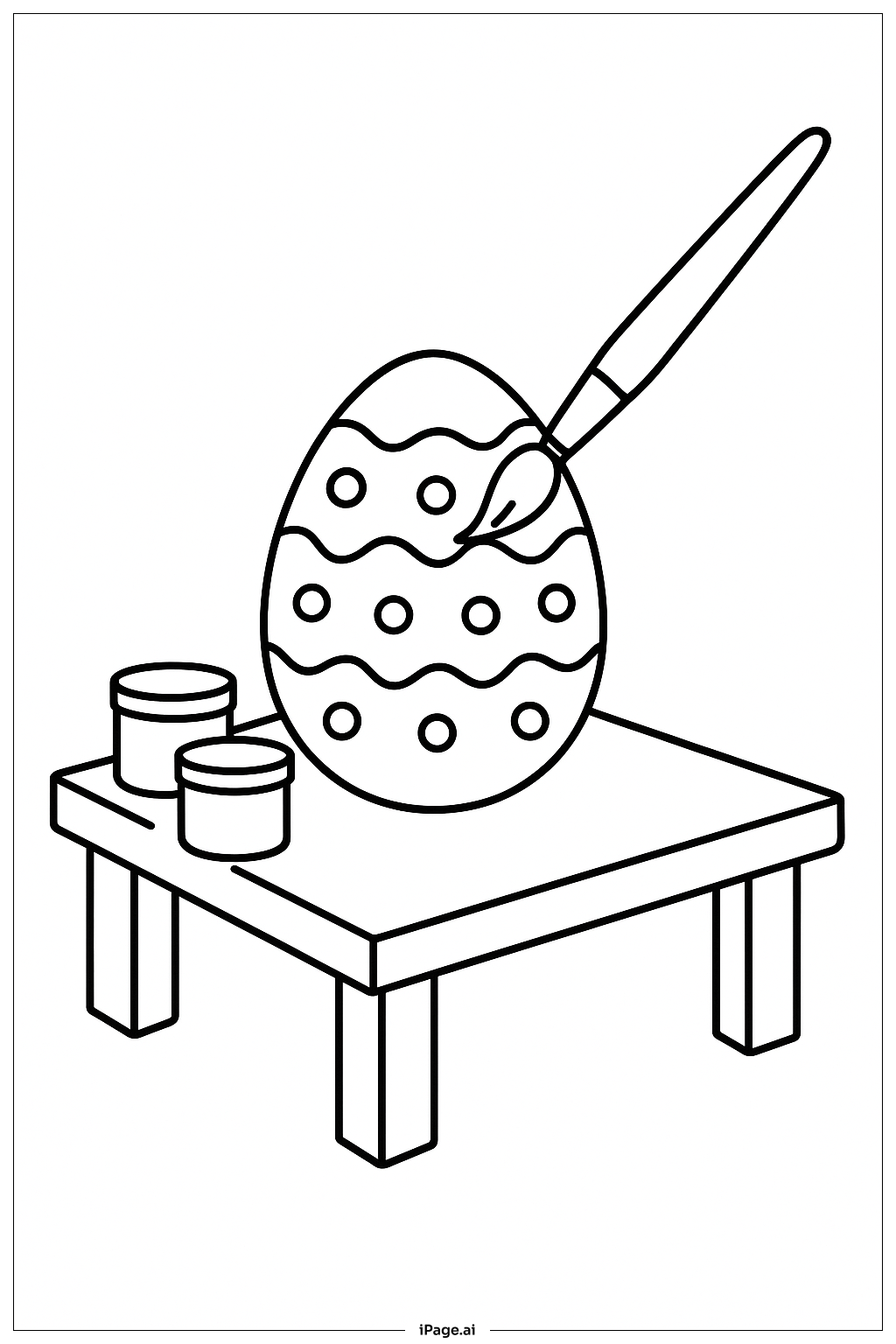
Coloring tips: How to color Painting An Easter Egg coloring page well?
For the child's clothing, try soft pastels like lavender, mint green, or butter yellow to match the spring theme. The hair can be any natural shade from blonde to brown or black. Use rosy pink for the cheeks to add warmth and life to the face. For the Easter eggs, let your imagination run wild with bright, cheerful colors like turquoise, coral, sunshine yellow, hot pink, and lime green. Create fun patterns using stripes, polka dots, zigzags, or flower designs. The paint palette should have rainbow colors to show the variety of options available. Choose a light wood tone for the table and keep the background simple with pale blue or cream. Consider using metallic markers or gel pens to add special shimmer to the decorated eggs for extra Easter magic.
Coloring challenges: Which parts are difficult to color and need attention for Painting An Easter Egg coloring page?
• Facial Features and Expression: The child's face requires careful attention to create a natural, lifelike appearance. Coloring the eyes, nose, and mouth with appropriate shading helps convey the concentrated, happy expression. Skin tones need gradual blending to avoid a flat look, and adding subtle shadows under the chin and around the nose adds dimension.
• Small Egg Details: The Easter eggs feature intricate patterns and designs that demand precision and patience. Staying within the tiny lines of stripes, dots, or decorative motifs can be challenging, especially for younger colorists. Each egg may have different patterns, requiring careful color planning to make each one unique and visually appealing without overwhelming the composition.
• Hand and Brush Positioning: The hands holding both the egg and paintbrush involve complex shapes with fingers in natural positions. Coloring hands realistically requires understanding of light and shadow on small curved surfaces. The paintbrush bristles need delicate coloring to show texture and the transition from handle to brush tip.
• Paint Palette Organization: The palette contains multiple paint wells that need to be colored as distinct colors while maintaining the circular or rectangular structure. Keeping each color vibrant and separate without bleeding into adjacent wells tests color control and neatness.
Benefits of coloring books: Advantages of drawing Painting An Easter Egg coloring page
Coloring this Easter egg painting scene helps children develop fine motor skills through the precise movements needed for detailed pattern work on the eggs. It encourages creative decision-making as they choose color combinations and design patterns for multiple eggs, fostering artistic confidence. The activity promotes focus and patience, especially when working on the intricate details of the decorated eggs and facial features. It connects children to Easter traditions and springtime celebrations, making the coloring experience culturally meaningful. The scene also teaches about the artistic process itself, showing how people create decorated eggs, which can inspire real-life crafting activities. The variety of elements, from the child's features to the multiple eggs and painting supplies, provides diverse coloring challenges that keep young artists engaged and developing their skills progressively.