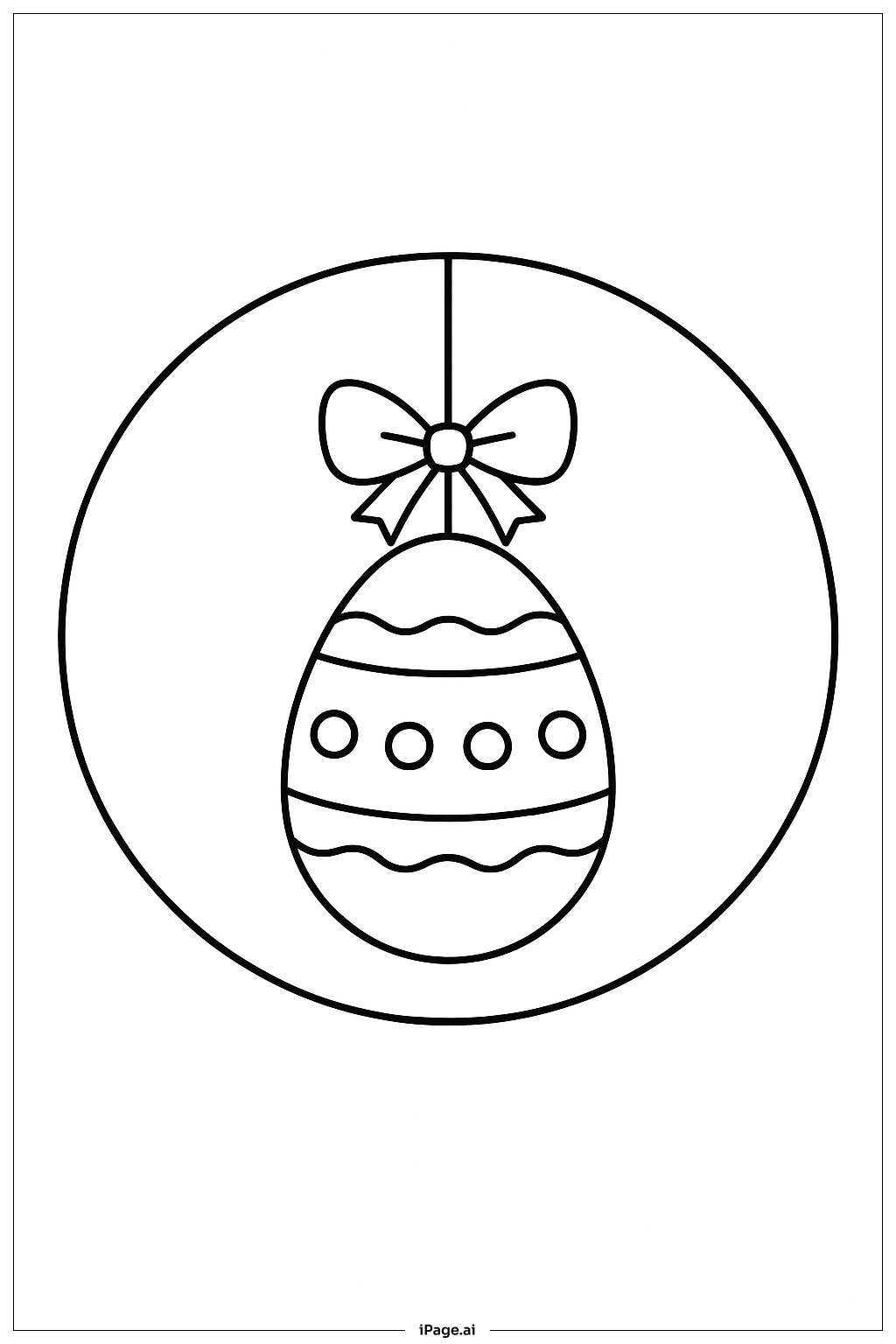
Coloring tips: How to color Hanging Easter Egg coloring page well?
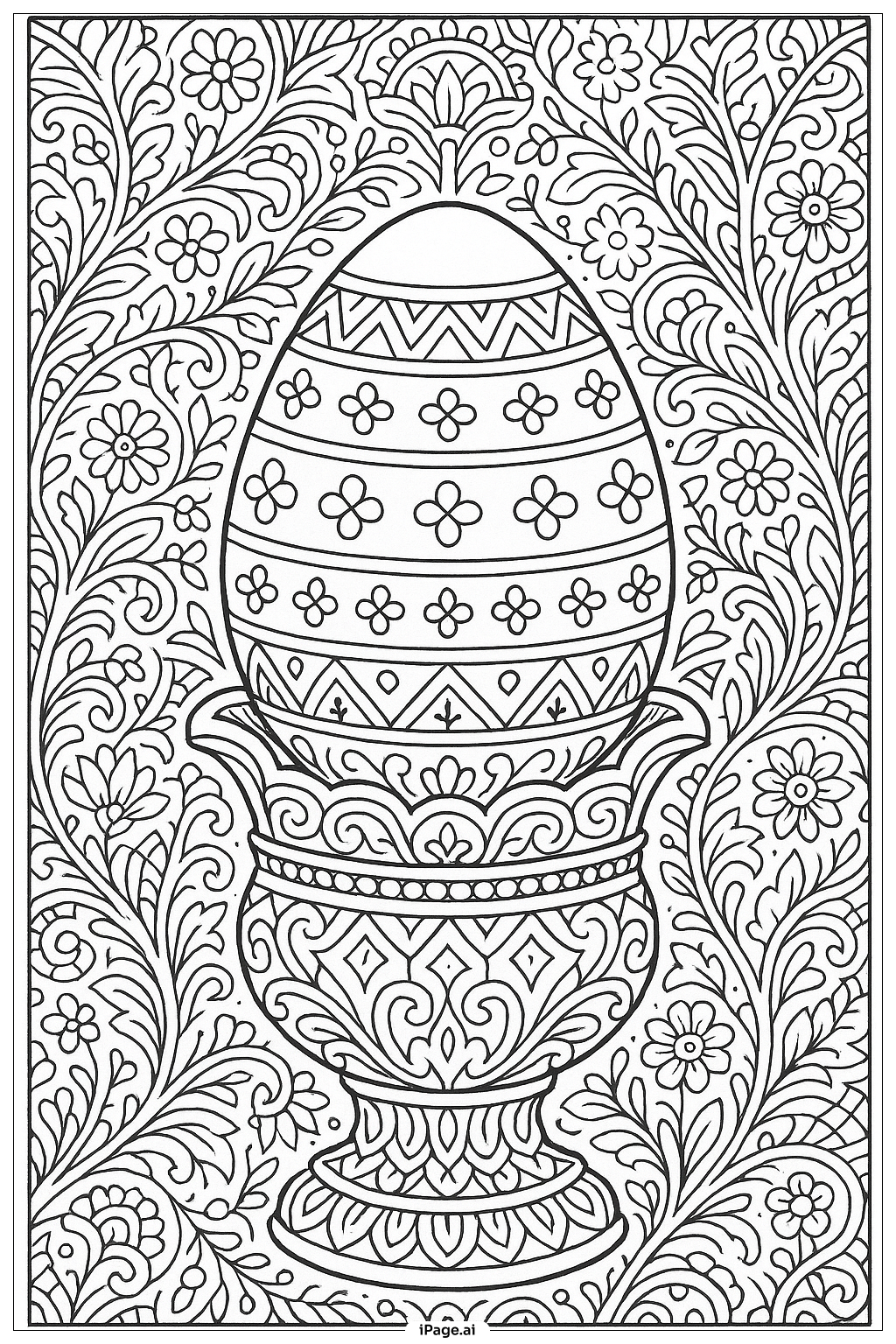
Start with the ribbon and bow at the top using a soft pastel color like lavender or baby blue. For the egg itself, consider using a variety of spring colors to highlight the different pattern sections. Try coloring alternating bands in complementary colors such as pink and yellow, or green and purple. The diamond shapes could be filled with bright colors like orange or red, while the zigzag patterns might look wonderful in turquoise or mint green. Use darker shades for the wavy lines to create contrast and make the patterns stand out. The dots can be colored in metallic gold or silver for a festive touch. Consider using colored pencils for smooth blending between sections, or markers for bold, vibrant results.
Coloring challenges: Which parts are difficult to color and need attention for Hanging Easter Egg coloring page?
• Pattern Precision: The geometric designs on the egg contain many small shapes and detailed lines that require careful coloring to stay within the boundaries. Children may find it challenging to color the tiny diamond shapes and dots without going over the lines, especially in areas where patterns overlap or meet.
• Symmetry Management: The egg features symmetrical patterns on both sides, and maintaining consistent colors across matching sections requires planning and attention. Young colorists might struggle to remember which colors they used on one side when coloring the corresponding section on the other side.
• Ribbon and Bow Details: The bow at the top has overlapping loops and folds that create a three-dimensional appearance. Distinguishing between the different ribbon sections and applying appropriate shading to show depth can be tricky for beginners.
• Color Coordination: With multiple pattern bands and design elements, choosing a harmonious color scheme that makes each section distinct while maintaining overall visual appeal requires thoughtful color planning. Children may need guidance in selecting colors that complement rather than clash with each other.
• Small Spaces: The narrow bands between larger pattern areas and the spaces within the zigzag and wave designs are quite small, making it difficult to color neatly with thicker coloring tools like large crayons or broad-tipped markers.
Benefits of coloring books: Advantages of drawing Hanging Easter Egg coloring page
Coloring this hanging Easter egg helps develop fine motor skills through the precise movements needed to fill small geometric shapes and intricate patterns. Children practice hand-eye coordination as they carefully navigate the various bands and detailed designs. The symmetrical nature of the egg teaches pattern recognition and encourages planning skills as young artists decide on color schemes. This activity promotes focus and patience, as completing the detailed patterns requires sustained attention. The Easter theme connects children to seasonal celebrations and cultural traditions, making the coloring experience meaningful. Working with different pattern types enhances spatial awareness and understanding of geometric concepts. The creative freedom in choosing colors boosts confidence and self-expression while the structured patterns provide a satisfying framework for artistic exploration.