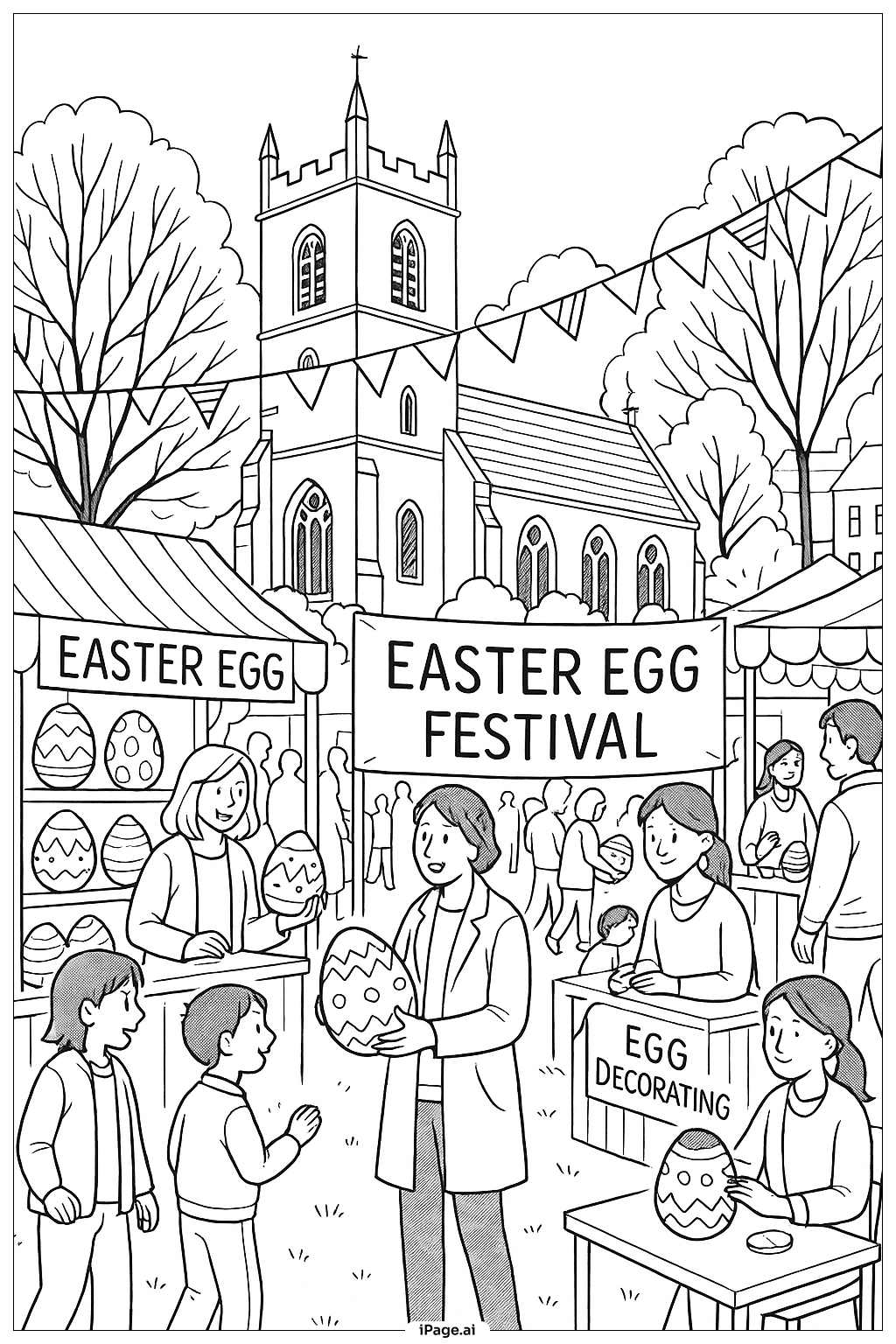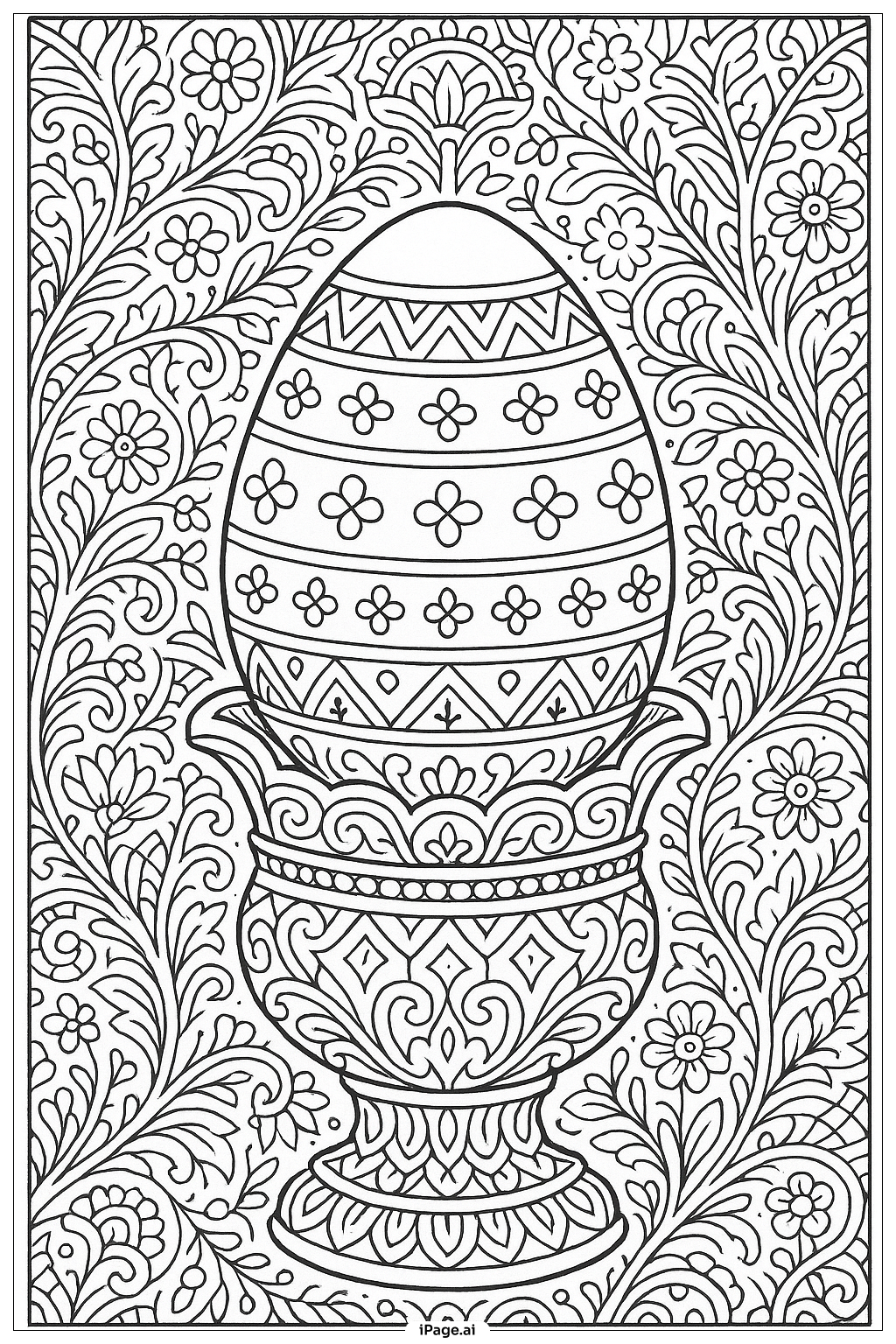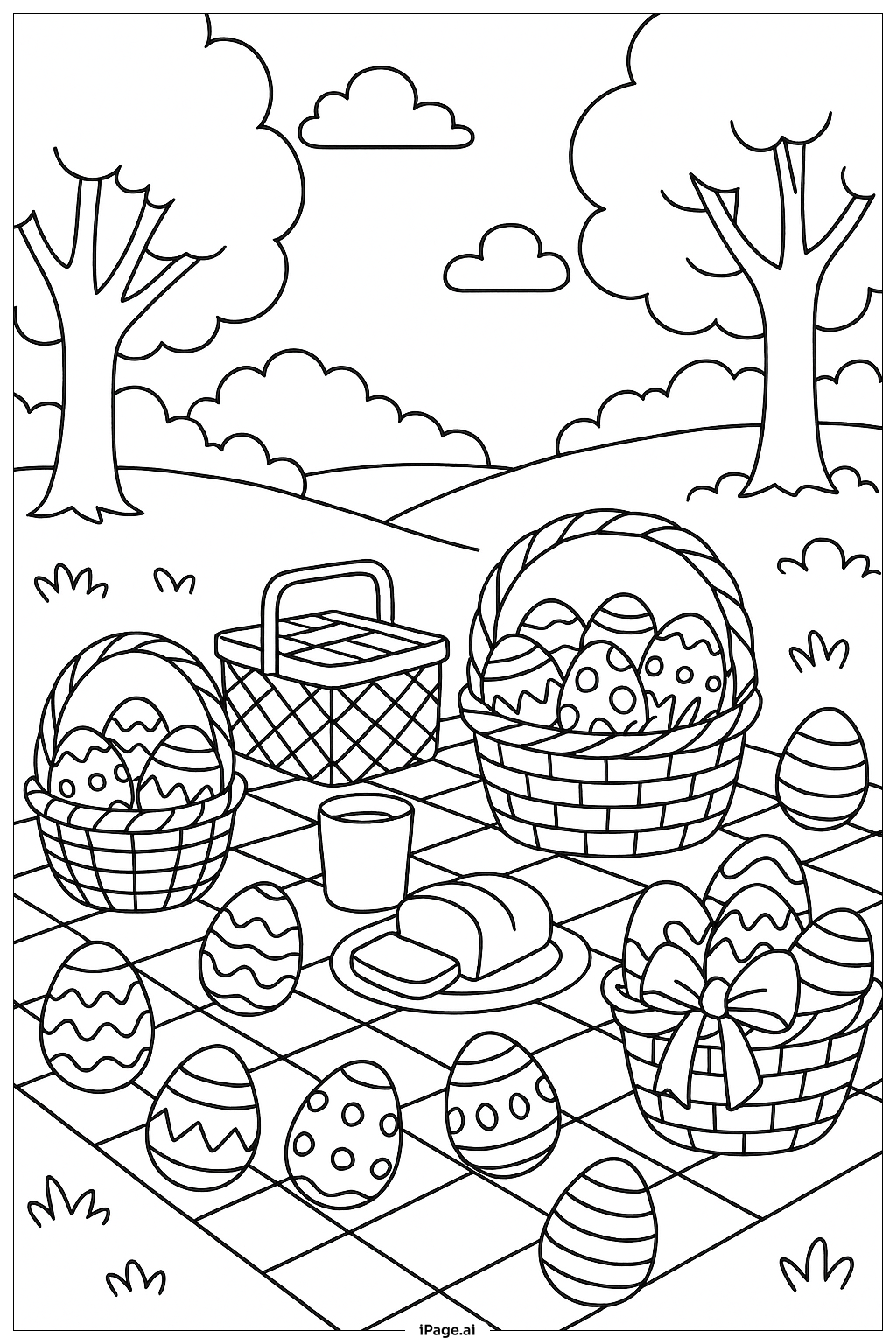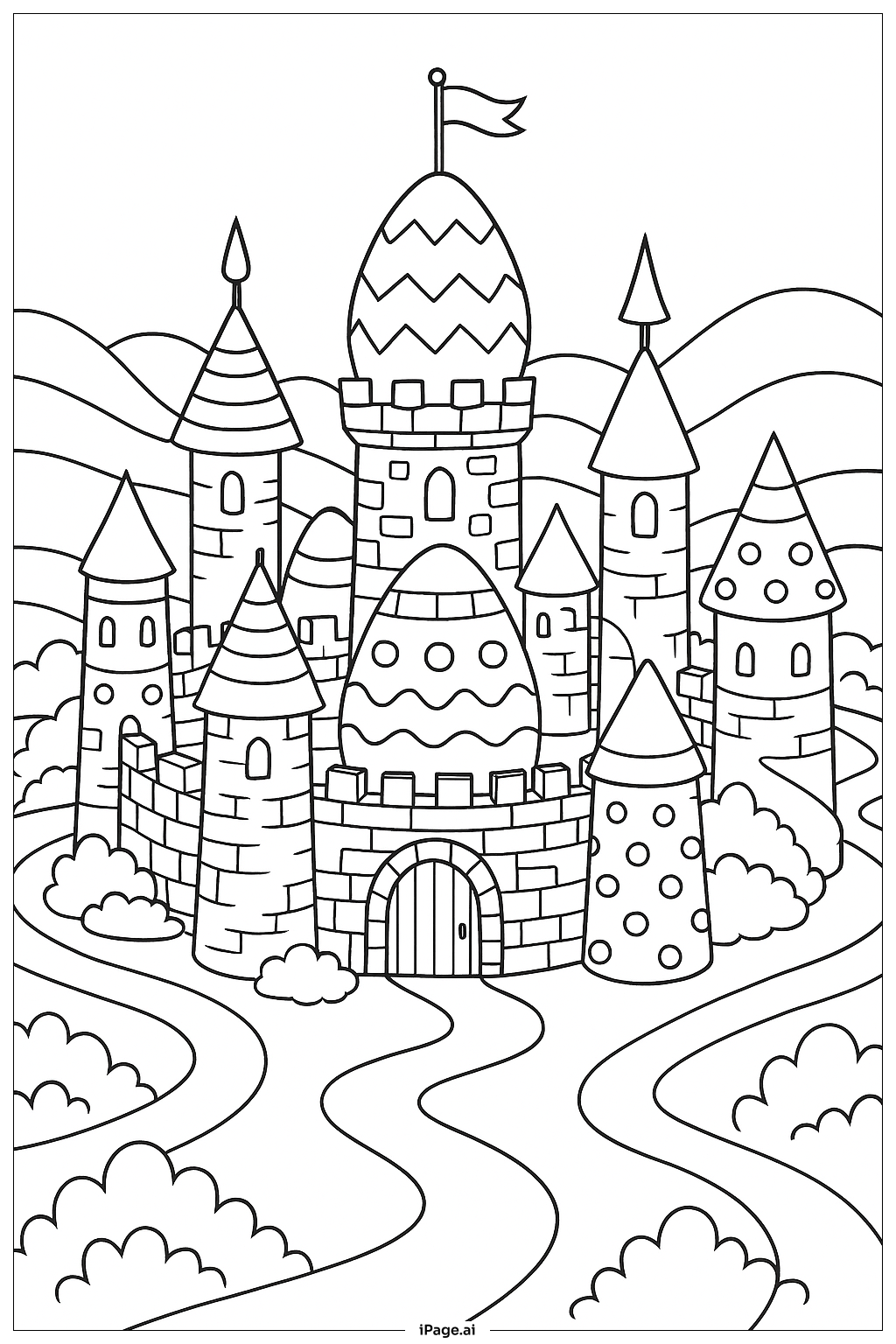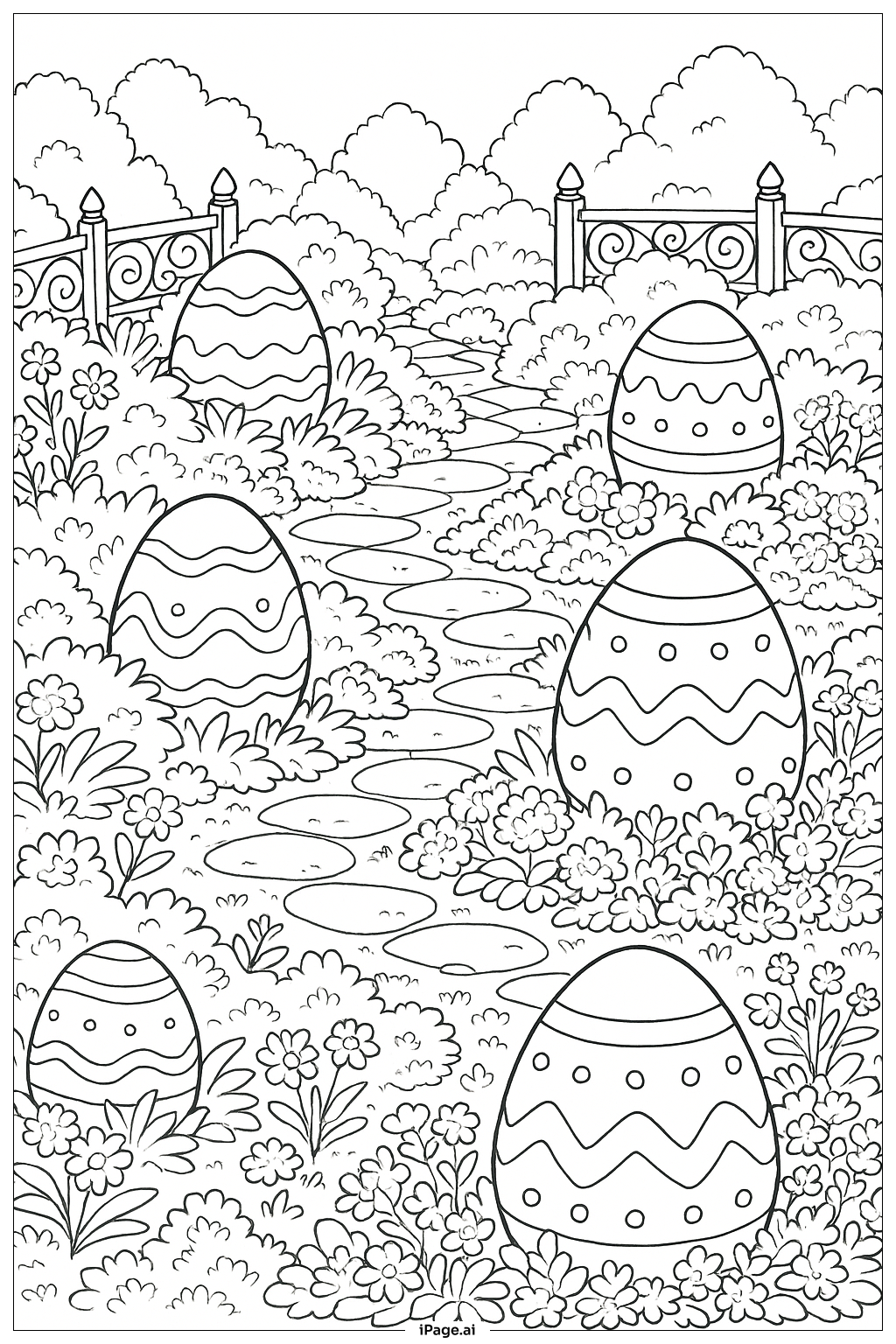
Coloring tips: How to color Easter Egg Garden Scene coloring page well?
Start with the Easter eggs as your focal points, using bright, cheerful colors like pink, purple, blue, yellow, and orange. Give each egg a different color scheme to make them stand out from one another. For the decorative patterns on the eggs, try contrasting colors or metallic gel pens for a special effect. Color the flowers in vibrant spring shades like red, yellow, pink, and purple, with yellow or orange centers. Use different shades of green for the grass and leaves to create depth, mixing light greens, dark greens, and even blue-greens. Make the sky a soft blue with white or light gray clouds. Color the sun bright yellow or golden orange with lighter yellow rays. Consider adding shadows under the eggs with darker colors to make them appear three-dimensional and grounded in the garden.
Coloring challenges: Which parts are difficult to color and need attention for Easter Egg Garden Scene coloring page?
• Intricate Egg Patterns: Each Easter egg features detailed decorative elements including zigzags, dots, stripes, and geometric designs that require careful attention to stay within the lines. The small spaces within these patterns can be challenging for younger children and require precision with coloring tools. Using fine-tipped markers or colored pencils can help achieve clean results in these tiny sections.
• Overlapping Elements: The composition includes multiple layers where grass, flowers, and eggs overlap one another. Determining which element is in front and choosing appropriate colors to create depth can be tricky. Colorists need to plan their color choices carefully to ensure each element remains distinct and visible, avoiding color combinations that might cause elements to blend together visually.
• Flower Details: The flowers contain multiple petals that radiate from central points, requiring consistent coloring to maintain symmetry and balance. The centers of the flowers have small detailed sections that need steady hands. Keeping petal colors uniform while adding subtle shading for dimension adds another layer of complexity.
• Grass and Foliage Variety: The numerous grass blades and leaves throughout the scene present the challenge of creating visual interest while maintaining a cohesive look. Coloring each blade individually can be time-consuming, and choosing varied green tones to prevent monotony requires thoughtful planning and patience throughout the coloring process.
Benefits of coloring books: Advantages of drawing Easter Egg Garden Scene coloring page
Coloring this Easter garden scene offers wonderful developmental benefits for children. The intricate patterns on the eggs help improve fine motor skills and hand-eye coordination as young artists carefully fill in small spaces. The variety of shapes and elements encourages focus and concentration, which can have calming effects and reduce stress. Making color choices for each egg, flower, and plant element promotes creative thinking and decision-making skills. The seasonal theme provides opportunities to learn about spring, nature, and Easter traditions while engaging in a fun artistic activity. The overlapping elements teach spatial awareness and planning as children determine coloring sequences. Completing this detailed page builds patience and perseverance, while the finished artwork provides a strong sense of accomplishment and boosts self-esteem. This coloring page is perfect for quiet time, holiday celebrations, or classroom activities.