Coloring tips: How to color Easter Bunny In Light Rain coloring page well?
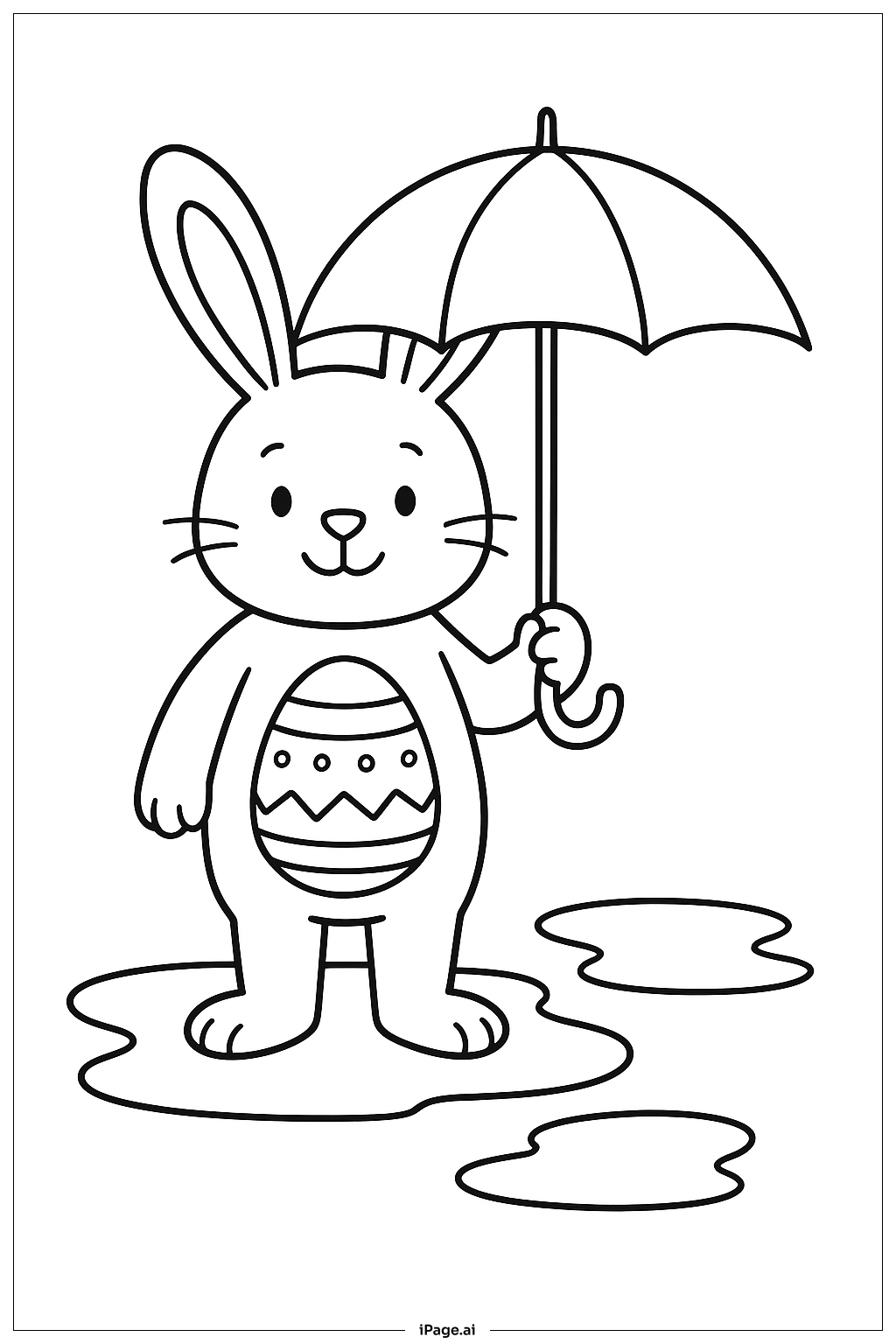
Start with the Easter Bunny's soft fur using light gray or cream colors, leaving some areas white for highlights. Color the large eyes with bright blue or brown, adding tiny white dots for sparkle. The bow tie can be a cheerful red, pink, or pastel blue. For the decorated Easter egg, use vibrant spring colors like purple, yellow, pink, and green in the pattern details. Make the raindrops light blue or silver to show they're falling gently. Color the clouds soft gray or light purple to show rain clouds. The puddles can be light blue with darker blue edges. Add green to the grass tufts and use light blue or gray for the sky background. Consider using colored pencils for soft blending on the bunny's fur, and markers for the bright Easter egg patterns.
Coloring challenges: Which parts are difficult to color and need attention for Easter Bunny In Light Rain coloring page?
• Fur Texture and Shading: The bunny's body requires careful attention to create a soft, fluffy appearance. Children need to use light pressure and gentle strokes to build up subtle shading that shows the roundness of the body and the fluffiness of the tail. The ears especially need delicate work to show their inside and outside surfaces, with lighter tones in the inner ear and slightly darker shades on the outer edges.
• Easter Egg Pattern Details: The decorated Easter egg features intricate designs with small geometric shapes, swirls, or floral patterns that require steady hand control and precision. Young artists must carefully stay within the tiny pattern boundaries while selecting complementary colors that make each design element stand out. This detailed work helps develop fine motor skills but can be challenging for younger children.
• Raindrop Transparency Effect: Creating realistic raindrops requires understanding how to show water as transparent and reflective. Children should use very light colors or leave some raindrops partially uncolored to suggest transparency. Adding small white highlights or light blue tones can make raindrops look wet and dimensional rather than flat.
• Puddle Reflections and Depth: The puddles on the ground present a challenge in showing water surface and depth. Young artists need to use lighter blues in the center and slightly darker shades at the edges to create a realistic water effect. Adding subtle reflections of the bunny or sky colors in the puddles adds complexity but creates a more engaging finished picture.
Benefits of coloring books: Advantages of drawing Easter Bunny In Light Rain coloring page
Coloring this Easter Bunny in rain scene helps children develop important skills while having fun. The detailed fur and patterns improve fine motor control and hand-eye coordination as they carefully fill small spaces. Working with the rainy weather theme encourages creative thinking about color choices and natural elements. Children learn about spring weather and seasonal changes while expressing their artistic vision. The cute bunny character promotes positive emotions and joy during the coloring process. Selecting colors for the decorated Easter egg allows experimentation with color combinations and pattern design. The scene's peaceful atmosphere helps children relax and practice mindfulness. Completing this detailed image builds patience, concentration, and a sense of accomplishment. The Easter theme connects children to holiday traditions and cultural celebrations, making the activity both educational and meaningful.